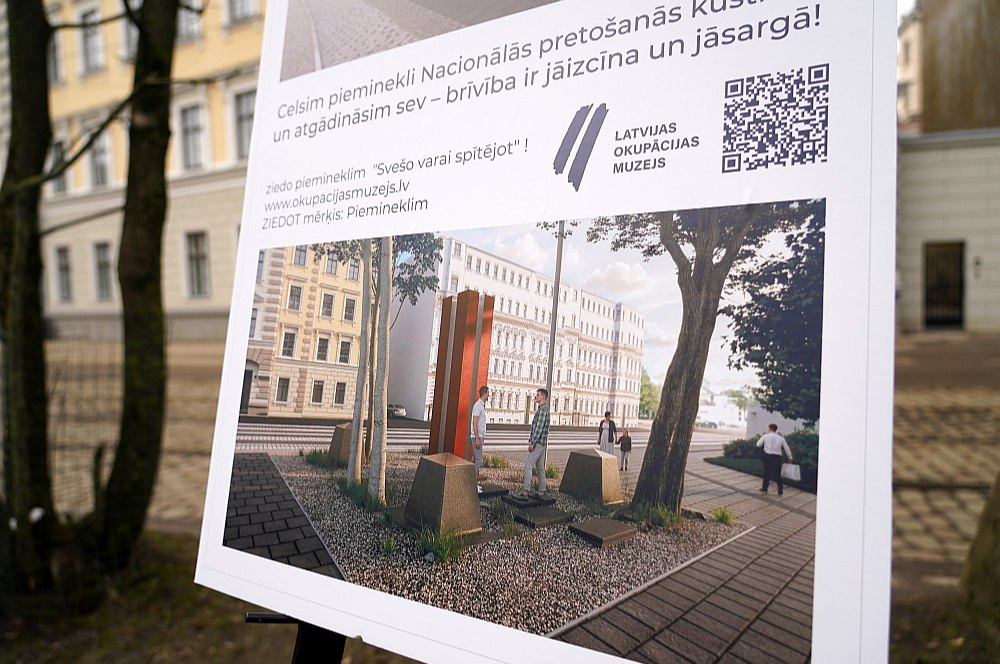
Riga is moving forward with plans to commemorate resistance to foreign powers with a novel memorial, a project that gained momentum following the transfer of a landscaping plan to the city council on March 17th. The memorial, tentatively named “In Defiance of Foreign Power,” will honor those who actively opposed Soviet occupation through armed struggle, underground organizations, and acts of civil disobedience. The initiative underscores Latvia’s continued reckoning with its complex 20th-century history and its commitment to preserving the memory of those who fought for independence.
The project was formally handed over to Riga City Council by the Museum of the Occupation of Latvia on National Resistance Day, a date chosen to highlight the memorial’s purpose. Riga Mayor Viesturs Kleinbergs accepted the plan, stating, “Today I receive a symbolic baton from those who defied foreign powers during the occupation. Unfortunately, many of them are no longer with us. This will be a memorial to our fight for freedom.” The development marks a significant step in a process that began with a cooperation memorandum signed between the city and the museum in April 2023, outlining a shared vision for the memorial and its surrounding area. Riga City Council News
A Site Steeped in Symbolism
The planned location for the memorial, at Radio iela 1, holds particular historical significance. It was here, on December 5, 1963, that Bruno Javoišs bravely hoisted the Latvian flag atop the Riga Radio Tower, a defiant act of resistance against Soviet rule. Javoišs was subsequently arrested and sentenced to seven years in a Mordovian prison camp for his actions. The choice of this location is intended to serve as a powerful reminder of his courage and the broader struggle for Latvian independence. Architect Raimonds Saulītis, who designed the landscaping project, emphasized the importance of preserving the site’s historical character. “The place has historical significance – here are the radio tower supports, these same trees that have grown from history, which we must not sweep away,” Saulītis explained. Latvian Occupation Museum
The landscaping plan aims to create an attractive and accessible public space along the city canal, blending historical preservation with modern design. According to the plan, existing public restrooms and waste bins will be removed to make way for the memorial and improved parkland. The project envisions a space that honors not only Javoišs’s individual act of defiance but also the collective efforts of the Latvian national resistance movement. Solvita Vība, Director of the Museum of the Occupation of Latvia, highlighted this broader scope, stating that the memorial will be dedicated to “all those who resisted Soviet occupation.”
Funding and Timeline
The creation of the “In Defiance of Foreign Power” memorial is being funded through public donations. As of March 2026, over €25,000 has been raised towards the total cost of €100,000. Delfi.lv The museum is actively seeking further contributions to complete the project. The Riga City Council is expected to consider allocating funds for the memorial site’s construction in the 2027 city budget.
Whereas the landscaping plan has been submitted, the overall project timeline anticipates a completion date of 2028. Vība indicated that securing the necessary materials, particularly granite, will be a complex undertaking, requiring a trip to Sweden to source the stone. The project is currently in its first phase, with the landscaping plan approved and submitted. The second phase will involve material procurement, and the third will focus on the actual construction of the memorial.
A Symbol of National Identity
The memorial project reflects a broader trend in Latvia of reassessing and commemorating its Soviet past. Following decades of Soviet rule, which ended in 1991, Latvia has been actively working to acknowledge the experiences of those who suffered under the occupation and to celebrate the country’s regained independence. The “In Defiance of Foreign Power” memorial is intended to serve as a lasting symbol of this national identity and a reminder of the importance of resisting oppression. Kleinbergs emphasized the symbolic weight of the project, describing it as a “symbolic baton” passed down from those who fought for freedom.
The initiative has garnered support from various segments of Latvian society, reflecting a widespread desire to honor the memory of those who resisted Soviet rule. The project’s reliance on public donations underscores the community’s investment in its success. The memorial is not simply a physical structure. it represents a collective effort to preserve and transmit the values of freedom, independence, and resistance to future generations.
The next step in the process involves the Riga City Council’s review and approval of the landscaping plan, followed by the allocation of funds for construction. The museum continues to solicit donations to reach the €100,000 fundraising goal. The completion of the memorial in 2028 will mark a significant milestone in Latvia’s ongoing efforts to come to terms with its past and to build a future based on the principles of freedom and self-determination.
What are your thoughts on the memorial? Share your comments below and let us know what this project means to you.