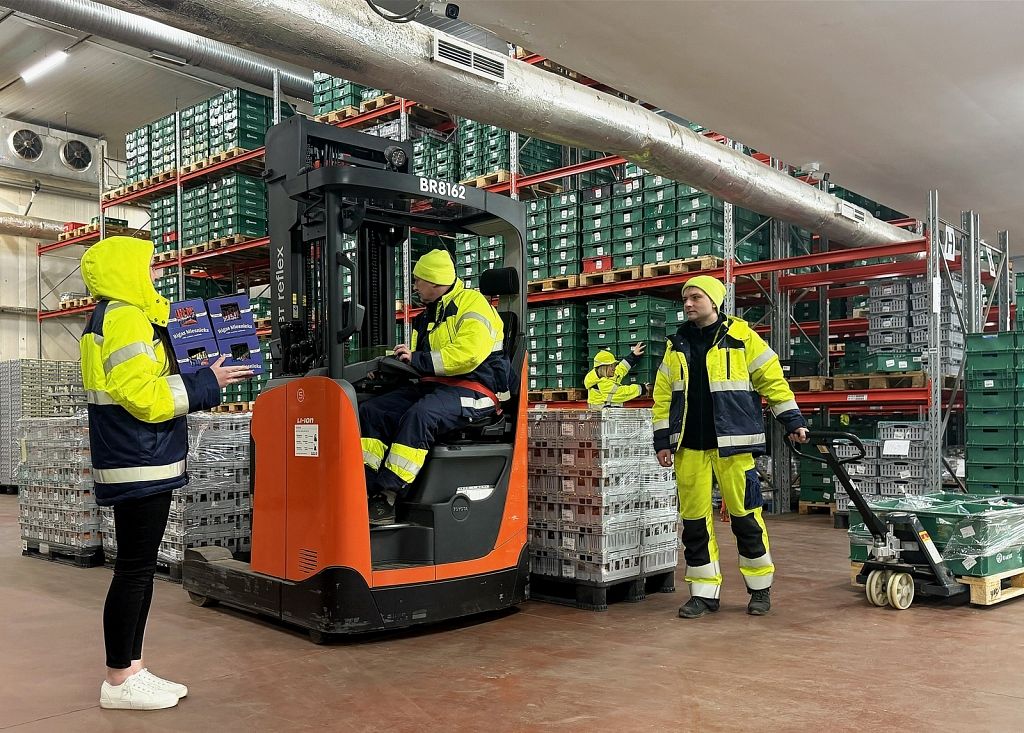
Rīgas Miesnieks, a cornerstone of the Latvian meat industry, has officially expanded its logistics center located at Atlasa iela 7 in Riga. The move is designed to increase operational capacity and streamline the distribution of its extensive range of meat products, ensuring that the brand can meet growing market demands with greater efficiency.
This infrastructure upgrade follows a period of strategic growth for the brand’s operator, AS Maag Latvija. The expansion of the logistics hub is a critical component of a broader effort to modernize the company’s supply chain, mirroring previous financial commitments to product diversification and quality control in a competitive Baltic food market.
For a brand that has navigated the complexities of the meat processing sector for over a century, the investment in logistics represents more than just a capacity increase; it is a reinforcement of the company’s commitment to maintaining the “unchanging taste and quality” that defines its market position. By optimizing the movement of goods from production to the consumer, Rīgas Miesnieks aims to solidify its footprint as a leading provider of high-quality meat products in the region.
Strategic Investment and Assortment Growth
The logistics expansion does not exist in a vacuum but is part of a wider investment strategy. In April 2025, AS Maag Latvija invested approximately one million euros specifically to expand the Rīgas Miesnieks product assortment. This financial injection was aimed at diversifying the brand’s offerings to align with evolving consumer preferences and dietary habits.
The company’s current portfolio reflects this drive for variety, ranging from traditional staples to more contemporary offerings. Their product line now includes specialized items such as chicken shashlik in Hoisin marinade, bacon shashlik, and Caucasian-style pork shashlik, as well as more niche products like Buffalo wings and coconut-marinated chicken wings. This diversification strategy requires a robust logistics framework to manage the varied storage and transport requirements of a broader product catalog.
However, the path to growth has not been without external pressures. Food producers in the region, including those under the Maag Latvija umbrella, have faced significant headwinds due to the “Green Course” (Zaļais kurss). As of April 2025, these environmental mandates have placed considerable pressure on food manufacturers, primarily through the rising costs of raw materials and energy resources, necessitating more efficient operational models to protect profit margins.
A Century of Meat Production Heritage
The choice of Atlasa iela 7 for the logistics expansion is deeply symbolic, as the site is tied to the brand’s historical roots. The origins of sausage production for the entity now known as Rīgas Miesnieks date back to 1922, when the “Konsums” union established a sausage workshop at this very location in Riga according to company records.
The company’s trajectory through the 20th century provides a case study in industrial resilience and adaptation:
- 1924: The “Konsums” union transformed into the Central Union and meat factory, initiating significant export activities, including the shipment of bacon to Sweden.
- 1932–1944: The establishment of the joint-stock company “Bekona eksports” saw the brand expand its reach with factories in Valmiera, Riga, and Liepāja, operating 22 stores. During this era, the company exported live pigs and salted bacon to Germany, the USSR, England, Sweden, Switzerland, the USA, Czechoslovakia, Italy, and the Netherlands.
- War-time Adaptation: During the war, the company produced specialized canned goods and long-storage sausages for military needs.
- 1944: Following nationalization, the “Bekona eksports” base became the Rīgas gaļas un konservu kombināts (Riga Meat and Canning Combine).
This legacy of international trade and industrial scale laid the groundwork for the modern operations of AS Maag Latvija, transitioning from a state-run combine to a modern, corporate-led meat processing leader.
Corporate Structure and Baltic Integration
Today, Rīgas Miesnieks operates within a sophisticated international corporate structure. AS Maag Latvija is currently controlled by a Finnish group, with management routed through the Rakveres gaļas pārstrādes kombināts in Estonia as detailed in the company’s history.
This Finnish ownership integrates the Latvian operations into a broader Baltic network of meat and poultry production. The group’s footprint includes “HK Ruokatalo” in Estonia, which is linked to the egg and poultry producer “Tallegg,” as well as Lithuanian entities “Klaipedos maisto produktai” and “Selingas.”
This regional integration allows Rīgas Miesnieks to leverage cross-border expertise in food safety, environmental management, and supply chain logistics. The expansion of the Riga logistics center is likely a reflection of this integrated approach, ensuring that the Latvian hub can function seamlessly within the larger Finnish-owned Baltic meat processing ecosystem.
Impact on the Regional Supply Chain
The expansion of the logistics center at Atlasa iela 7 is expected to have a ripple effect on the local supply chain. By increasing the capacity to store and move goods, the company can reduce lead times and improve the freshness of its products reaching retail shelves. This is particularly vital for a product range that includes highly perishable items like fresh shashliks and traditional sausages.
For consumers, this means a more consistent availability of the “Rīgas Miesnieks” brand across Latvian retail outlets. For the industry, it signals a continued investment in domestic infrastructure despite the economic challenges posed by energy costs and environmental regulations.
Key Corporate Milestones
| Period/Date | Key Development | Significance |
|---|---|---|
| 1922 | Workshop established at Atlasa iela | Founding of production roots in Riga |
| 1932 | Formation of “Bekona eksports” | Shift to large-scale international export |
| 1944 | Nationalization | Transition to Rīgas gaļas un konservu kombināts |
| 2025 | €1 Million Investment | Expansion of product assortment |
| 2026 | Logistics Center Expansion | Increased distribution capacity at Atlasa iela 7 |
As the company continues to balance its century-old traditions with the demands of modern European food standards, the expansion of its logistics capabilities marks a pivotal step in ensuring its longevity in the Baltic market.
You’ll see currently no further scheduled announcements regarding additional site expansions; however, the company continues to monitor the impact of the “Green Course” on production costs.
Do you think traditional meat producers can successfully adapt to the “Green Course” mandates without significantly raising consumer prices? Share your thoughts in the comments below.
Worth a look