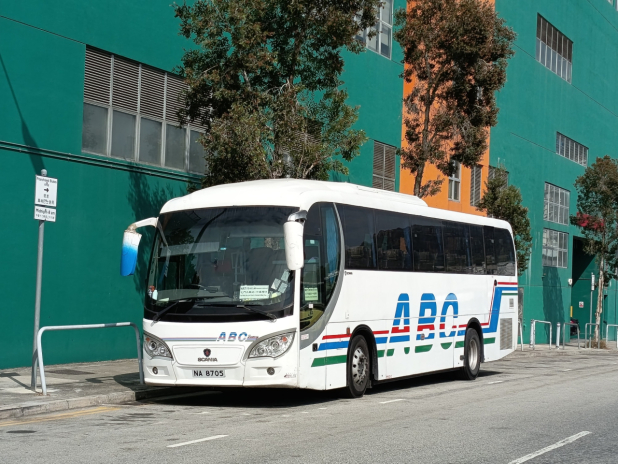
A sudden surge in global fuel prices has sparked a confrontation between a local transport operator and regulators in Hong Kong, bringing the fragility of non-franchised transit services into sharp focus. ABC Bus, a company providing essential resident bus services in Tuen Mun, recently attempted to reduce its service frequency, citing unsustainable operational losses driven by a dramatic spike in diesel costs.
The move quickly met resistance from the government. The Transport Department intervened, reminding the operator that any adjustments to service details—including the reduction of trips—require the prior consent of resident representatives and a formal application process. This clash highlights the precarious balance between maintaining affordable public transport and the economic survival of small-scale operators facing volatile commodity markets.
For the residents of Tuen Mun who rely on these “village buses” (邨巴) for their daily commutes to Kowloon and Hong Kong Island, the situation represents more than a regulatory dispute; We see a warning sign of how geopolitical instability can directly impact local mobility. As diesel prices climb, the operators are finding themselves in a position where every trip may result in a financial loss, leading to threats of total service suspension if a resolution is not reached.
The Financial Strain of Skyrocketing Diesel
The crisis began when ABC Bus announced on April 5, 2026, that it would immediately reduce some of its service frequencies. The company pointed to a catastrophic rise in fuel expenses, claiming that diesel prices had surged by more than 100% within a single month, specifically between February 28 and April 3, 2026 .
According to the operator, this price hike increased the cost of transporting each single passenger by more than $5 . In a series of candid social media posts, ABC Bus described the current operational climate as “pouring money into the sea,” arguing that the company was losing money on every trip conducted. The operator expressed a sense of desperation, noting that while they have applied for fare increases, the government’s approval process is too slow to keep pace with the daily rise in fuel costs.
The volatility is largely attributed to heightened tensions in the Middle East, which have driven international oil prices upward and created a ripple effect across Hong Kong’s transport sector . For a non-franchised operator, these costs cannot be easily absorbed, nor can fares be adjusted unilaterally, leaving the company caught between regulatory requirements and financial insolvency.
Regulatory Constraints and the Transport Department’s Mandate
The Transport Department responded to the service cuts on the evening of April 6, 2026, emphasizing that the operator had bypassed necessary legal procedures. Under the terms of the passenger transport license, any operator planning to adjust service details must first obtain the agreement of resident representatives and submit a formal application to the Transport Department at least 14 days in advance .
Because ABC Bus had attempted to implement cuts immediately without this approval, the department insisted that all services be maintained at their normal levels. Following this intervention, ABC Bus posted a follow-up update on the evening of April 6, acknowledging that their reduction in frequency had not been approved and stating that all bus trips must return to their normal schedules .
The Transport Department has since confirmed that the operator is currently in discussions with resident representatives to negotiate service adjustments. The government has stated it is closely monitoring the impact of international oil price hikes on Hong Kong’s transport network and is maintaining contact with various operators to understand their operational struggles .
Affected Routes and Passenger Impact
The dispute centers on four specific resident bus routes in the Tuen Mun district that provide critical links to major transport hubs and business districts. These routes include:
- Route NR79: Connecting Chi Lok Garden to Hung Hom Station.
- Route NR707: Connecting Tai Hing Garden to Hung Hom Station.
- Route NR711: Connecting Siu Lun Court to Wan Chai.
- Route NR720: Connecting Siu Lun Court to the Hung Hom Ferry Terminal .
While services have temporarily returned to normal, the long-term stability of these routes remains uncertain. ABC Bus has warned that if the fuel price crisis is not resolved—either through a successful fare increase application or a drop in global oil prices—the company may be forced to consider more drastic measures. These include the potential total suspension of all resident bus services or the introduction of a fuel surcharge to offset the rising costs .
Summary of Service Status and Requirements
| Action Attempted | Regulatory Requirement | Current Status |
|---|---|---|
| Reduction in trip frequency | Resident representative agreement + 14-day notice | Reverted to normal (Unapproved) |
| Fare Increase | Government application and approval | Pending Application |
| Fuel Surcharge | Regulatory approval/agreement | Proposed as future alternative |
The Broader Economic Implications for Transit
This incident serves as a microcosm of the challenges facing non-franchised transport operators globally. Unlike major franchised bus companies that may have more robust hedging strategies or diversified revenue streams, small resident bus operators are highly exposed to “spot” price fluctuations in the energy market.
The reliance on a specific fuel type (diesel) and a fixed-fare structure creates a “price squeeze” when input costs rise faster than the regulatory body allows fares to increase. When the cost per passenger rises significantly—as seen in the $5 increase reported by ABC Bus—the profit margin evaporates, turning a public service into a financial liability for the operator .
the requirement for resident representative agreement adds a layer of social complexity to the economic problem. While the Transport Department aims to protect passengers from sudden service drops, this mechanism can slow down the operator’s ability to react to rapid economic shocks, potentially leading to a total collapse of the service rather than a managed reduction.
As the government continues to monitor the situation, the outcome for Tuen Mun residents will depend on whether a compromise can be reached between the operator’s need for financial viability and the public’s need for reliable, affordable transport.
The next critical checkpoint will be the outcome of the ongoing discussions between ABC Bus and the resident representatives. If an agreement is reached, a formal application will be submitted to the Transport Department, which will then undergo the mandatory 14-day review period before any service changes or fare adjustments can legally take effect.
Do you think transport regulators should allow “emergency” fare adjustments during global fuel crises, or is the current resident-approval system necessary to protect commuters? Share your thoughts in the comments below.
Keep reading
- AI Bubble Fears Trigger Tech Sell-Off: Samsung and SK Hynix Stocks Plummet
- BNP Paribas and Partners Grant $410.8M Serie A Loan
- Why Nighttime Heat Is Rising Faster Than Daytime Highs in US Cities (daybreakwire.com)
- Federal Judge Halts Large Logging Project in Montana Over US Forest Service Concerns (news-usa.today)