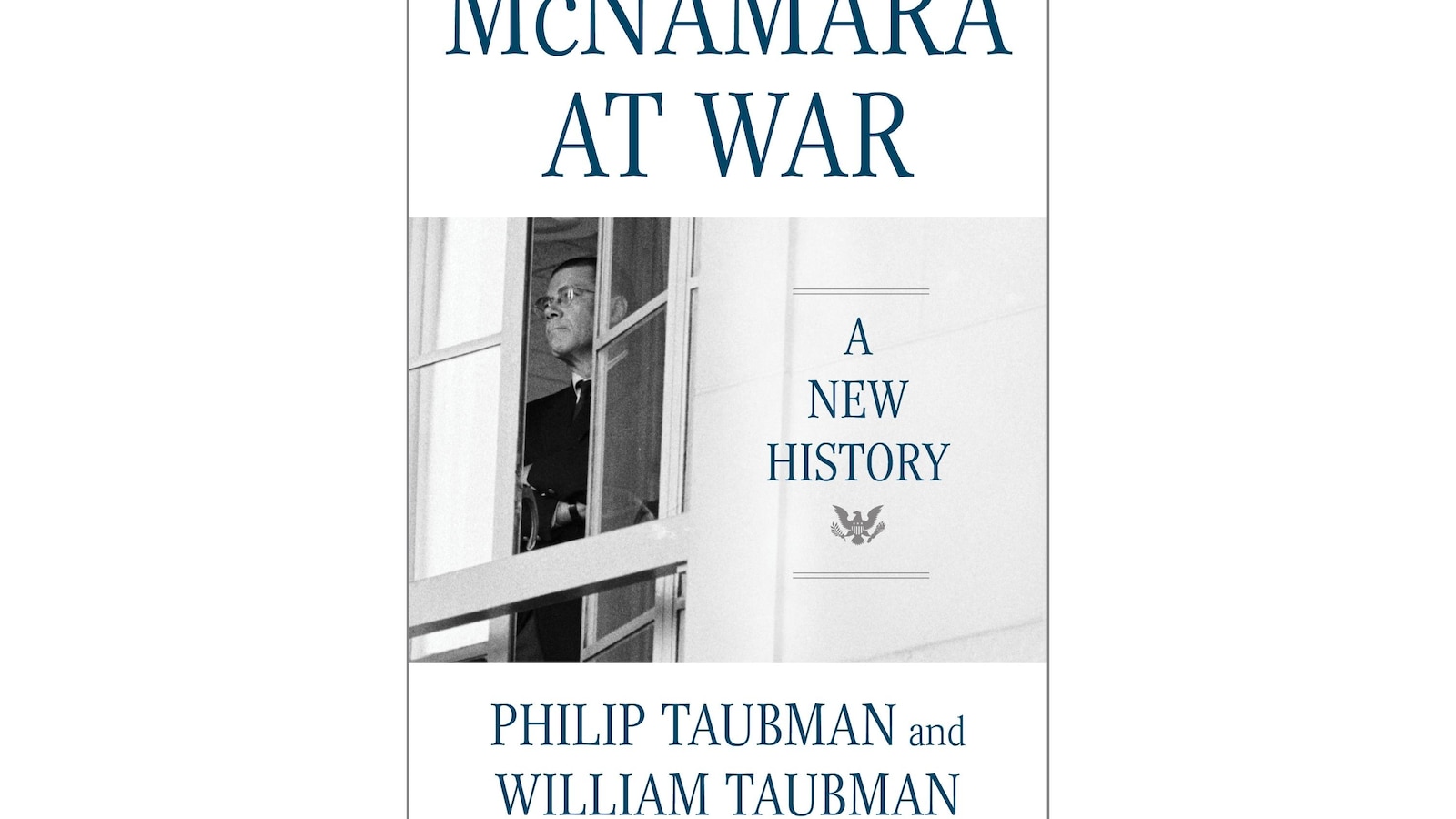
New York – A meticulously researched biography of Robert McNamara, the controversial and influential figure who served as U.S. Secretary of Defense for much of the Vietnam War era, has been awarded the prestigious $50,000 Barbara and David Zalaznick Book Prize in American History. Philip and William Taubman’s “McNamara at War: A New History,” published by W.W. Norton, was announced as the winner on Monday by The New York Historical Society. The book delves into the complex life of McNamara, tracing his trajectory from a rising business leader in the post-World War II era to his pivotal, and ultimately fraught, role in shaping American foreign policy during a period of immense social and political upheaval.
The award recognizes not only the depth of the Taubmans’ scholarship but also the book’s nuanced portrayal of a man often viewed as a symbol of Cold War pragmatism and, later, as a key architect of a deeply divisive conflict. “McNamara at War” doesn’t shy away from the ethical and strategic dilemmas that defined McNamara’s career, exploring the internal contradictions and evolving perspectives of a figure who grappled with the consequences of his decisions long after leaving public office. The book’s exploration of McNamara’s life is framed by the authors as a modern tragedy, echoing the classical Greek cycle of ambition, hubris, and eventual reckoning.
Robert McNamara’s tenure as Secretary of Defense, spanning from 1961 to 1968 under Presidents John F. Kennedy and Lyndon B. Johnson, was marked by a commitment to systems analysis and quantitative decision-making. He brought a data-driven approach to national security, seeking to apply the principles of efficiency and rationality to the complexities of the Cold War. However, it was his role in escalating U.S. Involvement in Vietnam that ultimately defined his legacy. As the war dragged on and casualties mounted, McNamara began to express private doubts about the viability of the American effort, a tension that the Taubmans’ biography explores in detail. He resigned from his post in February 1968 to become president of the World Bank, a move that signaled a shift in his focus but did not erase the shadow of Vietnam.
A Life Defined by War and Regret
Born in 1916, Robert McNamara’s early career was rooted in the world of business. He rose through the ranks at Ford Motor Company, becoming a key figure in its post-war expansion. His success in the automotive industry caught the attention of President Kennedy, who recruited him to serve as Secretary of Defense. McNamara quickly established himself as a powerful and influential member of the Kennedy administration, advocating for a modernized military and a more strategic approach to national security. However, the escalating crisis in Vietnam soon dominated his agenda.
The Taubmans’ biography meticulously examines McNamara’s involvement in the key decisions that led to the deepening U.S. Commitment to Vietnam. They explore his role in the Gulf of Tonkin Resolution, the strategic bombing campaigns, and the deployment of hundreds of thousands of American troops. The book also sheds light on McNamara’s growing disillusionment with the war, as he came to believe that the conflict was unwinnable and that the costs – both human and financial – were unsustainable. This internal conflict, and his eventual acknowledgement of errors in judgment, became a defining feature of his later life. McNamara died in 2009, having spent his final years reflecting on the lessons of Vietnam and advocating for nuclear disarmament.
The Zalaznick Prize and its Illustrious Past
The Barbara and David Zalaznick Book Prize in American History, awarded by The New York Historical Society, is one of the most prestigious honors in the field of American historical writing. The $50,000 prize recognizes books that demonstrate exceptional scholarship, originality, and insight. The Taubmans will receive an engraved medal and the title of American Historian Laureate at a ceremony in April.
Previous winners of the Zalaznick Prize include Robert Caro for his monumental biography “The Passage of Power” (1977), a deep dive into the life and career of Lyndon B. Johnson; Ron Chernow for “Washington: A Life” (2010), a critically acclaimed biography of the first U.S. President; and Beverly Gage for “G-Man: J. Edgar Hoover and the Making of the American Century” (2022), a comprehensive examination of the controversial FBI director. The inclusion of “McNamara at War” in this distinguished company underscores the significance of the Taubmans’ achievement and the enduring relevance of McNamara’s story.
McNamara’s Legacy: A Continuing Debate
Robert McNamara remains a deeply controversial figure. While some view him as a brilliant and dedicated public servant who sought to apply rational principles to the challenges of the Cold War, others observe him as a symbol of the arrogance and miscalculation that led to the tragedy of Vietnam. The release of the Pentagon Papers in 1971, a classified study of the Vietnam War commissioned by McNamara himself, revealed a history of deception and misjudgment that fueled public outrage and intensified the anti-war movement.
The Taubmans’ biography offers a fresh perspective on McNamara’s life and career, drawing on newly available archival materials and interviews with those who knew him well. It avoids simplistic judgments, instead presenting a complex and nuanced portrait of a man who was both a product of his time and a figure who profoundly shaped the course of history. The book’s exploration of McNamara’s internal struggles and his eventual acknowledgement of errors in judgment provides valuable insights into the challenges of leadership and the complexities of decision-making in times of crisis.
The book’s impact extends beyond historical scholarship. In an era of ongoing conflicts and geopolitical tensions, McNamara’s story serves as a cautionary tale about the dangers of hubris, the importance of critical thinking, and the need for humility in the face of uncertainty. The Taubmans’ work encourages readers to grapple with the difficult questions raised by McNamara’s life and to consider the lessons that can be learned from his experiences.
Key Takeaways
- “McNamara at War” by Philip and William Taubman has won the $50,000 Barbara and David Zalaznick Book Prize in American History.
- The biography offers a nuanced portrait of Robert McNamara, exploring his career from business leader to Secretary of Defense and his evolving views on the Vietnam War.
- McNamara’s tenure was marked by a commitment to systems analysis but ultimately defined by his role in escalating the Vietnam War.
- The Zalaznick Prize is a prestigious award recognizing exceptional scholarship in American history, with previous winners including Robert Caro and Ron Chernow.
- The book encourages reflection on the complexities of leadership, the dangers of hubris, and the importance of learning from past mistakes.
The Taubmans’ work arrives at a moment when historical understanding feels particularly vital. As debates continue about America’s role in the world and the lessons of past conflicts, “McNamara at War” offers a timely and important contribution to the conversation. The award ceremony in April will undoubtedly draw attention to this significant work and further stimulate discussion about the life and legacy of Robert McNamara.
Related reading