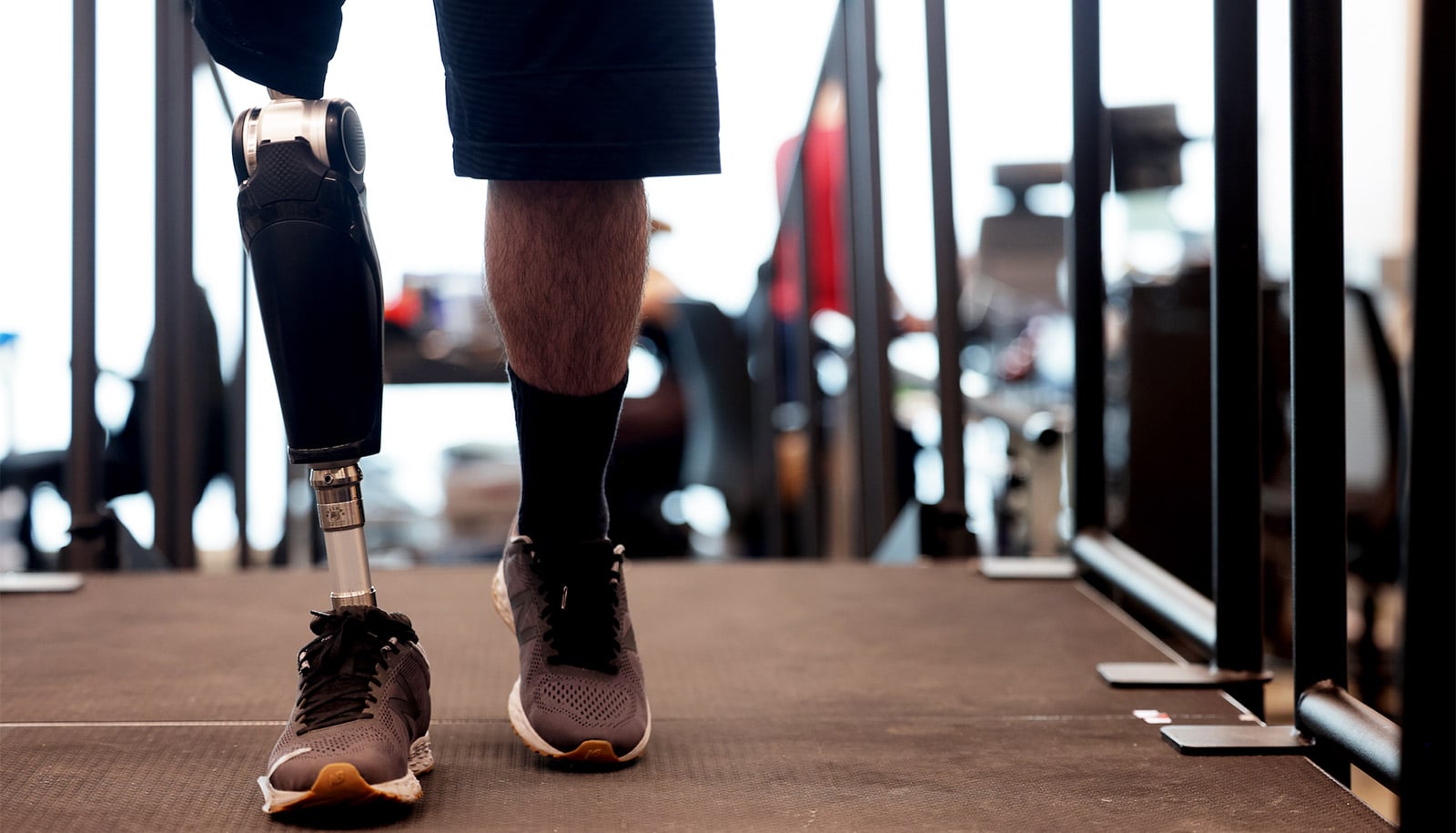
Reclaiming Natural Movement: Advanced Control Algorithm Revolutionizes Robotic knee Prostheses
For individuals living with lower-limb amputation, regaining a natural and effortless gait is a paramount goal. While powered prosthetic knees have offered critically important advancements, a key challenge has remained: achieving seamless synchronization between the user’s intent and the prosthesis’s response. Now, a groundbreaking study from the University of Michigan, in collaboration with Össur, unveils a novel control algorithm that promises to dramatically improve the functionality and user experience of robotic knee prostheses, bringing them closer than ever to replicating the natural movement of a biological limb.
The limitations of Current Prosthetic Control Systems
Existing powered prosthetic knees frequently enough rely on recognizing specific movements – the initiation of sitting or standing, for example – before responding. While this approach prioritizes safety and predictability, it can feel reactive and lag behind the user’s natural rhythm. This disconnect can lead to compensatory movements, increasing the risk of overuse injuries and drawing unwanted attention to the user’s gait. As Kevin Best, the study’s first author and a robotics PhD graduate, explains, ”Our goal in prosthesis control is to make the leg behave as close as possible to the missing human limb in order to prevent compensations that often lead to overuse injuries. It also matters becuase gait deviations can bring unwanted attention to some users.”
A New Approach: Predictive, User-Synchronized Control
The research team, led by Dr. Gregg, took a fundamentally different approach.Instead of reacting to movement, they developed a control algorithm that anticipates it.this was achieved by building elegant mathematical models of human locomotion, drawing upon extensive datasets of unimpaired individuals. The algorithm continuously monitors the user’s thigh motion, using this data to predict the appropriate knee behavior in real-time.
“This isn’t about simply recognizing what the user is doing; its about understanding how they’re moving and responding in a way that feels intuitive and natural,” explains Dr. Best.This predictive capability allows for smoother transitions between activities – sitting, standing, and walking – and a more fluid, less labored gait.
Study Results: Significant Improvements in Functionality and Gait
The study involved participants performing a range of everyday activities, including repeated sit-to-stand transitions, treadmill walking, and a combined sit-walk-sit routine.the results were compelling.
* Enhanced Assistance for Users Requiring Support: participants who typically relied on assistive devices like canes experienced significant benefits across all tasks,demonstrating the Power Knee’s ability to provide crucial support.
* Improved Gait for More Mobile Users: Those with greater prosthetic proficiency exhibited marked improvements in their gait patterns when using the new control algorithm. One participant even described the experience as the closest they’d felt to walking with two natural legs.
* Reduced Risk of Tripping: The algorithm enabled users to lift the prosthetic foot higher during walking, minimizing the risk of tripping over obstacles or uneven terrain.
* Decreased Hip Swing & Potential for Reduced Back pain: The powered knee and lifelike control algorithm reduced the need for excessive hip swing, suggesting a potential for decreased back pain and increased endurance – though further research is needed to confirm these benefits.
* Rapid Learning & Adaptation: Participants demonstrated a remarkable ability to learn and adapt to the new control system, becoming faster and more efficient with each repetition of the sit-to-stand task.
The Promise of a More Natural Prosthetic Experience
Jeff Wensman, a certified prosthetist/orthotist at Michigan Medicine and study coauthor, emphasizes the importance of this advancement. “With the improvements in robotic devices, it is clear that robotic prostheses offer great promise to the amputee population,” he states. “I am excited to see the advancement of a strategy to provide powered prosthesis users with user-synchronized control. I believe that this is a missing link to making powered prosthetics a reality for amputees.”
Looking Ahead: Stairs, Ramps, and Real-World Integration
The research team is now focused on expanding the algorithm’s capabilities to tackle more complex terrains, such as stairs and ramps. Future studies will also involve take-home tests to assess the long-term effectiveness and user satisfaction in real-world settings.
ultimately, the goal is for Össur to integrate aspects of this innovative control algorithm into its existing Power Knee technology, making this enhanced prosthetic experience accessible to a wider range of amputees. The fact that two study participants have already transitioned to using the Power knee as their everyday prosthesis is a testament to the potential of this technology.
**This research represents a significant step forward in the field of prosthetic technology, offering renewed hope for individuals seeking to
Keep reading