AI-Powered Robotics Offer a Harvest of Efficiency for Tomato Farming
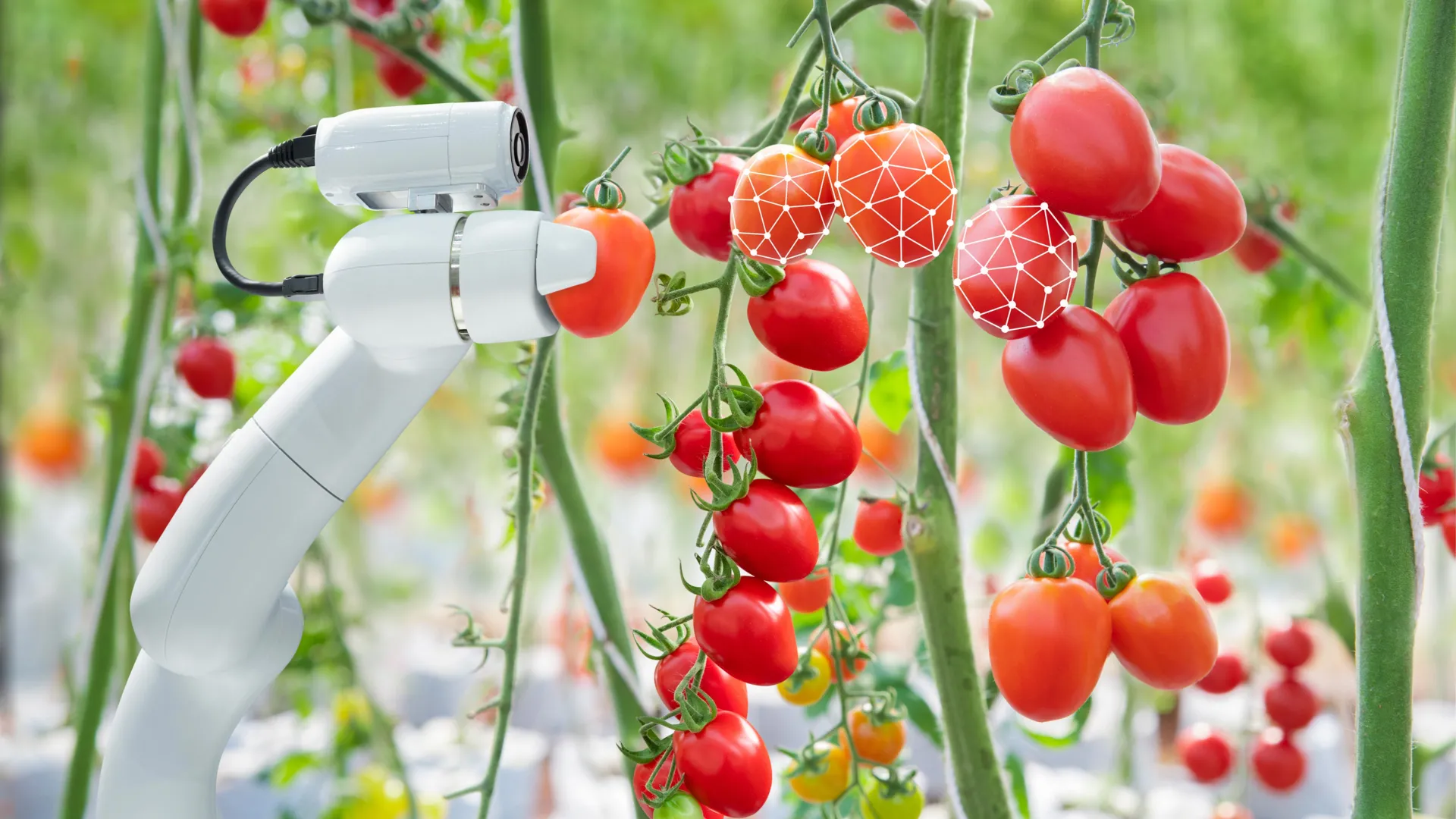
The agricultural sector is increasingly turning to automation to address persistent labor shortages, and a modern development from Osaka Metropolitan University is offering a particularly promising solution for one of the trickiest crops to harvest: tomatoes. Researchers have developed an AI-powered robot capable of not just identifying ripe tomatoes, but also assessing the optimal method for picking each fruit, significantly boosting efficiency and paving the way for more collaborative farming environments. This innovation addresses a key challenge in agricultural robotics – the need for delicate handling and intelligent decision-making when dealing with crops that grow in clusters and require careful selection.
Assistant Professor Takuya Fujinaga of Osaka Metropolitan University’s Graduate School of Engineering has spearheaded the development of a system that moves beyond simple fruit detection. The robot utilizes a novel approach called “harvest-ease estimation,” analyzing visual cues to predict how easily a tomato can be picked. This allows the robot to adjust its approach, selecting the most effective angle and grip for each individual fruit. The system achieved an impressive 81% success rate in testing, demonstrating a substantial improvement over traditional robotic harvesting methods. ScienceDaily reported on the breakthrough on March 18, 2026.
The Challenge of Robotic Tomato Harvesting
Tomatoes present a unique set of challenges for robotic harvesting. Unlike some other fruits and vegetables, tomatoes typically grow in clusters, requiring robots to differentiate between ripe and unripe fruit and carefully select only the ready-to-harvest tomatoes. This demands a level of precision and dexterity that has historically been difficult to achieve with automated systems. Traditional approaches often focused solely on identifying the presence of a tomato, without considering the complexities of its position, stem structure, or surrounding foliage. The United States Department of Agriculture (USDA) estimates that approximately 30-40% of labor costs in tomato production are associated with harvesting, highlighting the potential economic benefits of automation. USDA Economic Research Service provides detailed data on tomato production and labor costs.
From Detection to ‘Harvest-Ease’ Estimation
Fujinaga’s system represents a shift in focus from simply asking “can a robot pick a tomato?” to “how likely is a successful pick?” This “harvest-ease estimation” combines image recognition with statistical analysis. The robot analyzes a range of visual details, including the tomato itself, its stem, and any obstructions like leaves or other parts of the plant. This information is then used to determine the best angle for picking each fruit. The system’s ability to adapt its approach on the fly is particularly noteworthy. approximately one-quarter of successful picks involved the robot adjusting its angle after an initial attempt failed, demonstrating its capacity for problem-solving. Osaka Metropolitan University detailed the methodology in a research news release on December 9, 2025.
The research team’s approach leverages advancements in computer vision and machine learning. Image recognition algorithms allow the robot to “spot” and identify the key features of the tomato and its surrounding environment. Statistical analysis then helps the robot to predict the probability of a successful pick based on these visual cues. This combination of technologies enables the robot to make informed decisions and optimize its harvesting strategy.
Implications for the Future of Agriculture
The development of this AI-powered tomato-picking robot has significant implications for the future of agriculture. As labor shortages continue to plague the industry, automation is becoming increasingly essential for maintaining food production levels. This technology could help to alleviate these shortages and reduce the reliance on manual labor, particularly during peak harvest seasons. According to a 2024 report by the Food and Agriculture Organization of the United Nations (FAO), global agricultural labor shortages are projected to worsen in the coming decades, driven by factors such as aging populations and migration patterns. FAO report on agricultural labor
Fujinaga envisions a future where robots and humans work side-by-side in the fields. Robots could handle the easier-to-pick tomatoes, although humans could focus on the more challenging fruits that require a higher level of dexterity, and judgment. This collaborative approach could maximize efficiency and ensure that all tomatoes are harvested with optimal quality. “Robots will automatically harvest tomatoes that are easy to pick, while humans will handle the more challenging fruits,” Fujinaga explained.
The success of this project also highlights the potential for applying similar AI-powered techniques to other crops. Many fruits and vegetables present similar challenges for robotic harvesting, and the principles behind Fujinaga’s system could be adapted to address these challenges. This could lead to a wider adoption of automation in agriculture and a more sustainable food supply chain.
Key Takeaways
- An AI-powered robot developed by Osaka Metropolitan University can harvest tomatoes with an 81% success rate.
- The robot utilizes “harvest-ease estimation” to assess the optimal picking method for each fruit.
- This technology addresses critical labor shortages in the agricultural sector.
- The research suggests a future of collaborative farming, where robots and humans work together.
The findings of this research were published in the journal Smart Agricultural Technology. Further research is planned to refine the system and explore its application to other crops. The team is also investigating ways to improve the robot’s ability to handle different tomato varieties and growing conditions. The ongoing development of this technology promises to revolutionize tomato harvesting and contribute to a more efficient and sustainable agricultural future.
Looking ahead, the team plans to explore integrating the robot with other agricultural technologies, such as drones and sensors, to create a fully automated harvesting system. This could involve using drones to scout fields and identify ripe tomatoes, and then deploying robots to harvest them. The ultimate goal is to create a seamless and efficient harvesting process that minimizes waste and maximizes yield.
The next step for the research team involves field testing the robot in real-world farming environments. This will allow them to assess its performance under a variety of conditions and identify any areas for improvement. The team is currently seeking partnerships with local farmers to conduct these field trials.
What are your thoughts on the role of robotics in agriculture? Share your comments below, and let’s discuss the future of farming!
Worth a look