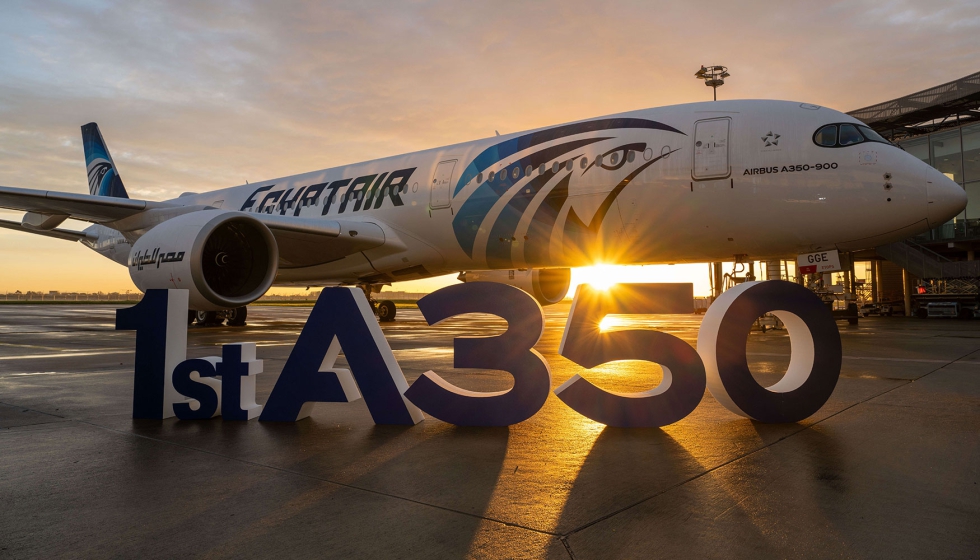
EgyptAir Bolsters Fleet with Airbus A350-900, Aiming for Operational Efficiency
Cairo – EgyptAir has taken a significant step towards modernizing its long-haul fleet with the arrival of the first of sixteen Airbus A350-900 aircraft. The delivery, a key component of the airline’s strategic expansion plan, promises enhanced passenger experience and improved operational efficiency. The fresh aircraft incorporates advanced technologies and aerodynamic solutions designed to reduce fuel consumption and lower emissions, aligning with the aviation industry’s growing focus on sustainability. This investment signals EgyptAir’s commitment to remaining competitive in the international aviation market and providing state-of-the-art travel options for its customers.
The introduction of the A350-900 is not merely an upgrade in aircraft; it represents a broader modernization effort by EgyptAir. The airline is actively working to enhance its overall service offerings, from in-flight entertainment to ground handling procedures. The A350-900 is renowned for its quiet cabin, spacious interior, and advanced air filtration systems, all contributing to a more comfortable journey for passengers. EgyptAir anticipates that the new aircraft will play a crucial role in attracting both leisure and business travelers, particularly on long-haul routes connecting Egypt to key global destinations.
Rolls-Royce Engines Powering EgyptAir’s New Fleet
A critical element of the A350-900’s performance is its propulsion system. The aircraft is powered by Rolls-Royce engines, specifically designed for efficiency and reliability. According to Airbus, the integration of these engines, alongside other aerodynamic improvements, contributes significantly to the aircraft’s reduced fuel burn. Rolls-Royce is undergoing a transformation to leverage digital and AI technologies to further optimize the design, build, and operation of its power solutions.
The UltraFan technology, a development program by Rolls-Royce, aims to deliver a 25% improvement in fuel efficiency compared to the first generation of Trent engines, and a 10% improvement over the Trent XWB, currently one of the most efficient large aero engines in service. Recent testing of the UltraFan demonstrator, utilizing 100% sustainable aviation fuel (SAF), has been completed successfully at Rolls-Royce’s Derby, UK facility. While the UltraFan demonstrator isn’t intended to power any specific aircraft directly, Rolls-Royce believes technologies developed through the program can be transferred to current Trent engines.
A350-900: Technological Advancements and Passenger Comfort
The Airbus A350-900 is a wide-body jet airliner that represents a significant leap forward in aviation technology. Its primary structure is composed of a high percentage of advanced composite materials, reducing weight and improving fuel efficiency. The aircraft as well features a redesigned wing and advanced aerodynamic features that minimize drag. These innovations collectively contribute to a substantial reduction in operating costs for airlines.
Beyond its technical specifications, the A350-900 is designed with passenger comfort in mind. The cabin offers a wider fuselage, providing more personal space for passengers. Advanced air filtration systems maintain a high level of air quality, while noise reduction technology creates a quieter and more relaxing in-flight environment. EgyptAir is expected to configure its A350-900s with a variety of seating classes, including business and economy, to cater to a diverse range of travelers.
EgyptAir’s Expansion Plans and Regional Impact
The acquisition of the A350-900 fleet is part of a larger strategic plan by EgyptAir to expand its network and enhance its position as a leading airline in the Middle East and Africa. The airline intends to deploy the new aircraft on key long-haul routes, including those connecting Cairo to major cities in Europe, North America, and Asia. This expansion is expected to boost tourism to Egypt and facilitate increased trade and investment.
EgyptAir’s modernization efforts are also expected to create new employment opportunities within the aviation sector in Egypt. The airline will require additional pilots, cabin crew, and maintenance personnel to operate and maintain the new fleet. This investment in human capital will contribute to the development of a skilled workforce and strengthen Egypt’s aviation industry.
Tech Stack Supporting EgyptAir and Airbus Operations
Modern aircraft like the A350-900 rely on a complex technological infrastructure, both for the airline’s operations and the aircraft manufacturer. Rolls-Royce utilizes a tech stack of 488 technologies encompassing areas like HR, programming languages (including JavaScript), productivity tools, CAD software, and business intelligence. While a comprehensive list for EgyptAir is not publicly available, it’s reasonable to assume they employ similar technologies for fleet management, passenger services, and operational control. These systems include HRMS, learning management systems, job boards, office suites, legal research tools, inventory management, live chat, helpdesk tools, and forms/survey platforms.
The integration of these technologies is crucial for ensuring the smooth and efficient operation of the airline. Data analytics and business intelligence tools are used to optimize flight schedules, manage fuel consumption, and improve customer service. Advanced software systems are also employed for aircraft maintenance and safety monitoring.
Looking Ahead: Sustainable Aviation and EgyptAir’s Future
The arrival of the A350-900 marks a significant milestone in EgyptAir’s journey towards a more sustainable and efficient future. The airline’s commitment to utilizing SAF in testing, as demonstrated by Rolls-Royce’s UltraFan program, highlights its dedication to reducing its environmental impact. As the aviation industry continues to evolve, EgyptAir is well-positioned to embrace new technologies and practices that promote sustainability and enhance the passenger experience.
The next step for EgyptAir will be the full integration of the remaining fifteen A350-900 aircraft into its fleet over the coming years. The airline will also continue to invest in training and development programs for its employees to ensure they are equipped to operate and maintain the new aircraft effectively. Further announcements regarding route expansions and service enhancements are expected in the coming months.
What’s next? EgyptAir is scheduled to announce its deployment plan for the remaining A350-900 aircraft by the end of Q2 2026. Stay tuned to World Today Journal for further updates on EgyptAir’s fleet modernization and expansion initiatives. Share your thoughts on EgyptAir’s new aircraft in the comments below.
Keep reading