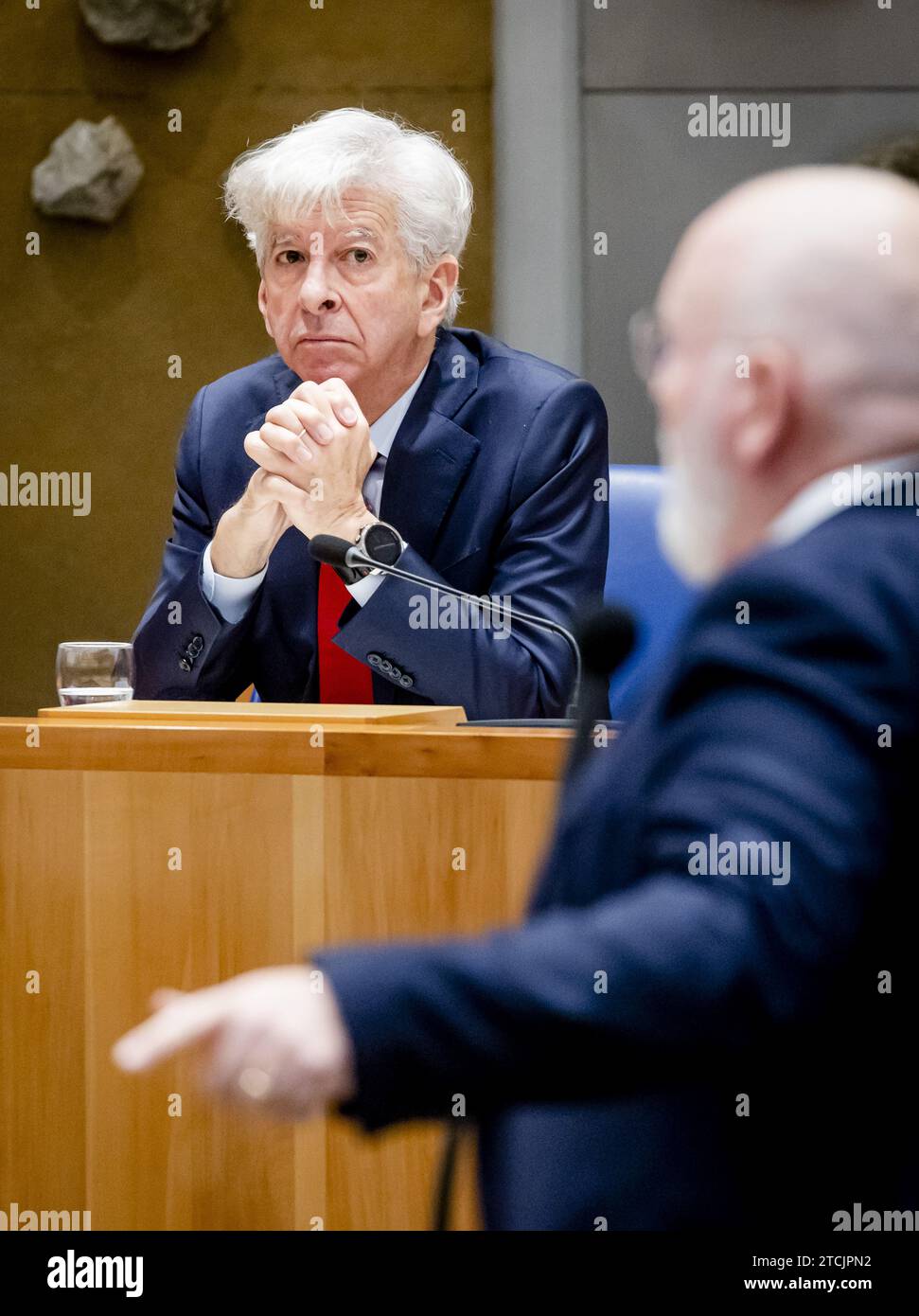
Former Dutch government negotiator Ronald Plasterk has publicly criticized a recent proposal from the political party D66, characterizing it as a potential strategy to dismantle the Party for Freedom (PVV). Plasterk, who previously led the coalition formation talks following the November 2023 general election, suggested that the legislative ideas put forward by D66 regarding party funding and organizational structure could be interpreted as a targeted effort to undermine the political viability of Geert Wilders’ party.
The debate centers on the legal and democratic frameworks governing political parties in the Netherlands. D66 has argued for stricter transparency and governance requirements for all political organizations, citing concerns over how parties are financed and managed. Plasterk, however, contends that these specific regulatory shifts appear designed to disproportionately affect the PVV, which operates under a unique, centralized structure where the PVV Association is the sole member.
Regulatory Scrutiny and the Structure of the PVV
The PVV maintains a distinct organizational model that has frequently drawn comment from political observers and legal scholars. According to the official statutes of the PVV, the party is organized as an association with a single member, Geert Wilders. This structure allows for centralized control over the party’s platform and candidate selection. While this model has functioned within Dutch electoral law for years, critics argue it lacks the internal democratic checks and balances typical of traditional Dutch political parties.

D66’s proposal aims to introduce broader legislative oversight, which supporters say would modernize the Dutch Political Parties Act. The party’s proponents suggest that regardless of the specific entity, all political movements receiving public funding should be subject to identical standards of internal democracy and financial accountability. Plasterk’s critique implies that the timing and nature of these proposals are not merely procedural, but rather a political maneuver intended to create an environment where the PVV’s current form of organization might be declared incompatible with new, more rigid legal standards.
The Debate Over Political Party Governance
The tension between regulating political parties and protecting the freedom of association is a long-standing issue in the Netherlands. The Dutch Electoral Council (Kiesraad) oversees the registration of political parties, ensuring they meet the requirements to participate in national elections. Under current law, the threshold for establishing a party is relatively low, which has allowed for a diverse and fragmented parliamentary landscape.

D66 maintains that its proposals are intended to strengthen the integrity of the democratic process. In various parliamentary debates, representatives have noted that the lack of internal democratic processes in some parties could lead to risks regarding transparency and political influence. By contrast, defenders of the current system, including some within the PVV and other conservative factions, argue that such regulations are a form of “administrative overreach” that infringes upon the right of citizens to organize politically as they see fit.
Political Context and Legislative Outlook
This dispute occurs against a backdrop of significant shifts in the Dutch political landscape. Following the 2023 elections, the PVV emerged as the largest party in the House of Representatives (Tweede Kamer), leading to complex negotiations to form a new government. Ronald Plasterk served as the ‘verkenner’ (scout) and later as the lead negotiator during the initial phases of these talks, providing him with a unique vantage point on the power dynamics currently at play in The Hague.

As the debate continues, the focus remains on whether the Dutch parliament will move to amend the laws governing political parties. Any legislative change would require a majority in both the Tweede Kamer and the Senate (Eerste Kamer). The outcome of these discussions will likely have lasting implications for how parties are structured, funded, and held accountable under Dutch law.
The next official step in this process will depend on whether D66 formally submits its proposal to the Council of State for review or schedules a debate within the parliamentary committee for the Interior. Interested parties can monitor official updates through the official website of the Tweede Kamer, where legislative agendas and committee reports are published regularly.
If you have thoughts on the balance between political regulation and party autonomy, please feel free to share your perspective in the comments section below.