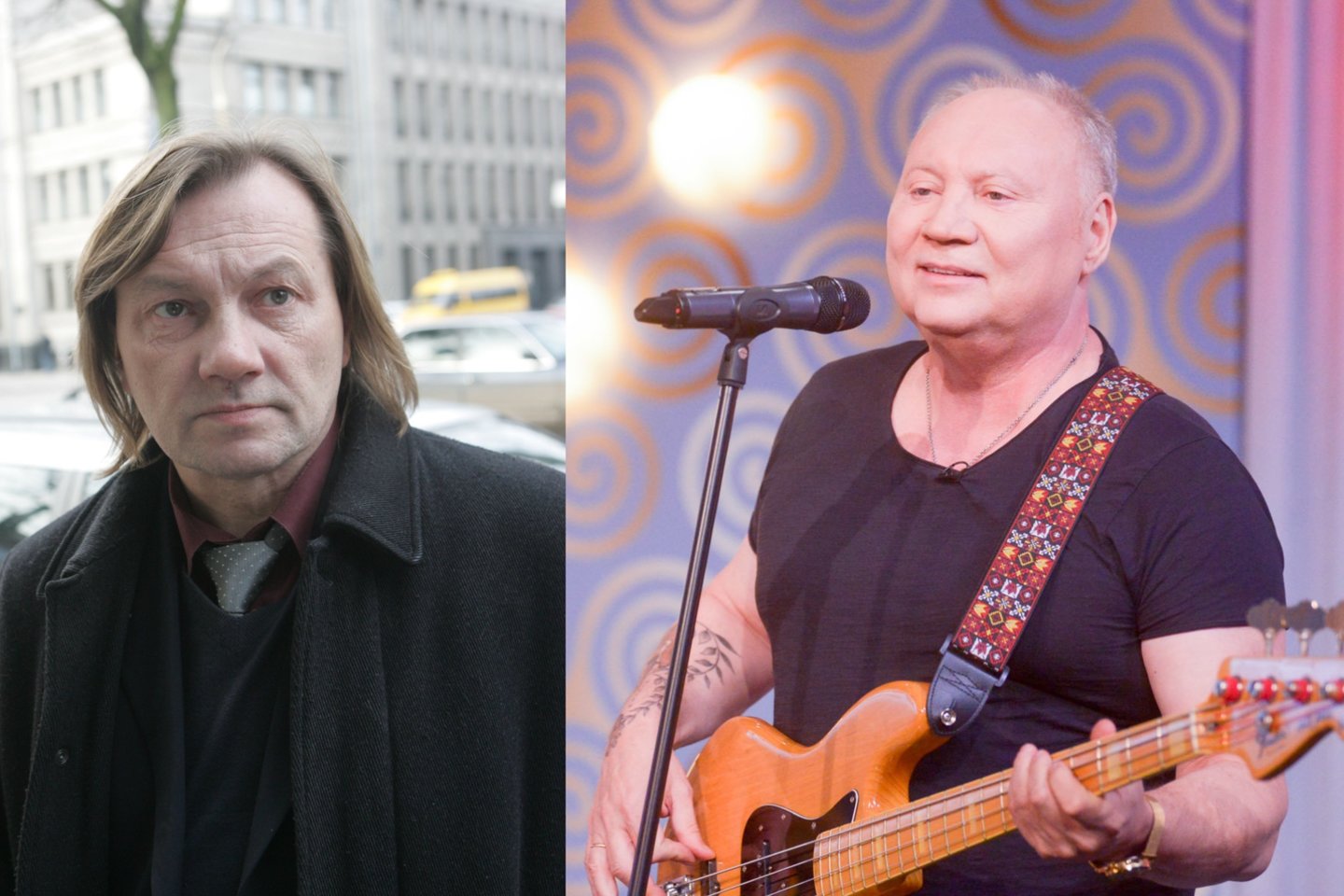
Founding Member Accuses ‘Rondo’ Frontman of Claiming Ownership of Iconic Lithuanian Band
A decades-long dispute over the ownership and legacy of the beloved Lithuanian band “Rondo” has resurfaced, with founding member Alvidas Tautkus alleging that vocalist Aleksandras Ivanauskas-Fara improperly secured the rights to the band’s name. The conflict, which centers on who has the authority to represent “Rondo,” has escalated in recent days following a statement from Ivanauskas-Fara regarding a planned tour by a group calling themselves “Brolių Tautkų Rondo” (The Tautkus Brothers’ Rondo). Tautkus, in a recent radio interview, claims Ivanauskas-Fara took a “crooked step” by unilaterally claiming ownership of the “Rondo” name without consultation or agreement.
The story of “Rondo” is deeply intertwined with Lithuania’s musical history. Formed during the Soviet era, the band became a symbol of cultural identity, and resistance. The current dispute highlights the complexities of artistic ownership and the challenges of preserving a shared cultural heritage. The core of the disagreement, as outlined by Tautkus, stems from a period of transition within the band when he stepped back from active performance to focus on management. This created an opportunity, he says, that Ivanauskas-Fara exploited to establish himself as the sole owner of the “Rondo” brand.
The Early Days of ‘Rondo’ and the Arrival of Ivanauskas-Fara
According to Tautkus, the origins of “Rondo” were humble. The band initially faced a personnel challenge when their bassist, Arūnas Armonas, was conscripted into the Soviet army. “We needed a bassist,” Tautkus explained in an interview on Žinių radijo’s “Radijo ritmas” program. “I heard that Aleksandras Ivanauskas was walking around Kaunas, free, so I found him and asked if he would like to play with us? He said he would. That’s how it stayed for a few years, we played.” This period marked the beginning of Ivanauskas-Fara’s association with the band, a collaboration that would ultimately lead to the current dispute. Lrytas.lt reported on the details of this account.
As Tautkus transitioned into a managerial role and his brother Gintas similarly became less involved in the band’s day-to-day activities, Ivanauskas-Fara’s wife, who worked at the same pop center, suggested that he continue performing under the “Rondo” name. Tautkus, at the time, saw no reason to object. “Why not? I invited him myself, he is our musician, let him continue,” he recalled. Yet, this seemingly amicable arrangement would later become a source of contention.
The Disputed Claim to Ownership
The crux of Tautkus’s grievance lies in Ivanauskas-Fara’s subsequent actions. Tautkus alleges that Ivanauskas-Fara registered the “Rondo” name in his own name without any prior discussion or agreement. “He did one thing, as I would say, a blunder: he ran and secured the name ‘Rondo’ for himself, as if he were the owner of this collective,” Tautkus stated. “It’s not beautiful, or anything. He didn’t come to inquire, he didn’t come to inform. That’s how ‘Rondo’ is now.”
This unilateral action, according to Tautkus, had concrete consequences. When he attempted to reissue a compact disc of the band’s music to commemorate a milestone anniversary, he was informed by LATGA, a Lithuanian copyright organization, that the rights to “Rondo” belonged to Ivanauskas-Fara. “They told me, ‘You know that ‘Rondo’ doesn’t belong to you?’ How doesn’t it belong to me? Whose is it then? They say, Aleksandras’,” Tautkus explained. 15min.lt also covered this aspect of the dispute.
Ivanauskas-Fara’s Response and the “Brolių Tautkų Rondo” Tour
The current conflict was reignited by Ivanauskas-Fara’s recent statement regarding the “Brolių Tautkų Rondo” tour. While details of his statement are limited, he views the tour, which appears to be organized by Tautkus and others, as unauthorized. This has prompted Tautkus to publicly address the issue and voice his concerns about Ivanauskas-Fara’s actions.
The emergence of “Brolių Tautkų Rondo” adds another layer of complexity to the situation. The name itself suggests an attempt to reclaim the band’s legacy and differentiate it from the version currently led by Ivanauskas-Fara. The tour’s organizers likely aim to emphasize the contributions of all founding members, including Tautkus and his brother, Gintas.
The Broader Implications for Lithuanian Music and Cultural Heritage
This dispute extends beyond a simple disagreement between musicians. It raises important questions about artistic ownership, the preservation of cultural heritage, and the rights of founding members in established bands. The case of “Rondo” serves as a cautionary tale for other Lithuanian artists and cultural institutions.
The issue of copyright and intellectual property rights is particularly relevant in the context of Lithuania’s transition from Soviet rule to an independent nation. During the Soviet era, artistic expression was often subject to state control, and ownership rights were often unclear. As Lithuania has embraced a market economy, these issues have become more prominent, leading to disputes like the one involving “Rondo.”
What Happens Next?
As of February 26, 2026, the situation remains unresolved. Ivanauskas-Fara has publicly addressed the tour organized by the Tautkus brothers, and Tautkus has voiced his grievances regarding the ownership of the “Rondo” name. It is unclear whether the parties will attempt to negotiate a settlement or whether the dispute will escalate further, potentially leading to legal action. Further updates on this developing story are expected as the “Brolių Tautkų Rondo” tour approaches and as both sides potentially seek legal counsel. Readers interested in following the developments can monitor Lithuanian news outlets such as TV3.lt for ongoing coverage.
What are your thoughts on this dispute? Share your opinions and insights in the comments below. Don’t forget to share this article with your friends and colleagues to keep the conversation going.
Keep reading