Unlocking Ancient Egypt: The Story of the Rosetta Stone
The Rosetta Stone stands as one of the most pivotal discoveries in archaeological history, a key that unlocked millennia of Egyptian history and culture. It wasn’t just a stone; it was a linguistic breakthrough that birthed the field of Egyptology. Let’s delve into its interesting story and the impact it continues to have today.
A Tri-Lingual Treasure
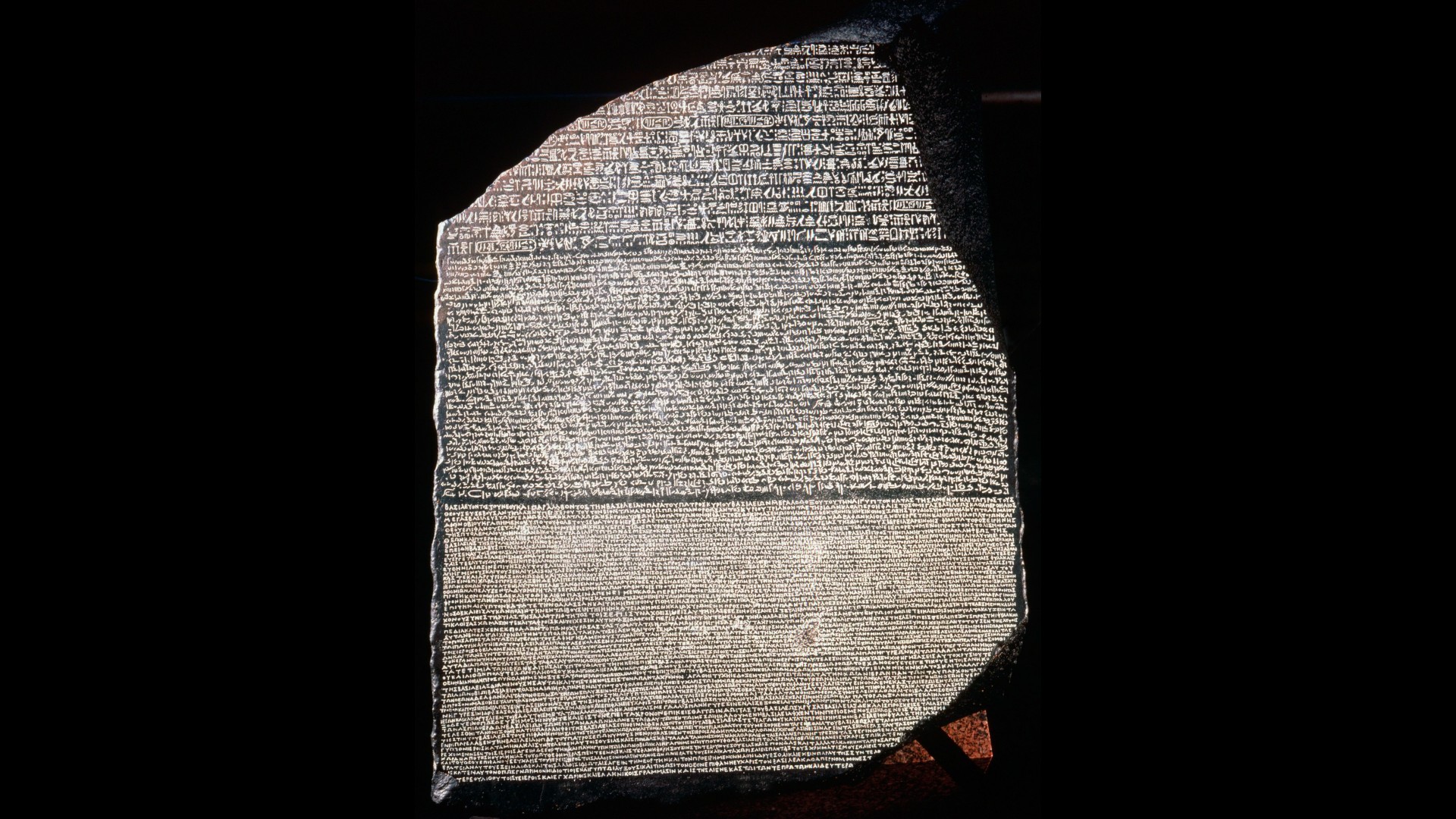
Discovered in 1799 during Napoleon’s campaign in Egypt, the Rosetta Stone quickly became a focal point for scholars eager to decipher the enigmatic hieroglyphs. It contained the same decree inscribed in three scripts: hieroglyphic, demotic, and Ancient Greek. Ancient Greek was well understood, providing a crucial entry point for understanding the others.
The Race to Decipher
Initially, progress was slow. Thomas Young, a brilliant English polymath, made notable strides in the early 1800s. he correctly identified that some hieroglyphs represented phonetic sounds, specifically deciphering the phonetic hieroglyphs for the name “Ptolemy.” Though, Young believed this phonetic usage was limited to names and foreign words.
Jean-François Champollion, a French scholar, fundamentally disagreed.He passionately believed hieroglyphs constituted a complete, decryptable alphabet. Champollion systematically compared the Greek and Coptic texts to the hieroglyphic inscriptions, meticulously working to identify the sounds each symbol represented.
A Moment of Revelation
Legend has it that Champollion experienced a moment of profound realization, even fainting from the excitement upon fully deciphering the text. While the fainting story is likely embellished, his proclamation to the Académie des Inscriptions et Belles-Lettres in Paris marked a turning point. His work definitively proved that hieroglyphs were not merely symbolic, but a complex writing system capable of conveying language.
the Birth of Egyptology
The rosetta Stone’s translation revolutionized our understanding of ancient Egypt. It opened a window into a sophisticated civilization that flourished for over 5,000 years along the Nile River. Suddenly,a wealth of previously inaccessible knowledge became available.
What We’ve Learned
Thanks to the Rosetta Stone, we’ve gained amazing insights into ancient Egyptian life, including:
* Religious Beliefs: You can now explore the elaborate rituals and beliefs detailed in texts like the Book of the Dead.
* Mummification Practices: Detailed embalming recipes have been reconstructed, revealing the intricate processes used to preserve the dead.
* Daily Life: We have a vivid picture of the lives of both pharaohs and commoners.
* Dynastic History: The histories of the dynasties that ruled Egypt for millennia have been untangled and understood.
A Contested Legacy
Currently, the Rosetta Stone resides in the British Museum, having been taken as a spoil of war.for decades, Egypt has formally requested its repatriation, arguing that it is an integral part of their national heritage.This ongoing debate highlights the complex issues surrounding cultural ownership and the legacy of colonialism.
The Rosetta Stone remains a powerful symbol of discovery, linguistic ingenuity, and the enduring allure of ancient Egypt.It continues to inspire researchers and captivate the public, ensuring that the stories of this remarkable civilization will be told for generations to come.