
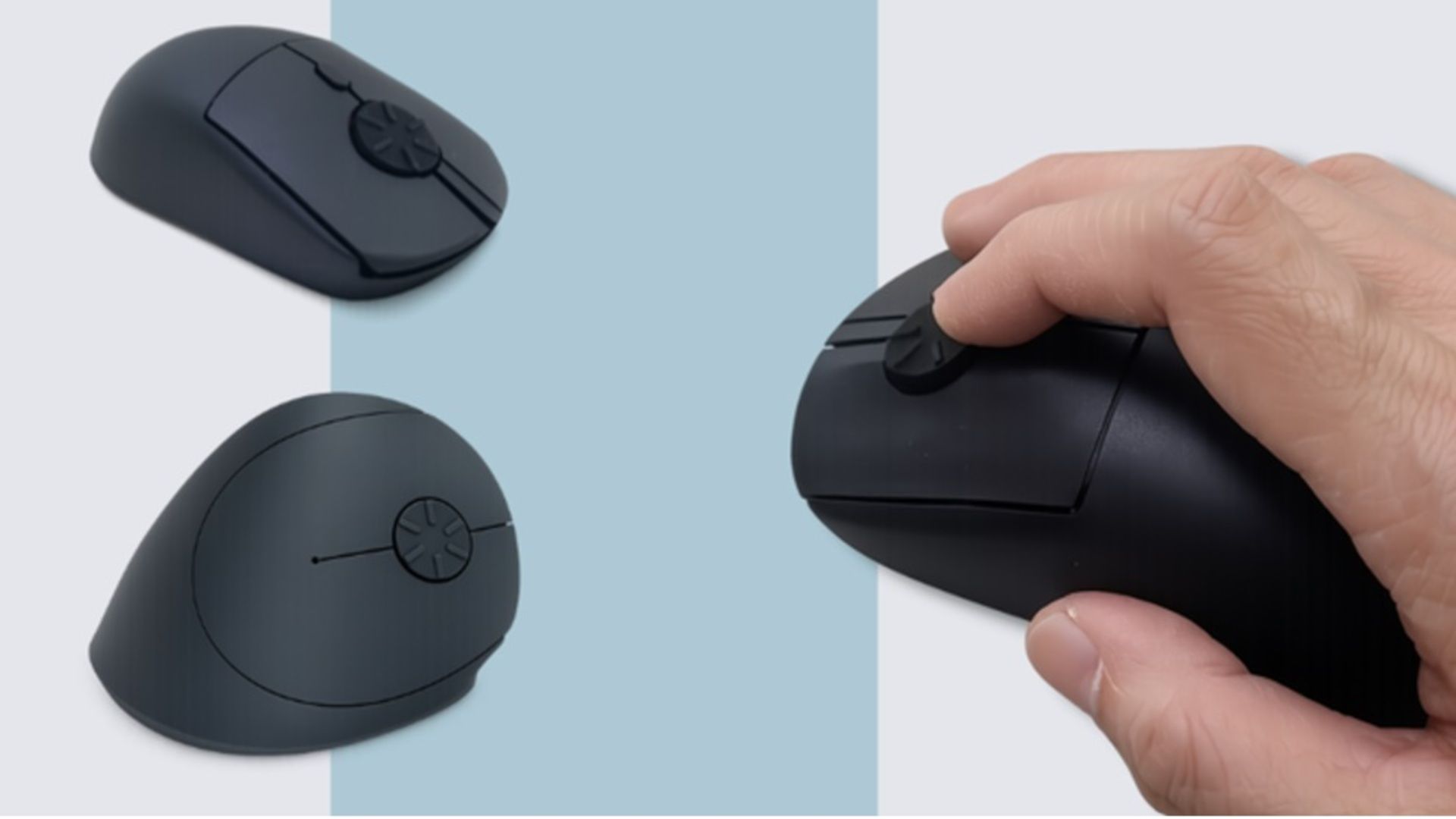
The Rotary Mouse, a new input device developed by electronics engineer Melvin Wong, replaces the traditional vertical scroll wheel with a continuous rotary dial to increase navigation speed. According to the project’s Kickstarter campaign, the device allows users to scroll through documents and spreadsheets up to 2.5 times faster than a standard mouse wheel while reducing repetitive finger strain.
The hardware shifts the mechanical input from a clicking flick to a knob-like rotation, which the developer claims provides a more fluid motion for professional workflows. The device is currently seeking funding via a Kickstarter campaign, where it has raised $3,654 of a $14,794 goal from 61 backers as of the latest update.
Wong designed the mouse to address finger fatigue during long computing sessions, utilizing 3D printing for early prototypes before moving to production units. The device targets users who frequently “scrub” through long timelines or large datasets, such as video editors and simulation gamers.
How does the rotary dial improve productivity?
The primary technical change is the replacement of the traditional scroll wheel with a rotary dial. While standard mice require repeated up-and-down movements, the Rotary Mouse uses a continuous motion that the campaign describes as turning a knob. This allows for faster traversal of digital workspaces and more precise stopping points when navigating a page.
For video professionals using software like Adobe Premiere Pro or DaVinci Resolve, the dial functions as a scrubbing tool. This allows editors to move through video timelines with more fluidity than traditional scrolling. The device also includes tactile feedback in the form of clicks during rotation to help users maintain control at higher speeds.
The mouse maintains versatility by supporting conventional vertical scrolling, meaning users do not have to abandon standard input methods entirely. It features an optical sensor with three switchable DPI sensitivity settings—800, 1200, and 1600—to adjust cursor precision based on the task.
What are the technical specifications and compatibility?
The device is housed in a matte black ergonomic shell measuring 119 mm by 64 mm by 40 mm. It is designed for lightweight use, weighing 59g without the battery. Connectivity is handled via a 2.4 GHz wireless USB receiver, and the device is powered by a single AAA alkaline battery.

According to the developer, the Rotary Mouse is compatible with the following operating systems:
- Windows
- macOS
- Linux
- Android
The hardware also features silenced left and right buttons, with a middle button integrated directly into the rotary wheel assembly.
Can it be used for gaming and simulations?
Beyond office productivity, the rotary input can be mapped to specific in-game controls. In simulation racing titles such as Euro Truck Simulator 2, Assetto Corsa, and BeamNG.drive, the dial can be used for steering. This provides a compact alternative to full steering wheels or keyboard inputs, allowing for the gradual steering adjustments required in simulation software.
This application of the rotary dial mirrors the “knob” inputs found on high-end professional audio mixers or specialized sim-racing hardware, bringing a similar tactile control to a standard mouse form factor.
What is the current availability and shipping timeline?
The Rotary Mouse is not yet available for general retail. It is currently in the crowdfunding stage on Kickstarter. The development team reports that more than 30 pre-production “Founder’s Edition” units have already been sold to early testers.

The project is aiming to begin shipping the final production version of the mouse by December 2026. However, as with all crowdfunding initiatives, this date is subject to production risks and potential delays.
Independent verification of the 250% speed increase claim remains limited, as most current data stems from the developer’s testing phases and early adopter reports. Real-world performance will likely vary based on the specific software and the user’s physical interaction with the dial.
The next major milestone for the project is the conclusion of its Kickstarter campaign, with approximately 18 days remaining for backers to contribute toward the $14,794 funding goal.
Do you think a rotary dial could replace the standard scroll wheel in your workflow? Share your thoughts in the comments below.