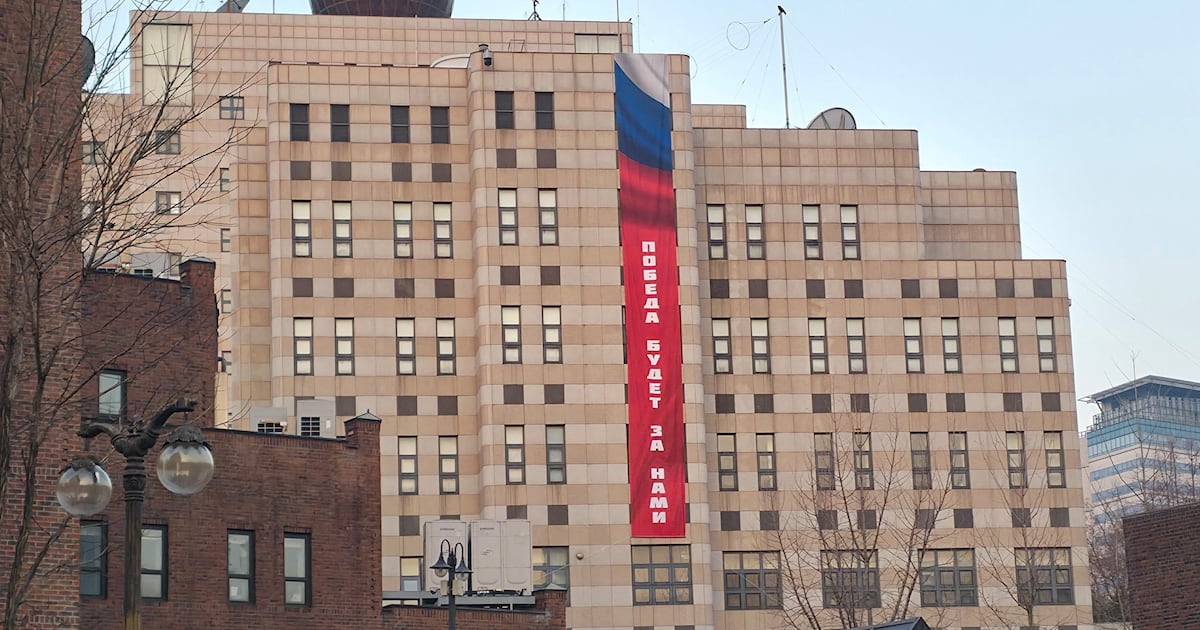
Russia Defies South Korean Government, Displays “Victory Will Be Ours” Banner on Embassy Wall
Seoul, South Korea – In a move escalating diplomatic tensions, the Russian embassy in Seoul has refused to remove a large banner proclaiming “Victory Will Be Ours” (Победа будет за нами), despite a direct request from the South Korean Ministry of Foreign Affairs. The banner, displayed on the embassy building in Jung-gu, Seoul, appeared ahead of the fourth anniversary of Russia’s invasion of Ukraine, scheduled for February 24th. This act of defiance underscores the increasingly strained relationship between South Korea and Russia, and raises questions about the limits of diplomatic protocol.
The display of the banner has been met with criticism from South Korean officials, who view it as an inappropriate and provocative gesture, particularly given the ongoing conflict in Ukraine. The Ministry of Foreign Affairs formally requested the embassy to remove the banner, citing concerns about its potential to inflame tensions and undermine international efforts to resolve the crisis. Yet, the Russian embassy has so far rejected the request, asserting its right to express its position. This incident highlights a growing pattern of disregard for diplomatic norms exhibited by Russia in its interactions with various nations.
A History of Diplomatic Friction
What we have is not an isolated incident in the complex history of South Korea-Russia relations. Over the past two decades, diplomatic issues with Russia have led to the removal of two South Korean Foreign Ministers, suggesting a deep-seated difficulty in navigating the relationship. In 1998, Foreign Minister Park Jung-soo was replaced following a spy-for-spy exchange between the two countries. This history, as noted by some analysts, points to a “Russia phobia” within the South Korean Foreign Ministry, potentially leading to overly cautious and ineffective responses to Russian actions.
The current situation is further complicated by concerns about potential corruption within South Korean overseas missions. Reports from 2024, as detailed by journalist Lee Ha-won, revealed allegations of budget misuse and illicit activities, including casino gambling and acceptance of bribes, within South Korean embassies. These issues have raised questions about the oversight and accountability of South Korean diplomats, and could potentially weaken the country’s position in international negotiations.
The Banner and Broader Geopolitical Context
The choice of language on the banner – “Victory Will Be Ours” – is a direct echo of rhetoric used by the Russian government to justify its actions in Ukraine. It represents a clear statement of intent and a rejection of international calls for a peaceful resolution to the conflict. The placement of the banner on the embassy wall in Seoul is a deliberate act of signaling, intended to demonstrate Russia’s unwavering commitment to its goals, despite international condemnation. This display is particularly noteworthy given South Korea’s strong alliance with the United States and its support for Ukraine.
The incident also occurs against a backdrop of increasing global scrutiny of Russian activities abroad. Many countries have imposed sanctions on Russia in response to its invasion of Ukraine, and have taken steps to limit its diplomatic presence. The South Korean government has joined these efforts, but the banner incident suggests that Russia is unwilling to moderate its behavior, even in the face of international pressure. The refusal to comply with the Foreign Ministry’s request could lead to further diplomatic repercussions, potentially including the expulsion of Russian diplomats or the downgrading of diplomatic relations.
South Korea’s Response and Future Implications
The South Korean government’s response to the banner has been carefully calibrated, balancing the need to express its disapproval with the desire to avoid further escalating tensions. While the Ministry of Foreign Affairs has publicly condemned the display, it has also emphasized the importance of maintaining communication channels with Russia. This approach reflects a recognition that completely severing ties with Russia could be counterproductive, particularly given the potential for future negotiations.
However, the incident has sparked a debate within South Korea about the country’s overall strategy towards Russia. Some critics argue that the government has been too hesitant to confront Russia, and that a stronger stance is needed to deter further provocative actions. Others maintain that a more cautious approach is necessary, given Russia’s geopolitical importance and its potential to disrupt regional stability. The incident has also raised questions about the effectiveness of South Korea’s diplomatic efforts, and whether the country needs to reassess its approach to dealing with Russia.
The situation is further complicated by the internal challenges facing the South Korean Foreign Ministry, including concerns about corruption and a perceived lack of assertiveness. Addressing these issues will be crucial if South Korea is to effectively navigate the increasingly complex geopolitical landscape and protect its interests. The banner incident serves as a stark reminder of the challenges involved in dealing with a country that appears increasingly willing to disregard international norms and diplomatic protocols.
Key Takeaways
- The Russian embassy in Seoul has defied a request from the South Korean Ministry of Foreign Affairs to remove a banner proclaiming “Victory Will Be Ours.”
- This incident highlights the strained relationship between South Korea and Russia, particularly in the context of the ongoing conflict in Ukraine.
- A history of diplomatic friction and concerns about corruption within the South Korean Foreign Ministry complicate the situation.
- The banner represents a deliberate act of signaling by Russia, demonstrating its unwavering commitment to its goals.
- The incident raises questions about South Korea’s overall strategy towards Russia and the effectiveness of its diplomatic efforts.
The South Korean government is expected to continue to engage with the Russian embassy on this issue, seeking a resolution that respects international norms and avoids further escalation. The next step will likely involve further diplomatic consultations and potentially the convening of a formal meeting between South Korean and Russian officials. Readers can stay updated on this developing story through official statements from the South Korean Ministry of Foreign Affairs and reports from reputable international news organizations.
What are your thoughts on the Russian embassy’s actions? Share your comments below and let us know how you think South Korea should respond. Don’t forget to share this article with your network to keep the conversation going.
Related reading