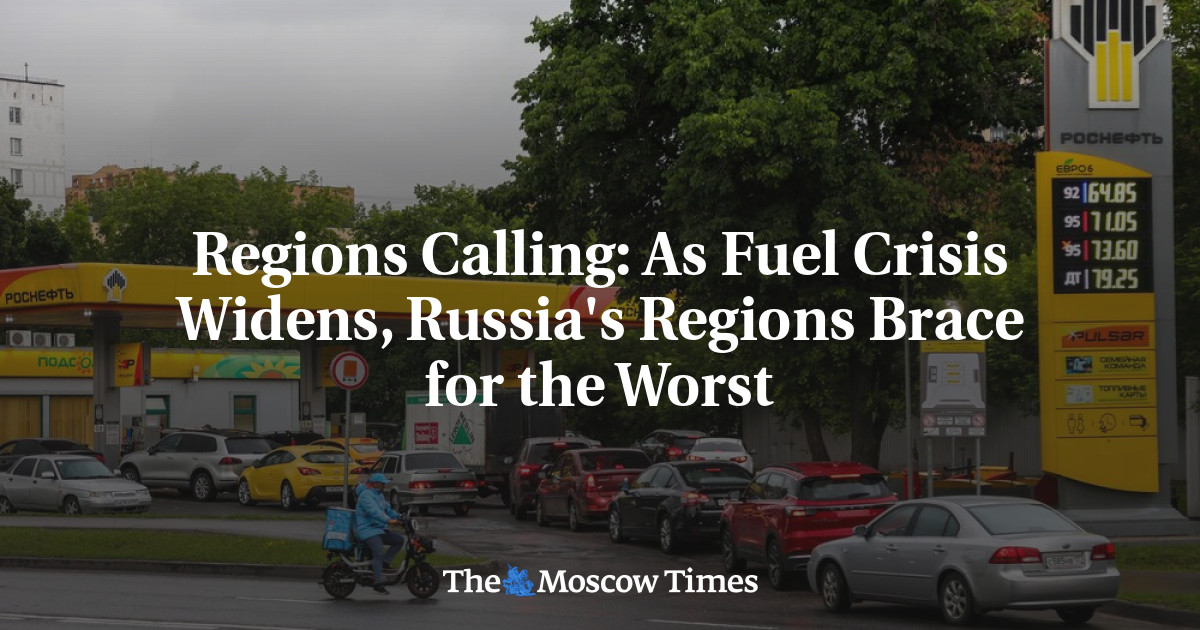
Russia’s domestic fuel market is facing significant volatility as a series of long-range drone strikes on oil refineries forces a shift in regional distribution and supply management. According to data from the International Energy Agency, these strikes have impacted a notable portion of Russia’s primary oil processing capacity, leading to localized shortages and increased pressure on supply chains across the country’s interior regions. As federal authorities scramble to stabilize prices and ensure consistent delivery to agricultural and industrial hubs, the situation remains a primary focus of government oversight committees.
Infrastructure Vulnerability and Regional Impacts
The disruption to Russia’s energy sector follows a targeted campaign against critical infrastructure, including refineries in Nizhny Novgorod, Ryazan, and Samara. As reported by Reuters, the reduction in operational capacity at these facilities has prompted the Russian government to increase gasoline imports from neighboring Belarus to mitigate the risk of domestic deficits. The impact is felt most acutely in regions far from the primary production centers, where logistics networks are struggling to compensate for the sudden loss of local supply.

Regional authorities in areas such as Belgorod and Kursk have reported increased challenges in maintaining fuel reserves for essential services. The Russian Ministry of Energy has stated that it is currently prioritizing the delivery of fuel to agricultural sectors to ensure that seasonal planting and harvesting activities are not interrupted. Despite these efforts, independent analysts, including those cited by the Financial Times, suggest that the “fuel crisis” label reflects a structural strain caused by the loss of secondary processing units, which are more difficult to repair than primary crude distillation units.
Government Response and Market Controls
To combat rising costs and supply uncertainty, the Russian government implemented a temporary ban on gasoline exports, which began on March 1, 2024, and was extended to run through the end of August. According to an official statement from the Russian Cabinet of Ministers, this measure is designed to saturate the domestic market and prevent price spikes during the high-demand summer season. The policy shift serves as a direct intervention to stabilize retail prices, which had seen upward pressure as refinery throughput declined.
.svg/220px-Subdivisions_of_the_Russian_Empire_by_largest_ethnolinguistic_group_(1897).svg.png "Government Response and Market Controls")
The efficacy of these measures is being monitored by the Federal Antimonopoly Service (FAS), which has been tasked with investigating potential price gouging by fuel wholesalers. In regions where supply remains tight, local administrations have been authorized to coordinate directly with major oil companies to secure priority shipments. However, the reliance on rail transport—which is already heavily burdened by other industrial needs—remains a bottleneck in the current supply chain strategy.
The Long-Term Outlook for Energy Security
The central question facing energy analysts is how quickly Russia can repair its damaged refinery infrastructure. Because many of these facilities rely on imported high-tech components for secondary processing—such as catalytic cracking units—the timeline for full restoration is tied to the availability of specialized equipment and technical expertise. As noted in a report by the Carnegie Endowment for International Peace, the long-term sustainability of the Russian fuel market depends on the ability to circumvent trade restrictions to procure these essential industrial parts.
For the average consumer in Russia’s regions, the current situation translates into a period of heightened uncertainty regarding fuel availability at independent gas stations. While major chains are generally better insulated due to their vertical integration, smaller retail outlets have faced intermittent stockouts. The situation is expected to persist as long as the conflict continues to target the energy sector, making it a critical metric for monitoring the broader economic impact on the Russian interior.
Frequently Asked Questions
Why are fuel shortages occurring in Russia?
According to reports from major financial news outlets, the shortages are primarily caused by drone attacks on oil refineries, which have reduced the country’s capacity to produce refined gasoline and diesel for the domestic market.

What is the government doing to fix the supply?
The government has instituted an export ban on gasoline, increased imports from Belarus, and instructed the Federal Antimonopoly Service to monitor fuel pricing to ensure market stability.
Which regions are most affected?
While the impact is national, regions that rely on specific refineries currently under repair or those with limited rail access to alternative supply hubs are experiencing the highest level of volatility.
The next major checkpoint for market stability will be the review of the export ban extension, which is slated for consideration by the Ministry of Energy as the autumn harvest season approaches. Readers are encouraged to monitor updates from the Russian Ministry of Energy and official regional government portals for the most current information regarding local fuel availability and policy changes. Share your observations on how these supply shifts have affected your local area in the comments section below.
Worth a look