Navigating the Escalation: NATO‘s Response to Russian Airspace Probes and the Delicate Balance of Deterrence
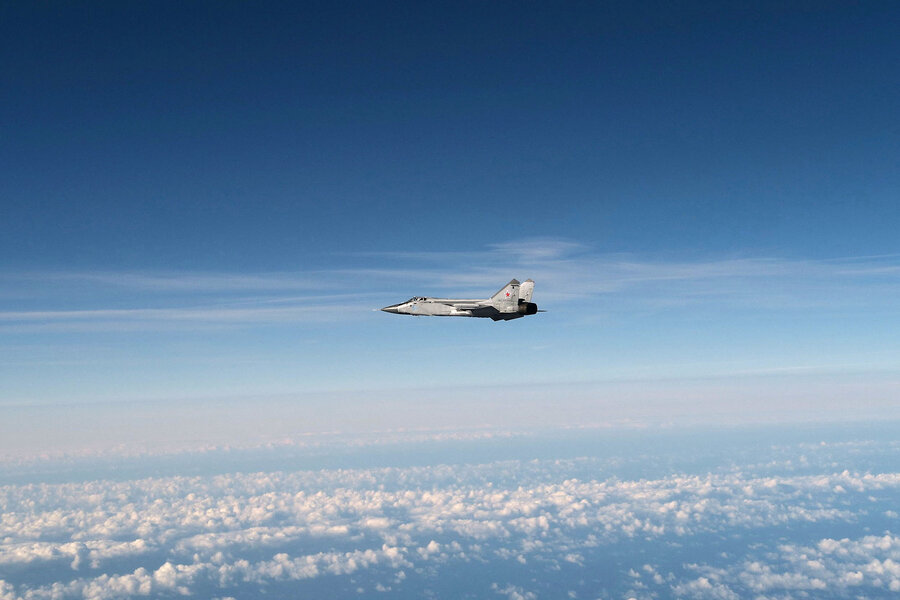
Recent incursions by Russian MiG fighter jets into Estonian airspace have reignited a critical debate within NATO: how to respond to increasingly frequent provocations without triggering a wider conflict. The incident, and NATO’s measured response, highlights the complex calculations the alliance faces in deterring further aggression while avoiding escalation. This article will delve into the nuances of these events, the internal discussions within NATO, and the potential pathways forward.
The Estonian Incursion: A Pattern of Probes
On September 24th, 2025, Italian air Force pilots stationed at Ämari Air Base in Estonia intercepted two Russian MiG aircraft that briefly violated Estonian airspace. This wasn’t an isolated event. These incursions are becoming more common, prompting NATO to repeatedly invoke Article 4 – a consultation clause meant to signal a potential threat.
You might be wondering, what does this mean? Essentially, Article 4 allows any member state to request consultations with other NATO members when they feel their territorial integrity, political independence, or security is threatened.
The Debate Within NATO: Is article 4 Losing its Impact?
While Article 4 serves as a crucial dialogue tool, some question whether its frequent use is diminishing its effectiveness. Is repeatedly signaling concern to adversaries diluting the message?
Experts like Jacob Parakilas at RAND Europe argue that the impact lessens with each invocation. it’s a “big thing to do,” he notes,but the signal weakens the more often it’s sent.
However,others advocate for a more assertive response. Czech President Petr Pavel, a former chair of NATO’s Military committee, believes the alliance needs to demonstrate a stronger resolve. He suggests a decisive response – like shooting down intruding aircraft - could quickly convey the seriousness of crossing established boundaries.
Lessons from the Past: Turkey’s 2015 Response
Lithuania’s defense minister recently pointed to Turkey’s 2015 downing of a Russian Su-24 fighter jet as a potential model. That incident,lasting just 17 seconds,didn’t immediately provoke a large-scale Russian retaliation.
Dr. Parakilas explains that when an aircraft is “unambiguously in enemy airspace,that’s a legitimate target.” Ancient precedent supports this.Numerous incidents during the Cold War involved the downing of intruding aircraft – including American reconnaissance planes – without escalating into war.
The Risks of Escalation: Piloted vs. Unmanned Aircraft
Despite these historical examples,a critical distinction exists between shooting down unmanned drones and targeting piloted aircraft. The stakes are significantly higher when human lives are at risk.
the challenge lies in establishing clear rules of engagement. These rules must remove the burden of split-second decisions from “relatively low-level troops” and define precisely when and whether to engage a crewed aircraft.
Current Protocol: Interception and Escort
Currently, NATO’s protocol involves intercepting intruding aircraft and escorting them out of member airspace. This is precisely what happened in Estonia. Italian pilots relayed their observations to NATO command and control, which authorized the escort.
Though,Colonel Gaetano Farina of the Italian Air Force clarifies that this protocol can change. If a NATO pilot’s life is threatened, they are authorized to act in self-defense. He emphasizes the growing network of sensors tracking Russian aircraft, constantly probing NATO’s defenses.
Understanding Russia’s Calculations
Intelligence suggests Russia is acutely aware of its military disadvantage compared to NATO. Estonian Defense Minister Hanno Pevkur believes this awareness is a key deterrent.
“And this calculation that they have no chance,” he states, “is the calculation we want them to have.” The goal isn’t necessarily to provoke a direct confrontation, but to reinforce the understanding that any important aggression would be met with overwhelming force.
Key Takeaways for You:
* Increased Russian Probes: Expect continued airspace incursions as Russia tests NATO’s resolve.
* Article 4’s Role: While valuable for consultation, its overuse may diminish its impact.
* The Deterrence balance: NATO is walking a tightrope between demonstrating strength and avoiding escalation.
* Clear Rules of Engagement: Establishing clear guidelines for engagement is crucial to prevent miscalculation.
*
Worth a look