
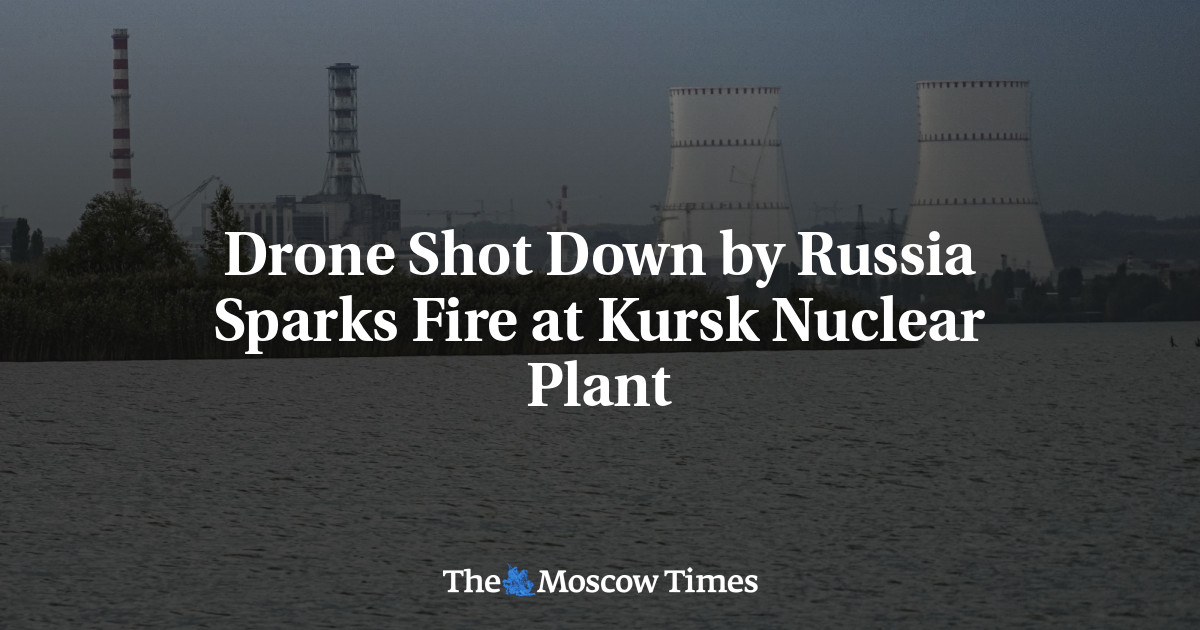
Drone Strike Sparks Fire at Kursk Nuclear power Plant: Assessing the Risks and Escalating tensions
A concerning incident unfolded Sunday at the Kursk Nuclear Power Plant in western Russia, as a fire erupted following the downing of a Ukrainian drone. While authorities report the blaze was quickly extinguished and radiation levels remain stable, the event underscores the growing vulnerability of critical infrastructure in the ongoing conflict and raises serious questions about nuclear safety in a war zone. This incident, coupled with simultaneous drone attacks on fuel terminals, signals a potential escalation in UkraineS strategy and a heightened risk profile for energy and nuclear facilities.
what Happened at the Kursk NPP?
According too official statements from the plant, a “device detonated” upon impact at the Kursk Nuclear Power Plant. This triggered a fire that was promptly contained by on-site fire crews. Crucially, there were no reported casualties, and the plant confirmed that the radiation background both within the facility and in the surrounding area remains at normal levels. Capacity at the plant had been reduced prior to the incident, potentially mitigating further risk.
However,the fact that a drone reached the facility – even if intercepted - is a important security breach. The Kursk NPP is located relatively close to the Russia-Ukraine border, west of the city of Kursk, a regional capital with a population of approximately 440,000. This proximity makes it a potential target, and the incident highlights the challenges of defending such vital infrastructure.
Beyond Kursk: Widespread drone activity & Fuel Depot fires
The attack on the Kursk NPP wasn’t an isolated event. Russian authorities together reported intercepting ukrainian drones over various regions, including St. Petersburg, a city far from the immediate conflict zone.More substantially, ten drones targeted the port of Ust-Luga on the Gulf of Finland, igniting a fire at a fuel terminal owned by Novatek, a major Russian energy company.
These attacks on fuel infrastructure are consistent with Ukraine’s strategy of disrupting Russia’s energy sector – a key source of revenue funding the war effort. Recent reports indicate a direct correlation between Ukrainian drone strikes and rising fuel prices within Russia. According to data from Kommersant (August 23, 2024), average gasoline prices have increased by 8% in the last month alone, a trend directly attributed to disruptions in supply chains caused by these attacks.
Ukraine’s Response: Missile and Drone Barrage
In a reciprocal action, Ukraine reported being targeted overnight by a Russian ballistic missile and a swarm of 72 Iranian-made Shahed drones.While the Ukrainian air force claims to have intercepted and destroyed 48 of the drones, the sheer volume of the attack demonstrates Russia’s continued reliance on aerial bombardment. tragically, a Russian drone strike resulted in the death of a 47-year-old woman in the Dnipropetrovsk region of eastern Ukraine.
The Growing Threat to Nuclear Facilities: IAEA Warnings
The International Atomic Energy Agency (IAEA) has consistently warned about the dangers of military activity near nuclear power plants since Russia’s invasion of Ukraine in February 2022. The potential for damage to critical systems – such as cooling mechanisms – could lead to a catastrophic release of radiation. The IAEA’s Director General,Rafael Grossi,has repeatedly called for a demilitarized zone around the Zaporizhzhia Nuclear Power Plant,which has been under Russian control for an extended period and remains a major source of concern.https://www.iaea.org/
Understanding the risks: Nuclear Plant Security & Drone Warfare
The Kursk incident raises several critical questions about nuclear plant security in the age of drone warfare. Traditional security measures are designed to protect against physical attacks, but drones present a new and evolving threat.
Drone Detection & Countermeasures: Nuclear facilities need robust drone detection systems and effective countermeasures, including jamming technology and directed energy weapons.
Physical Hardening: Strengthening the physical protection of critical infrastructure, such as reactor buildings and cooling systems, is essential.
Emergency Response Protocols: Clear and well-rehearsed emergency response protocols are vital to mitigate the consequences of a successful attack.
International Cooperation: Enhanced international cooperation and information sharing are crucial to address the global threat to nuclear facilities.
What Does This Mean for the Future?
The attack on the Kursk Nuclear Power Plant is a stark reminder of the risks associated with the ongoing conflict in Ukraine. It highlights the potential for escalation and the vulnerability of critical infrastructure. While the immediate threat appears to have been contained, the incident


![Wednesday News: Latest Updates & Headlines – [Date]](https://assets.thelocal.com/cdn-cgi/rs:fit:1200/quality:75/plain/https://apiwp.thelocal.com/wp-content/uploads/2025/12/watermarks-logo-visigoth-crown.jpg@webp "Wednesday News: Latest Updates & Headlines – [Date]")


