
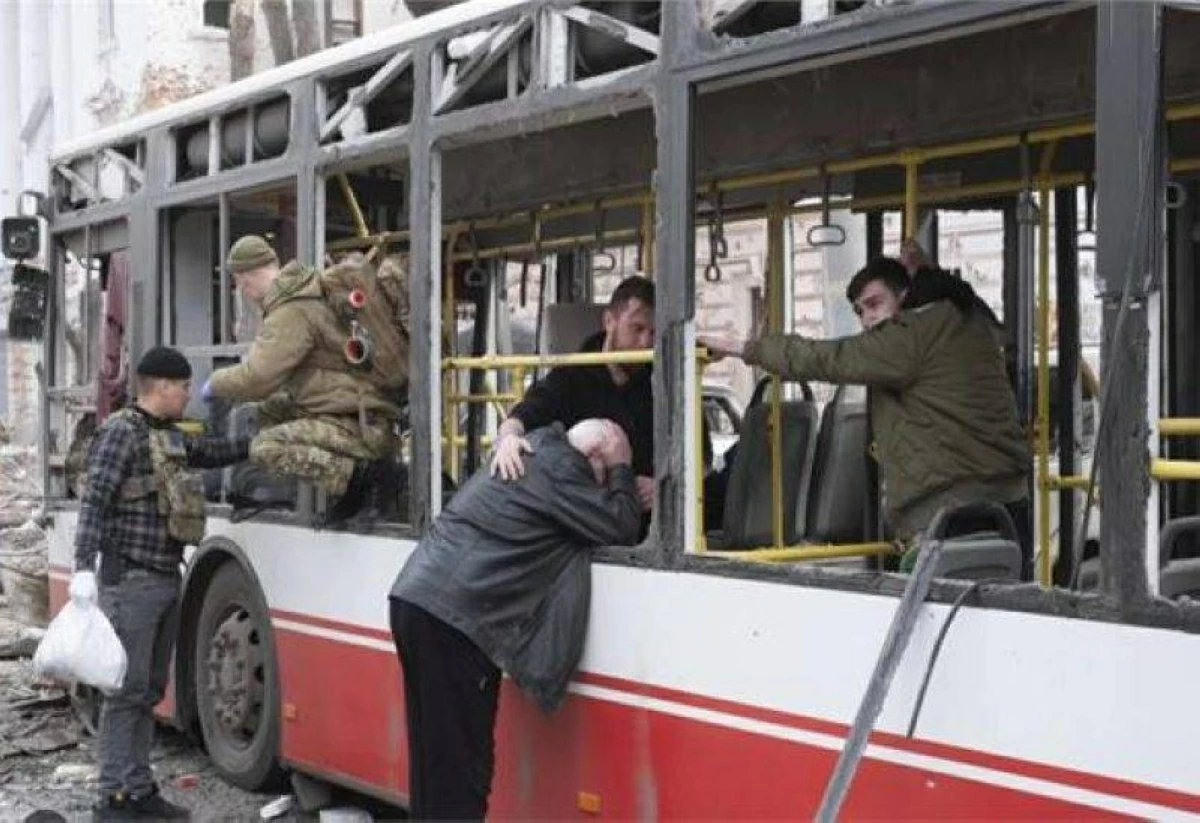
The ongoing conflict in southern Ukraine has seen a marked escalation in aerial assaults targeting civilian infrastructure, with the city of Kherson remaining a primary focal point of Russian drone operations. In a series of targeted strikes, Russian forces have repeatedly hit public transport and commuters, underscoring the precarious nature of daily life for those remaining in the region.
Recent reports from the Kherson Regional Military Administration indicate a pattern of attacks utilizing First-Person View (FPV) drones to strike route buses and individual civilians. These operations are part of a broader surge in long-range aerial activity; according to data analyzed by ABC News, Russia launched at least 6,804 long-range drones and missiles into Ukraine during April 2026, marking the most intense month of such attacks since the war began.
The strategic targeting of public transport in Kherson reflects a wider trend of attrition and psychological pressure. By striking “marshrutkas”—the small route buses essential for local mobility—Russian forces disrupt the basic functioning of the city and increase the risk for non-combatants navigating the Dnipro district.
Pattern of Attacks on Kherson Public Transport
The vulnerability of Kherson’s transit system has been highlighted by several specific incidents over the last few months. On April 17, 2026, Russian drones struck a route bus in the Dnipro district of Kherson, resulting in injuries to both the driver and passengers, as reported by Mezha. During the same window of activity, a drone dropped an explosive device on a cyclist, causing significant shrapnel wounds and leg injuries.
Earlier in the spring, the intensity of these strikes was similarly evident. On March 11, Russian forces attacked a minibus in the city, which resulted in 10 people being wounded, including a 17-year-old teenager, according to reports from 112.ua. While some attacks have caused only vehicle damage—such as a strike on a municipal minibus reported by Yaroslav Shanko, Head of the Kherson City Military Administration, on March 29—the frequency of these engagements suggests a deliberate effort to target civilian movement.
These incidents are not isolated but are integrated into a wider tactical framework. The use of FPV drones allows Russian operators to maintain precision over low-altitude targets, turning routine commutes into high-risk maneuvers. For the residents of Kherson, the simple act of boarding a bus has become a gamble with their lives.
The Human Cost of Aerial Attrition
The impact of these strikes extends beyond the immediate casualties. The psychological toll of “drone terror” creates a climate of constant vigilance. When public transport is targeted, the ability of the population to access healthcare, food, and essential services is severely curtailed. The Kherson Regional Military Administration has noted that the strikes often target not only vehicles but also public transport stops and surrounding infrastructure.
The situation reached a critical point on May 1, 2026, when overnight drone attacks in Kherson killed one person and damaged several private homes and apartment buildings, according to Mezha. The head of the regional administration, Yaroslav Shanko, confirmed that rescuers and law enforcement were deployed to manage the aftermath of the destruction.
Strategic Context: A Record-Breaking Month of Strikes
The attacks in Kherson are occurring against a backdrop of unprecedented aerial volume. The Ukrainian Air Force reported facing 6,663 drones and 141 missiles throughout April 2026. This surge suggests a Russian strategy of saturating Ukrainian defenses to identify gaps and exhaust air-defense munitions.
This aerial offensive is coinciding with a period of high-stakes diplomacy and shifting battlefield dynamics. Ukrainian President Volodymyr Zelenskyy has recently indicated he is seeking further details regarding a short-term ceasefire proposal from Russia, which was reportedly discussed with U.S. President Donald Trump, as noted by NPR. However, the continued strikes on civilian targets in Kherson and other regions suggest that tactical aggression remains a priority for the Kremlin despite these diplomatic overtures.
Simultaneously, Ukraine has begun to project its own air power deeper into Russian territory. In the past week, Ukrainian forces have targeted oil storage, ports, and refineries in the Urals, some as far as 1,600 kilometers from the border, according to Al Jazeera. This “tit-for-tat” escalation in long-range strikes has increased the volatility of the conflict, with both sides attempting to leverage aerial dominance to force concessions.
Kherson’s Dnipro Delta Deadlock
While the air war intensifies, the ground situation in the Kherson region remains a grueling stalemate. Reports from the partisan group Atesh indicate that Russian forces are struggling to advance in the Dnipro River delta, citing the difficulty of moving equipment and ammunition under constant Ukrainian threat, as detailed by RBC-Ukraine. This inability to build ground gains may be driving the increased reliance on drone strikes to demoralize the population and disrupt the logistics of the city.
What This Means for Civilians in Southern Ukraine
For the people of Kherson, the current environment is one of “calculated risk.” The transition from large-scale missile barrages to precision FPV drone strikes means that Notice few “safe” zones. The targeting of buses, cyclists, and pedestrians indicates that any movement in the open is potentially a target.

International observers and human rights organizations continue to monitor these incidents, as the targeting of clearly marked civilian transport may constitute violations of international humanitarian law. The repeated nature of these strikes suggests they are not accidental “collateral damage” but a specific tactical choice to target the civilian infrastructure of the city.
Key Takeaways of the Recent Escalation
- Targeted Mobility: Russian forces are specifically using FPV drones to attack route buses (marshrutkas) and individual commuters in Kherson.
- Record Volume: April 2026 saw the highest volume of long-range aerial attacks of the war, with over 6,800 drones and missiles launched into Ukraine.
- Civilian Impact: Recent strikes have resulted in multiple casualties, including teenagers and transport workers, while damaging residential infrastructure.
- Strategic Deadlock: The aerial intensity correlates with a ground stalemate in the Dnipro delta, where Russian forces are unable to advance.
As the conflict enters a new phase of long-range aerial warfare, the residents of Kherson remain on the front lines of a strategy designed to erode the city’s resilience. The international community’s focus now turns toward the viability of the proposed May 9 ceasefire and whether it will actually lead to a reduction in the targeting of civilian transit.
The next major checkpoint will be the formalization of details regarding the proposed ceasefire, which Ukrainian officials are currently reviewing. We will continue to monitor official reports from the Kherson Regional Military Administration for updates on civilian casualties and infrastructure recovery.
World Today Journal encourages readers to share this report and leave comments below regarding the humanitarian situation in southern Ukraine.