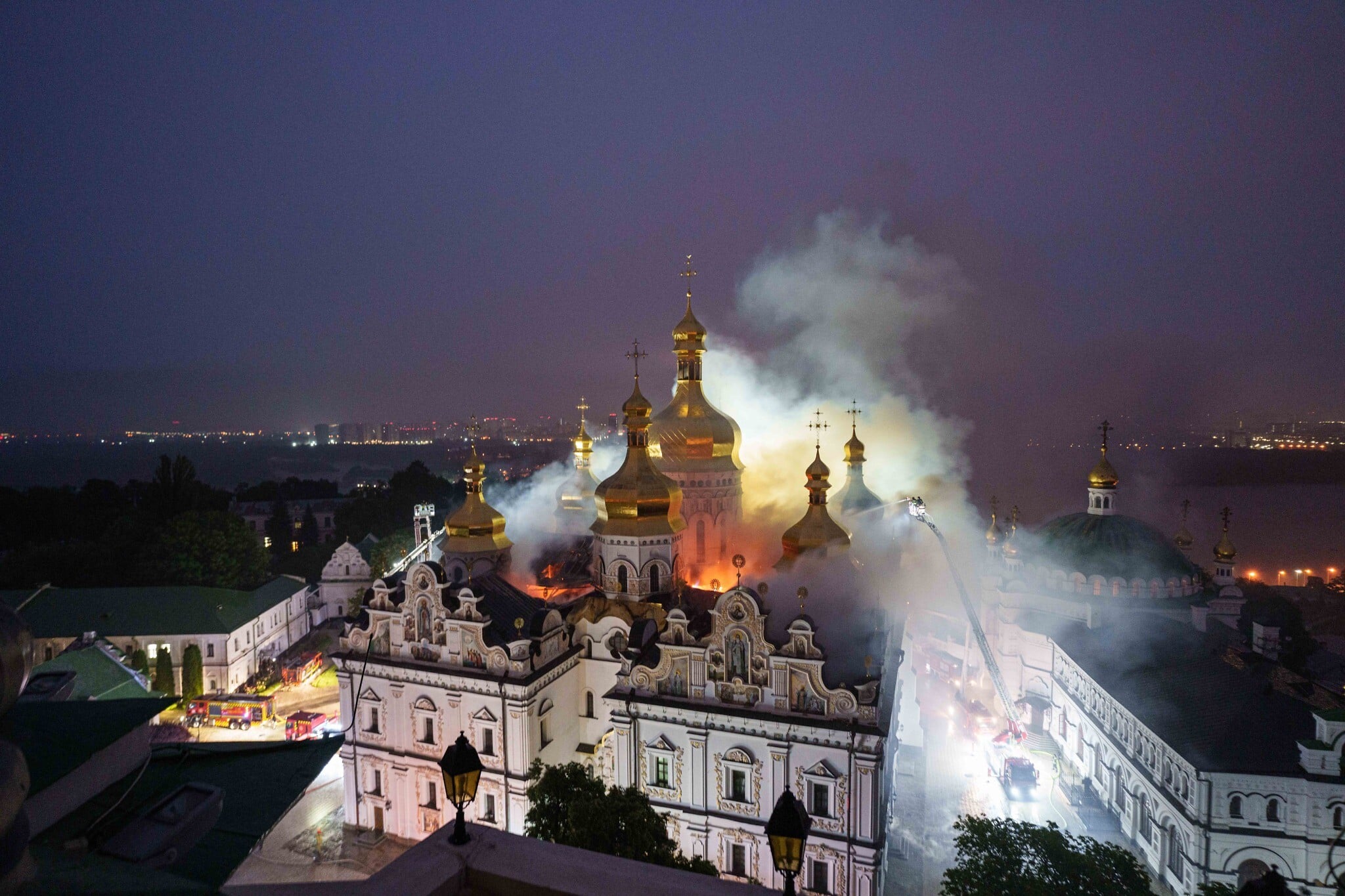
Russian forces launched a coordinated series of missile and drone barrages across major Ukrainian cities on Monday, resulting in at least 11 deaths and widespread infrastructure damage, according to reports from emergency services and regional authorities. The strikes targeted residential areas and critical infrastructure, causing significant casualties and igniting fires at historic sites, including segments of the Kyiv-Pechersk Lavra complex.
The escalation comes as global leaders prepare for upcoming diplomatic summits, with officials confirming that the security situation in Ukraine remains a primary focus of international policy. According to the State Emergency Service of Ukraine, the bombardment utilized a combination of cruise missiles and Iranian-designed Shahed drones, hitting facilities in at least 15 regions. The attack represents one of the most geographically expansive aerial campaigns in recent months.
Casualties and Impact on Civilian Infrastructure
Emergency responders reported that at least 11 people were killed in the strikes, with dozens more injured, including several children. Hospitals and local clinics in affected regions have been overwhelmed, prompting the World Health Organization to coordinate with local health departments to ensure the delivery of emergency medical supplies. The strikes specifically targeted the energy grid, leading to widespread power outages and water supply disruptions that affected millions of residents across the country.
In Kyiv, the capital, debris from intercepted missiles fell onto residential neighborhoods, causing structural damage to apartment blocks. Local authorities have established temporary shelters for those displaced by the destruction, and the Kyiv City State Administration continues to assess the long-term impact on the city’s heating and electricity infrastructure as winter approaches.
Damage to Cultural and Historic Landmarks
The bombardment also caused damage to the 11th-century Kyiv-Pechersk Lavra, a UNESCO World Heritage site and one of the most significant Orthodox Christian centers in Eastern Europe. Local reports confirmed that debris from an intercepted projectile set fire to a portion of the roof of a building within the monastic complex. While the iconic Dormition Cathedral remained largely intact, the incident has drawn sharp criticism from cultural heritage organizations.
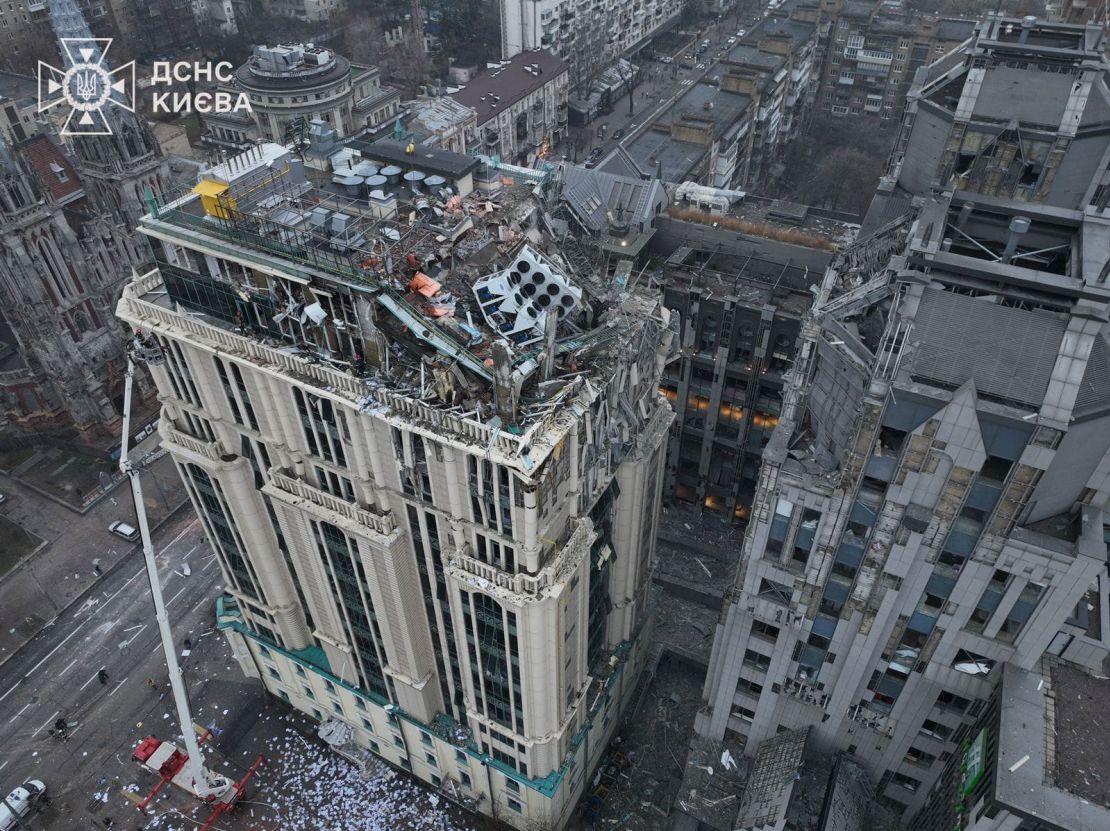
The UNESCO Secretariat has repeatedly called for the protection of Ukraine’s cultural heritage, noting that the intentional targeting of religious sites may constitute a violation of international humanitarian law. Restoration experts are currently on-site to evaluate the stability of the structures and to prevent further degradation caused by exposure to the elements following the fire.
Geopolitical Context and Upcoming Summits
The timing of these strikes has drawn intense scrutiny from the international community, particularly as world leaders prepare for upcoming high-level meetings. Diplomatic sources have indicated that the situation in Ukraine is expected to dominate the agenda at the next G7 summit, where discussions will focus on additional military aid and the strengthening of air defense capabilities for Kyiv. The attendance of world leaders, including various heads of state, is expected to provide a platform for reinforcing support for Ukraine’s sovereignty.
The White House has condemned the attacks, characterizing them as a deliberate attempt to undermine the civilian population’s morale. Meanwhile, the Kremlin has maintained its stance that such strikes are directed at military infrastructure, though independent observers and human rights groups continue to document the disproportionate impact on civilian areas.
What Happens Next
As recovery efforts continue, the immediate priority for the Ukrainian government remains the restoration of essential services and the assessment of the damage to the national power grid. The Ukrenergo power transmission operator has implemented emergency rolling blackouts to stabilize the system following the damage to substations. International partners are currently reviewing requests for additional air defense systems, with further announcements expected in the coming days as the diplomatic cycle accelerates.
Residents are encouraged to follow official guidance from the State Emergency Service of Ukraine regarding safety protocols during air alerts. The international community continues to monitor the situation closely, with further updates regarding aid packages and diplomatic responses anticipated following the next round of G7 consultations. Please share your thoughts or observations in the comments section below as this developing story continues to unfold.
- Zelensky Warns of Dwindling Missile Defenses as Russia Intensifies Overnight Attacks
- Lithuania Discovers Multiple Border Tunnels as Belarus Migrants Launch Attacks
- UN Arria-Formula Meeting Highlights Humanitarian Law Violations in Ukraine (time.news)
- Russian Saboteurs Recruit Pro-Russian Telegram Users to Burn Cars in Czechia (newsdirectory3.com)