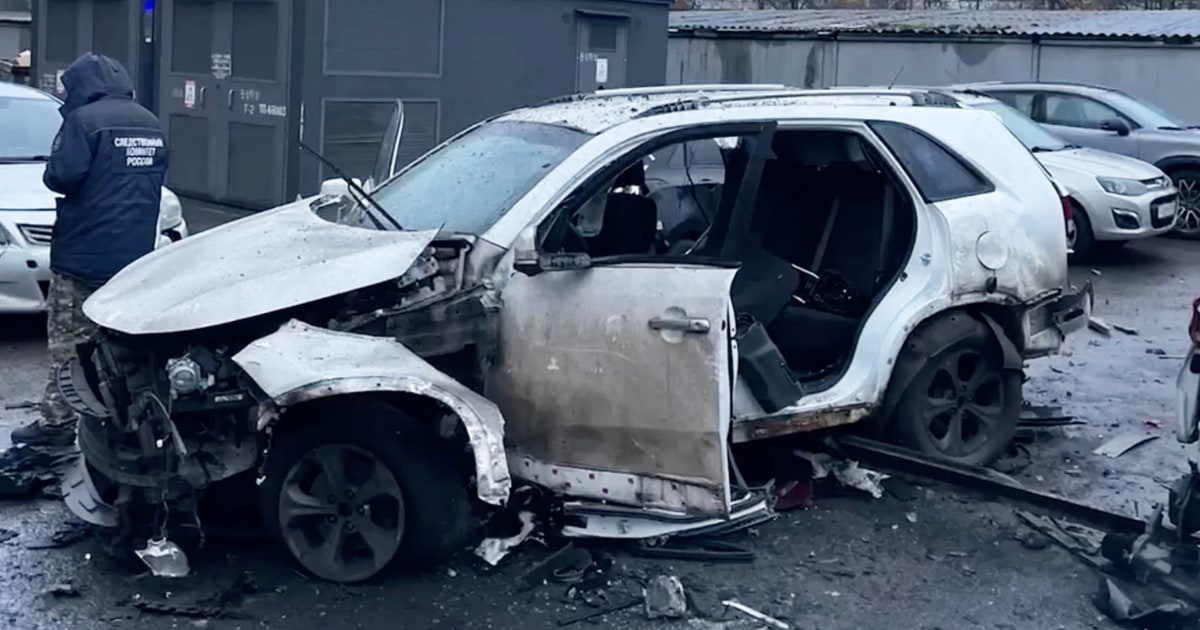
The Assassination of General Fanil Sarvarov: A Deep Dive into MoscowS Car Bombing and its Implications
The recent death of Lieutenant General Fanil Sarvarov, head of the operational training directorate of Russia’s armed forces general staff, following a car bombing in Moscow, has sent ripples through the geopolitical landscape. This incident, occurring on Yasenevaya Street on Monday morning, immediately sparked speculation about potential Ukrainian involvement. But what do we really know about this event, and what are the broader implications for the ongoing conflict? This article will dissect the available details, explore potential motives, and analyze the possible ramifications of this high-profile assassination. Understanding this event requires a nuanced look at the current state of the Russia-Ukraine war and the escalating tactics employed by both sides.
Did You Know? Car bombings, while less common in major European cities today, have historically been a tactic employed in conflicts involving state-sponsored actors and intelligence agencies. This method offers a degree of deniability and can be strategically used to destabilize an opponent.
The Incident: what Happened?
According to the Russian Investigative Committee, an explosive device detonated under Sarvarov’s vehicle. Svetlana Petrenko, a spokesperson for the committee, stated that investigators are exploring multiple theories, with a primary focus on potential orchestration by Ukrainian intelligence agencies. The 56-year-old general was a key figure in Russia’s military training operations, making his loss significant.
But is this simply a case of retaliation, or is ther a more complex strategic calculation at play? What level of risk assessment would ukrainian intelligence have undertaken before authorizing such an operation within Russian territory?
Potential Motives and Ukrainian Involvement
While Ukrainian officials have yet to comment directly on the allegations, the possibility of their involvement is being heavily scrutinized. Several factors contribute to this suspicion:
* Escalation of Sabotage: Recent months have seen a reported increase in acts of sabotage within Russia, attributed by some sources to Ukrainian operatives.These incidents, ranging from railway disruptions to attacks on infrastructure, suggest a shift towards a more aggressive strategy.
* Targeting of Key personnel: Sarvarov’s position as head of operational training made him a valuable target. Eliminating him coudl disrupt Russia’s ability to effectively train and deploy troops.
* Demonstrating Reach: A prosperous operation within Moscow would serve as a powerful signal to the Russian leadership, demonstrating Ukraine’s ability to strike at the heart of the enemy.
Though, it’s crucial to remember that attributing blame solely based on motive is insufficient. Concrete evidence is needed to substantiate the claims of Ukrainian involvement.
Pro Tip: when evaluating reports of such incidents, always consider the source. Official statements from involved parties are frequently enough subject to bias and should be corroborated with autonomous reporting from reputable news organizations.
A comparative Look: High-Profile Assassinations in Recent History
To understand the meaning of Sarvarov’s assassination, it’s helpful to consider similar events in recent history.
Here’s a quick comparison:
| Incident | Target | Alleged Perpetrator | Outcome |
|---|---|---|---|
| Assassination of Jamal Khashoggi | Saudi Journalist | Saudi Government (widely believed) | International condemnation, strained relations |
| Poisoning of Sergei Skripal | Former Russian Spy | Russian Intelligence (attributed by UK) | Increased sanctions, diplomatic fallout |
| Sarvarov Car Bombing | Russian General | Ukrainian Intelligence (alleged) | Potential escalation of conflict |
These examples demonstrate how