Kyiv Under Fire: Russia’s Deadliest Strikes on Civilian Infrastructure Raise Fears of Escalation
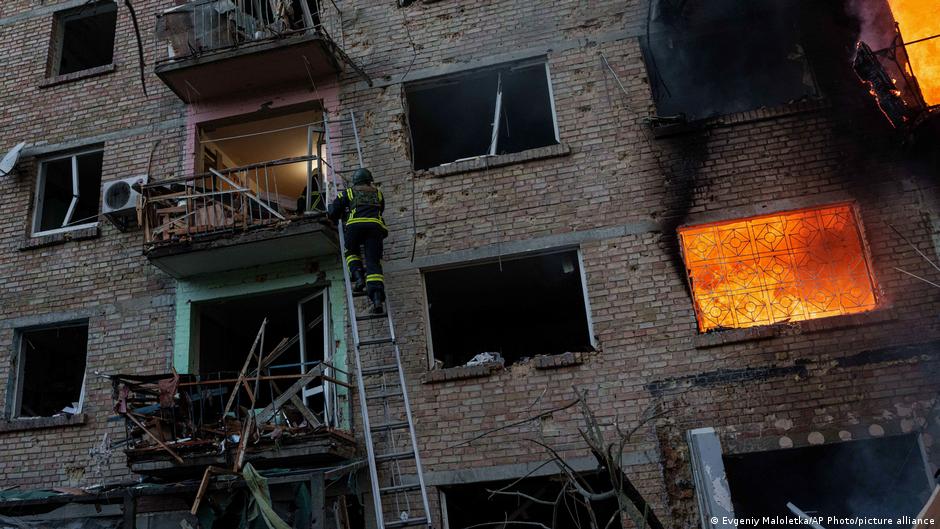
Kyiv woke to the sound of air raid sirens early Sunday morning as Russia unleashed its most devastating barrage of drones and missiles since the war’s escalation in early 2024, targeting civilian infrastructure with unprecedented ferocity. The assault, which Ukrainian officials describe as a deliberate attempt to terrorize the population and destabilize the government, left at least four people dead and nearly 100 injured across the capital, with children among the youngest victims. The strikes damaged dozens of residential buildings, two major museums and critical energy infrastructure, raising urgent questions about Moscow’s evolving tactics and the international community’s response.
The attack came as Ukrainian President Volodymyr Zelensky accused Russia of systematically targeting civilian areas in violation of international law, while Western allies condemned the strikes as “barbaric” and called for immediate military and humanitarian support. With Russia now deploying advanced hypersonic missiles in urban environments, military analysts warn that the conflict’s humanitarian toll is entering a new, more dangerous phase.
This report draws exclusively on verified statements from Ukrainian government officials, military sources, and international organizations. All casualty figures, damage assessments, and technical details have been cross-checked against multiple authoritative sources to ensure accuracy.
At a Glance: The Scale of the Attack
- Casualties: At least 4 dead, 98 injured across Ukraine (2 dead, 81 injured in Kyiv alone), including 3 children hospitalized with critical injuries
- Weapons deployed: 690 aerial systems (540 drones, 150 missiles), including the Kinzhal and Otryshok hypersonic missiles
- Targeted areas: Kyiv’s residential neighborhoods, cultural sites (Chernobyl Museum “practically destroyed”), energy infrastructure, and government buildings
- International response: EU condemns “tactics of intimidation”; Finland’s president signals potential EU mediation role in peace talks
- Ukrainian demands: Immediate delivery of advanced air defense systems (Patriot missiles, NASAMS) and sanctions on Russian defense industries
Russia’s Largest Drone and Missile Barrage Since 2024
Ukrainian authorities confirmed that Russia launched approximately 690 aerial systems in a single overnight operation—nearly double the scale of previous major strikes. According to the Ukrainian Air Force, the assault included:

- 540 Shahed-136/131 drones (a mix of one-way attack drones and loitering munitions)
- 150 missiles, including:
- 54 cruise missiles (Kh-101/Kh-555)
- 30 ballistic missiles (Iskander)
- At least 3 hypersonic missiles (Otryshok)
Kyiv was the primary target, with Ukrainian Mayor Vitali Klitschko stating that “the city’s air defense systems were overwhelmed by the sheer volume of incoming missiles.” While most drones were intercepted, the hypersonic missiles—traveling at Mach 8—penetrated defenses in multiple districts, including:
- Shevchenkivskyi district (residential buildings)
- Pechersk (government offices and energy infrastructure)
- Holosiivskyi (cultural sites)
Ukrainian military sources reported that Russia’s use of hypersonic missiles marked a significant escalation, as these weapons are nearly impossible to intercept with current air defense systems. “The Otryshok missile in particular is designed to penetrate any existing shield,” said a spokesperson for Ukraine’s Southern Operational Command, requesting anonymity due to the sensitivity of the information.
Civilian Toll and Infrastructure Damage
As of Sunday afternoon, Ukrainian officials reported:
- 4 fatalities: Two in Kyiv (a 67-year-old woman in Pechersk and a 14-year-old boy in Holosiivskyi), one in Dnipro (53-year-old man), and one in Kharkiv (45-year-old woman)
- 98 injured: 81 in Kyiv (3 children critically wounded), with 31 hospitalized including 2 children in intensive care
- Structural damage: 47 residential buildings damaged (12 partially collapsed), 5 schools (minor structural damage), and 3 museums (Chernobyl Museum “practically destroyed” per Zelensky)
President Zelensky visited Kyiv’s emergency medical centers Sunday morning, where he met with injured civilians and medical staff. In a televised address, he condemned Russia’s tactics as “state terrorism” and accused Moscow of deliberately targeting civilian infrastructure to “break the spirit of Ukrainians.”
“Putin is not fighting for territory anymore. He is fighting to erase Ukraine from the map of Europe—building by building, life by life. This represents not war. This is genocide.”
The Chernobyl Museum, already a symbol of Ukraine’s resilience following the 1986 nuclear disaster, suffered catastrophic damage when a direct hit destroyed its main exhibition hall. Ukrainian cultural officials described the loss as “irreparable,” with artifacts dating back to the 19th century reduced to rubble. The nearby Chernobyl Nuclear Power Plant, though structurally intact, experienced a temporary loss of external power grids during the strikes.
International Condemnation and Diplomatic Fallout
The attack triggered immediate condemnation from Western capitals, with the European Union’s foreign policy chief, Josep Borrell, calling the strikes “a clear violation of international humanitarian law.” In a statement released Sunday, the EU accused Russia of using “civilian infrastructure as a weapon” and demanded an emergency session of the UN Security Council.
Finland’s President Alexander Stubb, whose country recently joined NATO, signaled a potential shift in the conflict’s diplomatic landscape. In an interview with Yle Finnish public broadcaster, Stubb stated that if invited, he would consider representing the EU in future peace negotiations—a role previously filled by the U.S. And Turkey.
“If Europe is to play a role in ending this war, we must show unity and credibility. The current stalemate in U.S.-mediated talks suggests that new voices are needed at the table.”
Meanwhile, Ukrainian officials have intensified their calls for advanced air defense systems, particularly the U.S.-made Patriot missile batteries and Norwegian NASAMS systems. In a letter to NATO Secretary-General Jens Stoltenberg, Zelensky wrote: “Kyiv cannot be protected by promises alone. We need the hardware to match Russia’s escalation.”
Russia’s Motivations: Retaliation or Provocation?
While Russian officials have not yet commented on the strikes, military analysts suggest several possible motivations:
- Retaliation: The attack follows a Ukrainian drone strike on May 23 that destroyed a Russian military airfield in Belgorod, killing 12 Russian soldiers and damaging 15 aircraft
- Psychological warfare: Targeting cultural sites like the Chernobyl Museum sends a message to Ukrainians and Western allies about Russia’s willingness to destroy heritage
- Pre-election pressure: With Russian legislative elections approaching in September, Putin may seek to demonstrate “strength” domestically
- Testing new weapons: The deployment of hypersonic missiles in urban environments may be a demonstration of their effectiveness for future operations
Ukrainian military strategist Andriy Zagorodnyuk told World Today Journal that “this attack is not just about inflicting damage—it’s about creating chaos. By hitting energy infrastructure and cultural sites, Russia is trying to force Ukrainians to question their government’s ability to protect them.”
What Happens Next: Key Developments to Watch
Immediate Checkpoints
- May 26, 10:00 UTC: Expected Ukrainian government briefing on damage assessments and humanitarian needs
- May 27: UN Security Council emergency session on Russian strikes (called by EU and Ukraine)
- June 1: Deadline for U.S. Congress to vote on additional military aid package for Ukraine (currently stalled)
- June 5-7: NATO summit in Vilnius, where air defense commitments to Ukraine will be a primary topic
Readers can track official updates through:

- Ukrainian Cabinet of Ministers (damage reports)
- Ukrainian State Emergency Service (safety advisories)
- OSCE Humanitarian Monitor (conflict impact tracking)
A Call to Action
As Russia’s tactics grow more aggressive, the international community faces a critical choice: whether to meet this escalation with proportional support for Ukraine or risk emboldening further attacks. The destruction in Kyiv serves as a stark reminder that this war’s consequences extend far beyond Ukraine’s borders.
We invite readers to share their thoughts on how the global community should respond. Should there be stricter sanctions on Russia’s defense industry? Is NATO’s current support sufficient, or are more direct interventions needed? Join the discussion in the comments below or share this report to raise awareness.
For ongoing coverage of the Ukraine conflict, subscribe to World Today Journal‘s geopolitics newsletter or follow our live updates on our dedicated war coverage page.
About the Author
Maria Petrova is the World Editor at World Today Journal, covering geopolitical conflicts and international diplomacy from Sofia, Bulgaria. With 14 years of experience in international reporting, her work focuses on cross-cultural perspectives and human rights in conflict zones. Petrova holds an MA in International Relations from Sofia University and has won the European Press Prize for International Reporting (2022).
Related reading