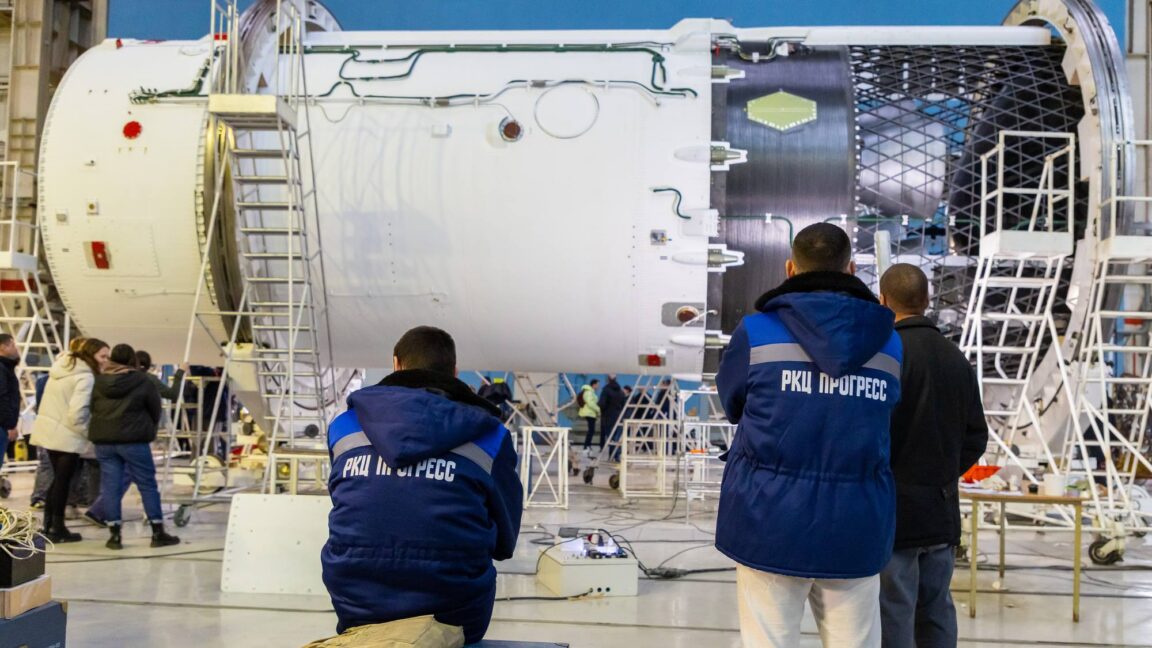
Russia’s New Soyuz 5 Rocket: A Powerful Boost, But Into what Market?
Russia is poised to launch the Soyuz 5 rocket, a significant addition to its space program. This new vehicle, also known as Irtysh, represents a significant leap in capability and ambition. But in a rapidly evolving launch market, where will it fit?
A Rocket Built for Power
The Soyuz 5 is designed to address a critical need for increased lift capacity. Its first stage boasts a single RD-171MV engine, a powerhouse delivering three times the thrust of SpaceX’s Raptor 3 at sea level. This engine family is renowned as the most powerful liquid-fueled rocket engine globally, and crucially, the RD-171MV relies entirely on Russian-made components.
Moreover, Russian space officials envision the Soyuz 5 as a key component of the yenisei super-heavy lift rocket. This future system is intended to support a potential human lunar program. However, the Yenisei project has faced persistent delays and remains largely in the conceptual phase.
Launch Imminent: But What’s the Demand?
The Soyuz 5 is very real and scheduled to launch within the next month. The central question now is: what market will it serve? Currently, Russia utilizes the Soyuz 2 for crew and cargo missions to the International Space Station, alongside launches of smaller spacecraft. The Angara rocket family has also been gradually coming online over the last decade.
The Soyuz 5 bridges the gap in performance between the Soyuz 2 and the Angara A5. This places it in the 18-ton-to-low-Earth-orbit capacity class. Determining the demand for this level of lift is proving complex.
Shifting Market Dynamics
Several factors are impacting the potential market for the soyuz 5. Consider thes points:
* Declining Geostationary Launches: The number of geostationary satellites – historically a mainstay for Russia’s Proton vehicle – has substantially decreased.
* Geopolitical Impacts: Russia’s invasion of Ukraine has effectively excluded its rockets from consideration by many Western satellite operators.
* Increased Competition: China is rapidly expanding its launch capabilities, offering both government and commercial options. India’s launch services are also becoming increasingly competitive.
* Price Sensitivity: For cost-conscious customers,spacex’s reusable Falcon 9 booster presents a formidable challenge. Russia will likely struggle to match its pricing.
Navigating a Crowded Field
You might be wondering what this means for the future of the Soyuz 5. It’s a powerful rocket, undoubtedly. However,it enters a launch market that is becoming increasingly crowded and competitive.
Successfully positioning the Soyuz 5 will require Russia to identify niche opportunities and perhaps offer competitive pricing. The success of this new rocket will depend on its ability to carve out a enduring role in a dynamic and evolving space landscape.
Ultimately, the Soyuz 5 represents a significant technological achievement for Russia. Whether it can translate that achievement into commercial success remains to be seen.