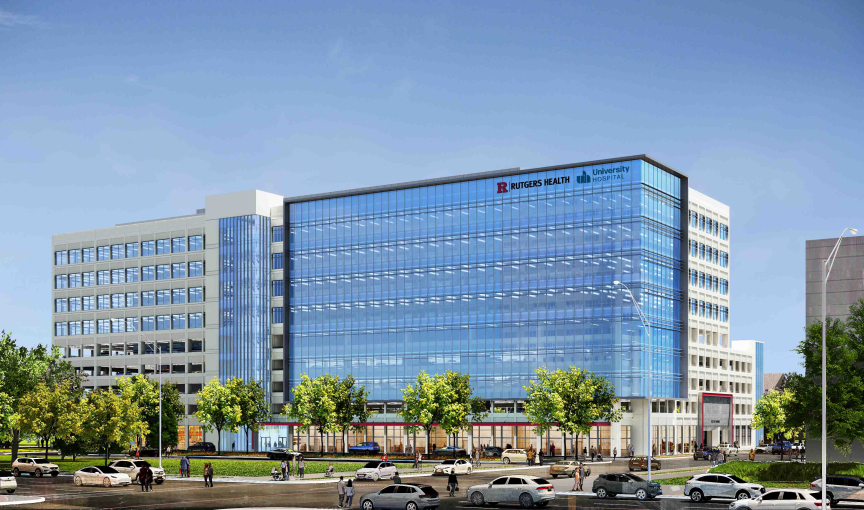
Rutgers Health & University Hospital Expansion: A $1.8 Billion Transformation for Newark’s Healthcare Future
Is Newark, New Jersey, on the cusp of a healthcare revolution? A groundbreaking ceremony on October 23rd marked the beginning of a sweeping $1.8 billion redevelopment plan for Rutgers health and University Hospital, promising expanded access to care, cutting-edge clinical services, and a revitalized healthcare hub for the region. This isn’t just about new buildings; it’s about fulfilling a decades-old promise and addressing critical healthcare needs within the community.
This comprehensive guide delves into the details of this ambitious project, exploring its phases, impact, and the historical context driving its development. We’ll examine how this modernization will benefit patients, healthcare professionals, and the wider Newark community, backed by the latest data and insights.
A Legacy Reimagined: The Newark Agreements and Modernization
The roots of this project extend back to the 1968 Newark Agreements, a pivotal moment in the city’s history following the 1967 civil unrest. These agreements included a commitment to expand healthcare access and opportunities for the Newark community. For over five decades, that promise remained partially unfulfilled – until now.
The current redevelopment plan isn’t simply about replacing aging infrastructure; it’s about strategically positioning University Hospital as a leading academic medical center capable of meeting the evolving healthcare demands of the 21st century. According to a recent report by the American Hospital Association (AHA), hospital modernization is crucial for attracting and retaining skilled healthcare professionals, improving patient outcomes, and adapting to technological advancements.https://www.aha.org/
Phase One: Laying the Foundation for Growth (2023-2027)
The initial phase, now underway, focuses on building a foundation for future expansion. Key components include:
* Administrative Building: Four new floors dedicated to administrative offices will streamline operations and improve efficiency.
* Clinical Space: 11,000 square feet of dedicated clinical space within the new building will expand outpatient care services, addressing a critical need for accessible healthcare.
* Parking Garage: An 875-space parking garage will alleviate longstanding parking challenges for patients, visitors, and staff.
This first phase is projected to be completed by 2027, marking a important step towards realizing the full vision of the modernization plan. A recent study by Deloitte highlights the importance of convenient parking and accessibility in patient satisfaction. https://www2.deloitte.com/us/en.html
Beyond phase One: A Multi-Year Transformation
The redevelopment isn’t stopping with the initial building. Subsequent phases will include:
* New Medical Office Building: Replacing the existing Doctors Office Center with a state-of-the-art facility offering a wider range of specialties. This expansion is crucial, as New Jersey faces a growing shortage of primary care physicians, particularly in urban areas. Data from the New Jersey Council of Medical Professionals indicates a 15% increase in demand for primary care services over the past five years.
* Patient Tower: Construction of a new patient tower will significantly increase bed capacity and provide advanced medical technologies.
* Hospital Building Updates: Major renovations to the existing hospital building will modernize infrastructure and enhance patient care environments.
Crucially, the project is being implemented in a phased approach to minimize disruption to ongoing patient care. Patients will continue to receive services in existing clinics until the new facilities are fully operational.
Impact on the Community: Health Equity and Economic growth
The impact of this redevelopment extends far beyond the hospital walls.
* Improved Health Outcomes: Modernized facilities and expanded services will lead to better patient outcomes and increased access to specialized care.
* Economic Development: The project is expected to create numerous construction jobs and stimulate economic growth in the surrounding area. A report by the New Jersey Economic Development Authority estimates the project will generate over $2 billion in economic activity. https://www.njeda.com/
* Addressing Health Disparities: The project is explicitly focused on advancing health equity and improving health outcomes for the Newark community, addressing long-standing disparities in healthcare access and quality.
“For decades, University Hospital has delivered critical care to New Jersey families,” stated Governor Phil Murphy. ”Today’s groundbreaking represents years of community-centered planning, along with a renewed commitment to advancing health equity and improving health outcomes for the people of Newark.”
A Vision for the Future: Strengthening the Healthcare Ecosystem
University Hospital Interim President and Chief Executive Officer Kaitlan baston emphasized the project’s importance in aligning facilities with the dedication of the hospital’s staff. “This new facility will give our teams the tools, space and infrastructure they need to operate and