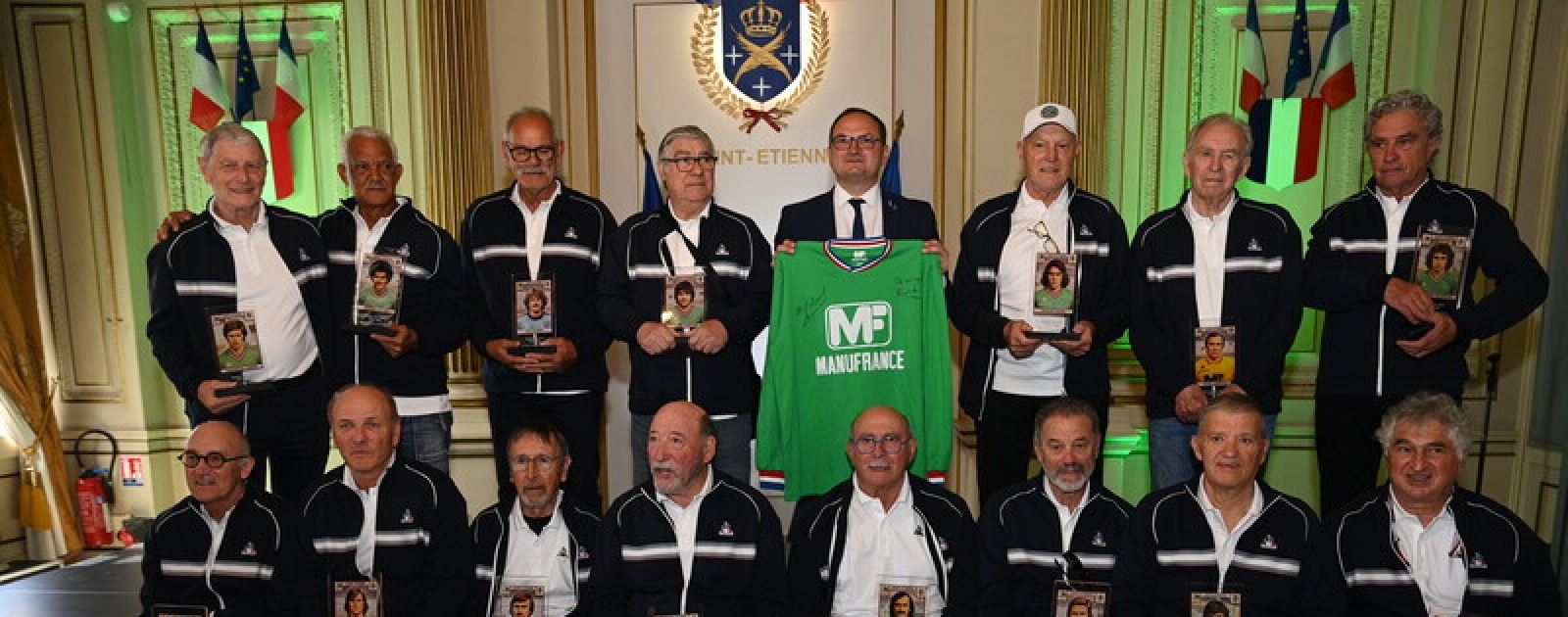
The city of Saint-Étienne is a place where football is not merely a sport; it is a secular religion, a shared history, and a source of enduring identity. As the calendar turns to May 2026, the atmosphere in this industrial heartland of France has reached a fever pitch. Tomorrow, May 12, marks exactly 50 years since one of the most poignant moments in the history of the gorgeous game: the 1976 European Cup final.
For the supporters of AS Saint-Étienne, known globally as Les Verts (The Greens), the date is etched into the collective memory with a mixture of pride and profound longing. It was the culmination of an era where a team from a working-class mining town didn’t just compete with the giants of Europe—they stood on the precipice of conquering them. The Saint-Étienne 1976 European Cup run remains the gold standard for French club ambition, a romantic epic that defined a generation of football fans.
Fifty years later, the legacy of that team continues to resonate. From the reflections of legendary players like Jean-Michel Larqué to the modern-day fans who inherited a passion they never personally witnessed, the “epic of the Verts” is more than a sporting statistic. It is a story of social ascent, tactical innovation, and a heartbreak so specific that it has its own architectural villain: the square goalposts of Hampden Park.
As an editor who has spent over a decade analyzing the rhythms of European football from Lisbon to London, I find the Saint-Étienne story uniquely compelling. It represents a time when football was deeply rooted in the geography of labor and local pride, long before the era of sovereign wealth funds and globalized super-leagues. To understand the current soul of French football, one must understand what happened in Glasgow half a century ago.
The Ascent of the Greens: A National Obsession
To appreciate the magnitude of the 1976 final, one must first understand the cultural phenomenon of AS Saint-Étienne in the 1970s. Under the guidance of the visionary coach Robert Herbin, the club transformed from a strong domestic side into a European powerhouse. Herbin didn’t just build a team; he built a machine based on discipline, technical fluidity, and an unwavering belief in the capabilities of the French player.
During this period, the club became a symbol of the “France that wins,” representing the industrial working class of the Loire region. The team’s success was a source of national pride, effectively acting as a surrogate for the French national team in European competitions. The “Verts” were not just playing for a trophy; they were carrying the aspirations of a city defined by coal mines and factories, proving that a provincial town could outshine the bourgeoisie of the capital.
The squad was a blend of tactical intelligence and raw talent. Jean-Michel Larqué provided the cerebral leadership in midfield, while the attacking prowess of players like Hervé Revelli and Dominique Rocheteau made them a nightmare for any defense. Their journey to the final was a testament to their resilience, navigating a grueling tournament to reach the ultimate stage. According to official records from UEFA, the 1975-76 season saw Saint-Étienne emerge as the first French club to reach the final of the European Cup (now the UEFA Champions League) in the modern era of the competition’s prestige.
May 12, 1976: The Tragedy at Hampden Park
The stage was set at Hampden Park in Glasgow, Scotland. On May 12, 1976, Saint-Étienne faced off against the formidable Bayern Munich. The match was a clash of styles: the romantic, flowing football of the Greens against the clinical, disciplined efficiency of the Germans. For 90 minutes, the world watched a contest that was balanced on a knife’s edge, characterized by intense pressure and missed opportunities.
The decisive moment arrived in the 32nd minute when Bayern Munich’s Franz Roth scored the only goal of the match. For the remainder of the game, Saint-Étienne launched a relentless assault on the Bayern goal. They played with a desperation and brilliance that nearly overturned the deficit, but they were thwarted by a combination of an inspired Bayern defense and a peculiar piece of stadium architecture.
In the annals of football folklore, the “poteaux carrés”—the square goalposts—of Hampden Park have attained a mythical status. Unlike the round posts used in most modern stadiums, the square edges of the Glasgow goals were blamed for deflecting several Saint-Étienne shots that seemed destined for the net. The belief that the shape of the posts robbed the Verts of a goal, and potentially the title, has persisted for five decades, turning a sporting defeat into a cosmic injustice.
The final whistle blew with a 1-0 victory for Bayern Munich. The French side had been beaten, but they had not been outplayed in the eyes of many. The aftermath was a paradoxical blend of grief and celebration. Despite the loss, the team returned to France as heroes, greeted by crowds that treated them as if they had won the trophy. They had put French club football on the map, proving that a team from the Loire could challenge the hegemony of the German and Italian giants.
The Sociological Impact: More Than a Game
The “epic of the Verts” matters because it mirrored the social transformations of 1970s France. Saint-Étienne was a city of labor, and the football club was the primary vehicle for collective expression. When the team played, the factories paused. The green jersey became a uniform of identity, bridging the gap between the miners and the municipal leaders.
This era established a blueprint for the “passion” that still defines the ASSE fanbase today. The club’s identity is inextricably linked to this period of glory and heartbreak. For many older supporters, 1976 is the benchmark against which all subsequent eras are measured. It was a time of innocence and ambition, before the commercialization of the sport shifted the power dynamics toward the metropolitan centers like Paris.
Even today, the influence of the 1976 squad is visible in the way the club is managed and supported. The insistence on developing local talent and maintaining a strong connection to the community is a direct inheritance from the Robert Herbin era. The “Verts” are not just a sports team; they are the custodians of a working-class legacy that refuses to be forgotten.
Reflections at 50: The Living Legacy
As the 50th anniversary celebrations unfold, the conversation has shifted from the pain of the loss to the beauty of the journey. Jean-Michel Larqué, who remains one of the most respected figures in French football, has frequently reflected on the era, emphasizing that the experience of reaching the final was a victory in itself. For Larqué and his teammates, the 1976 run was a validation of their hard work and a testament to the tactical evolution of the French game.

The anniversary has also sparked a renewed interest in the archives. Documentaries and retrospectives have surfaced, allowing a new generation of fans—those born long after the square posts of Hampden Park were replaced—to understand why their grandparents speak of 1976 with such emotion. This intergenerational transfer of passion is what keeps the spirit of the Verts alive.
For the modern observer, the 1976 final serves as a reminder of the unpredictability of sport. A single goal, a few inches of wood, and a specific date in May can create a legend that lasts half a century. While the trophy remained in Munich, the glory stayed in Saint-Étienne.
Key Takeaways from the 1976 Epic
- The Milestone: AS Saint-Étienne became the first French club to reach the European Cup final in the modern era.
- The Architect: Coach Robert Herbin is credited with transforming the team into a European powerhouse through tactical discipline and a belief in French talent.
- The Heartbreak: A 1-0 loss to Bayern Munich on May 12, 1976, at Hampden Park, Glasgow.
- The Myth: The “square posts” (poteaux carrés) are legendary for allegedly deflecting shots that could have changed the outcome.
- The Legacy: The team remains a symbol of working-class pride and the golden age of provincial French football.
What Happens Next for the Verts?
As Saint-Étienne concludes its 50th-anniversary commemorations, the club looks toward the future with the weight of this history as both a burden and a motivation. The challenge for the modern administration is to honor the legacy of the 1976 squad while building a competitive structure for the 21st century.
The next major checkpoint for the club will be the upcoming seasonal review and the strategic planning for the next campaign, as they aim to return to the heights of European competition. While the “square posts” of 1976 will always be a topic of conversation, the ultimate goal remains the same: to bring a European trophy back to the city of the Verts.
Do you remember the legend of the square posts, or are you a new fan of the Greens? Share your thoughts and memories of AS Saint-Étienne in the comments below.