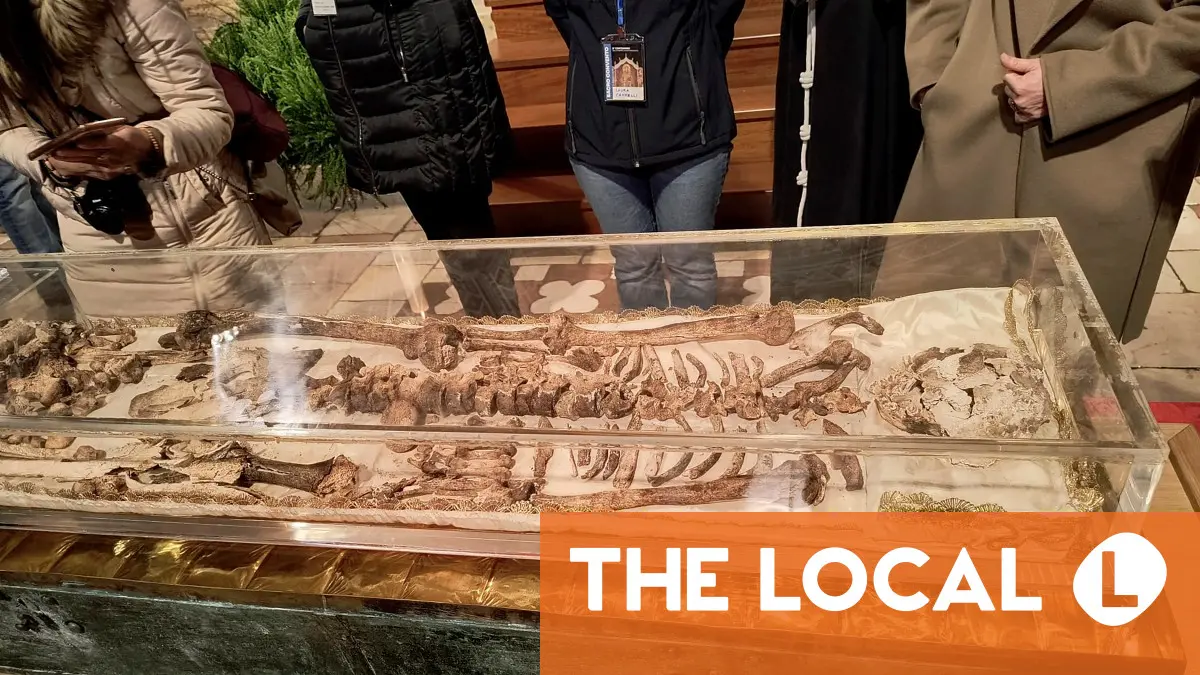
Assisi, Italy – Thousands of pilgrims are flocking to the Basilica of Saint Francis of Assisi, as the remains of the 13th-century saint were put on public display for the first time on Sunday, February 22, 2026. The unprecedented event, marking the 800th anniversary of Saint Francis’s death, offers a rare opportunity for the faithful to view the skeletal remains of the founder of the Franciscan Order, a figure revered globally for his devotion to poverty, peace, and nature. The display, which began on Sunday, is scheduled to continue until March 22, with approximately 400,000 visitors having already reserved their place to pay homage.
The Basilica of Saint Francis, a UNESCO World Heritage Site since 2000, stands as a testament to the enduring legacy of Saint Francis. Constructed beginning in 1227, just a year after his death, the basilica is not merely a religious site but a masterpiece of Italian Gothic architecture, blending Romanesque and Gothic styles. It serves as the mother church of the Roman Catholic Order of Friars Minor Conventual and remains one of Italy’s most important Christian pilgrimage destinations. The site’s significance extends beyond its architectural beauty. it embodies the core values of Saint Francis, attracting visitors from all walks of life seeking spiritual connection and inspiration.
A Rare Glimpse into the Life of a Saint
The decision to display the remains of Saint Francis is a momentous occasion for the Franciscan Order and the Catholic Church. Previously, the bones had only been briefly exhibited once in 1978, to a limited audience for a single day. This extended viewing period allows a far greater number of people to connect with the physical remains of the saint, fostering a deeper sense of reverence and devotion. Pilgrims are permitted to touch the outer glass case containing the remains, creating a tangible link to the historical and spiritual figure.
Visitors are being admitted in groups of approximately 750 people every half hour, starting at 7:00 am, after undergoing security checks. The remains are presented in a plexiglass case positioned near the altar in the basilica’s lower church. Many pilgrims have expressed profound emotion upon viewing the remains, with reports of tears, prayers, and the touching of rosary beads to the protective glass. Nicoletta Benolli, a 65-year-old visitor from Verona, described the experience as “a very moving morning – a unique event and I appreciated it hugely,” according to reports from Agence France-Presse (AFP).
The Life and Legacy of Saint Francis
Born in Assisi around 1181 or 1182, Saint Francis of Assisi, originally named Giovanni di Pietro di Bernardone, renounced a life of wealth and privilege to embrace a life of poverty and service to others. He founded the Franciscan Order in 1209, which quickly gained a large following due to its emphasis on simplicity, humility, and charitable work. His devotion to the poor and marginalized, as well as his deep connection with nature, continue to inspire people around the world. He was canonized as a saint by Pope Gregory IX in 1228, just two years after his death.
The impact of Saint Francis extends far beyond the religious sphere. His teachings on peace, environmental stewardship, and social justice resonate with contemporary concerns. He is often invoked as a patron saint of animals, merchants, and ecology, reflecting the breadth of his influence. The Franciscan Order continues to be a significant force in the Catholic Church, operating schools, hospitals, and charitable organizations globally. The Basilica in Assisi serves as a central hub for the order and a powerful symbol of its enduring mission.
Examining the Remains and Historical Context
According to Giulio Cesareo, director of communications for the convent of Assisi and a Franciscan friar, the remains bear the visible marks of Saint Francis’s austere lifestyle. “You can observe with the naked eye that these remains are really consumed but not consumed by time but by fatigue, by privations, for this man who walked enormously and slept in caves,” Cesareo stated. The skull also shows evidence of damage sustained during the initial relocation of the body to the basilica in the 13th century. These physical details offer a poignant reminder of the sacrifices and hardships endured by Saint Francis during his lifetime.
The display of the remains also provides an opportunity for scientific examination. While previous exhumations have been conducted for inspection purposes, this extended viewing period allows for further study of the skeletal remains, potentially offering new insights into the life and health of Saint Francis. Such investigations are conducted with the utmost respect and reverence, adhering to the ethical guidelines of the Franciscan Order and the Catholic Church.
A Pilgrimage of Faith and Reflection
For many pilgrims, the journey to Assisi and the opportunity to view the remains of Saint Francis is a deeply personal and transformative experience. Rosa Padhilete, a Franciscan nun from Naples, expressed “immense, inexplicable joy” at witnessing the remains, stating that it felt as though Saint Francis was “really alive and that revives hope for those of us who are still on Earth.” Others echoed similar sentiments, describing a sense of peace, connection, and renewed faith.
The event has drawn visitors from across Italy and around the world, highlighting the universal appeal of Saint Francis’s message. Nicola Urlandini, who traveled with his girlfriend, remarked that being near the remains “transmits something to the soul,” allowing one to “almost hear Francis’s message.” The pilgrimage to Assisi serves as a powerful reminder of the enduring power of faith, compassion, and the pursuit of a life dedicated to serving others.
The Basilica of Saint Francis remains a beacon of hope and inspiration for millions, and this unprecedented display of the saint’s remains is expected to further solidify its place as a central destination for religious and cultural tourism. The event underscores the continuing relevance of Saint Francis’s teachings in a world grappling with complex challenges, offering a message of peace, simplicity, and unwavering devotion to the common good.
As the viewing period continues through March 22, the Basilica of Saint Francis anticipates welcoming hundreds of thousands more pilgrims, each seeking a personal connection with the life and legacy of one of history’s most beloved saints. Updates and further information regarding the event can be found on the official website of the Sanctuary of Saint Francis.
What are your thoughts on this historic event? Share your comments below and spread the word!
Keep reading