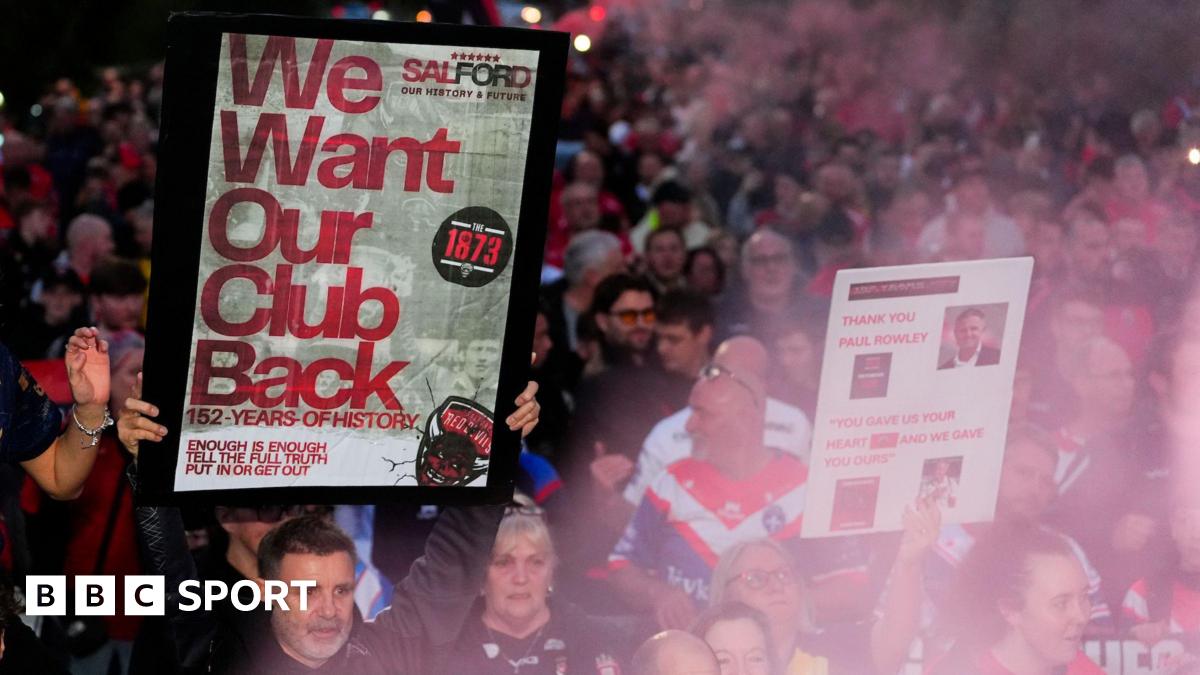
Salford Red Devils‘ 2024-2025 Collapse: A Deep Dive into Financial Ruin and Off-Field Turmoil
The Salford Red Devils’ recent descent into governance marks a devastating low point for the club, a stark contrast to their promising 2024 season. What began as a campaign building on fourth-place finish and playoff contention quickly unraveled, culminating in a court-ordered winding-up order. This article provides a complete analysis of the factors contributing to Salford’s downfall, examining the financial woes, leadership instability, and on-field consequences that led to this crisis.
The Seeds of Financial Difficulty
Salford’s financial troubles didn’t emerge overnight. The cracks began to appear at the end of the 2024 season, prompting the club to request an advance on their 2025 Rugby Football League (RFL) distribution payments.This early warning sign foreshadowed the difficulties to come.
A takeover by a consortium led by Swiss businessman Dario Berta offered a glimmer of hope on the eve of the 2025 season. However, despite the change in ownership, the underlying financial issues persisted and ultimately worsened.
the Impact of the Sustainability Cap & On-Field Struggles
The RFL imposed a sustainability cap on Salford, directly impacting their ability to field a competitive team. This restriction forced the Red Devils to rely heavily on youth players, leading to a disastrous start to the season.
The consequences were immediately visible. Salford suffered a record-breaking 82-0 defeat against St Helens, a clear indication of the team’s weakened state. Throughout the season, player departures – including key figures like Marc Sneyd, Nene Macdonald, and Ryan Brierley – further depleted the squad.
Here’s a breakdown of the cascading effects:
* Reduced Team Quality: The sustainability cap and player exits significantly weakened the squad.
* Heavy Defeats: A depleted team consistently faced overwhelming losses.
* Welfare Concerns: The lack of experienced players raised serious concerns about player safety, ultimately leading to the postponement of a Super League game against Wakefield in August.
Off-Field Chaos and Leadership vacuum
The turmoil wasn’t limited to the pitch. A series of unsettling events unfolded off the field, exacerbating the club’s instability.
* Executive departures: Chief Executive Chris Irwin resigned after just three months, signaling deep-seated problems within the institution.
* Stadium Uncertainty: Negotiations with Salford City Council regarding the purchase of the Salford Community Stadium collapsed in May, leaving the club’s long-term home in jeopardy.
* Serious Allegations: A shocking allegation surfaced when Chief Operating Officer Claire Bradbury claimed ownership suggested she compromise herself to influence the RFL. This claim further eroded trust and raised serious ethical questions.
Failed Rescue Attempts and the Final Blow
Following an october court adjournment, the club’s ownership announced they had secured funding expected to arrive within 12 days. Unluckily, this promise proved empty. The anticipated financial lifeline failed to materialize, leaving the club with no viable path forward.
Ultimately, the court issued a winding-up order, bringing an end to this tumultuous chapter in Salford red Devils history.
What Does This Mean for You, the Rugby League Fan?
The collapse of Salford is a cautionary tale for the entire sport. It highlights the critical importance of sound financial management, transparent leadership, and a commitment to player welfare. You can expect further discussion and analysis regarding the future of the club and the broader implications for the Super League. the RFL will now focus on restructuring and potentially rebuilding a Salford presence, but the road ahead is undoubtedly challenging.
This situation serves as a stark reminder of the fragility of even established sporting organizations and the need for robust oversight and sustainable practices.
Related reading