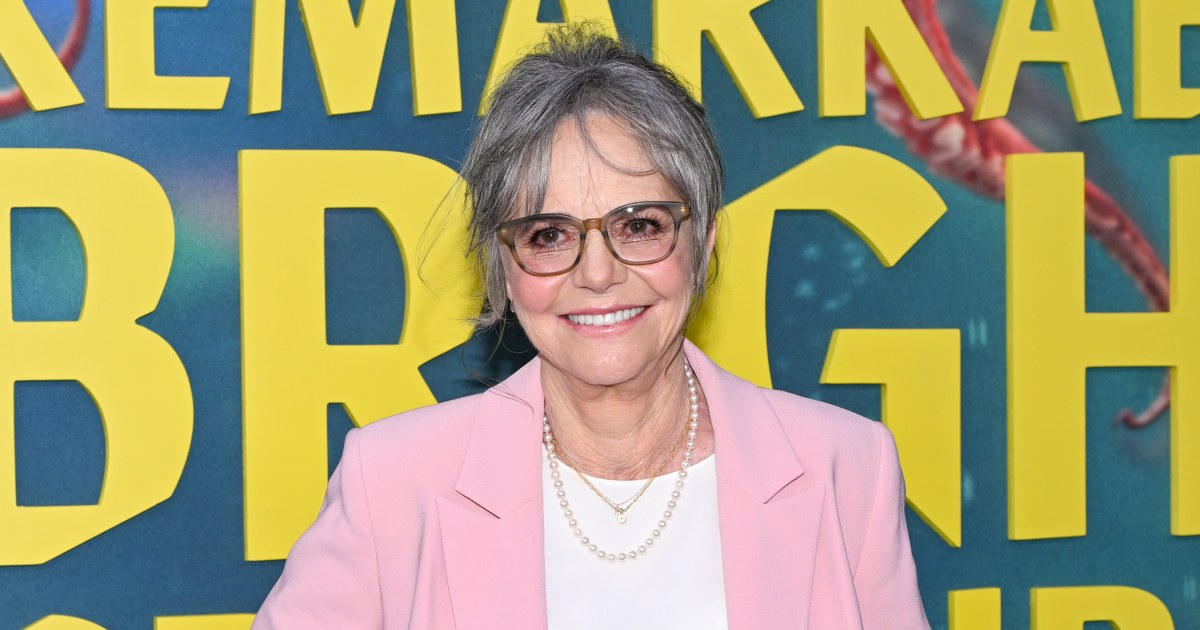
For decades, Sally Field has been a cornerstone of American cinema and television, possessing a rare ability to pivot from the wide-eyed innocence of her early career to the fierce, commanding presence of her award-winning dramatic roles. However, despite a resume that includes two Academy Awards and a lifetime of critical acclaim, the veteran actress is now speaking candidly about a persistent shadow that looms over the industry: the systemic devaluation of older women.
In a series of recent reflections, including an appearance on the podcast Wiser Than Me and a conversation on TODAY’s Sunday Sitdown, Field has challenged the narrow perceptions of aging in Hollywood. Her critique is not merely about the quantity of roles available, but the quality and depth of the characters written for women as they move into their 70s and beyond. For Field, the industry’s struggle to envision older women as complex, interesting protagonists is not just a professional hurdle—It’s a societal failure.
The conversation comes at a pivotal moment in Field’s career. With the release of her latest project, Remarkably Bright Creatures, which began streaming on Netflix on May 8, 2026, Field is once again stepping into a role that demands emotional granularity. Playing Tova, a night cleaner at an aquarium grappling with profound grief and isolation, Field is utilizing the role to push back against the “granny” stereotypes that often define the limited options for actresses of her generation.
The ‘Awful’ Reality of Ageism in Hollywood
The struggle for visibility does not disappear with fame or accolades. Even for an A-list legend, the pipeline of “rich” roles—characters with agency, internal conflict, and narrative importance—tends to dry up as actresses age. During her appearance on the Season 2 premiere of Julia Louis-Dreyfus’s Wiser Than Me podcast, Field did not mince words when asked about her perspective on ageism within the entertainment industry.
“Obviously, it’s awful,” Field stated, describing the dwindling opportunities for women as they grow older. She noted that while stories are written for women of various ages, the frequency and complexity of those stories diminish significantly over time. Field observed a frustrating trend in screenwriting, noting that the roles available to older women are often relegated to supporting characters whose primary narrative purpose is to be “looking for a man.”
This narrow framing, Field argues, ignores the vast spectrum of human experience that occurs in the later stages of life. By reducing older women to romantic interests or grandmotherly tropes, Hollywood misses an opportunity to explore the intellectual, emotional, and spiritual depths of aging. Field emphasized that We find “so many other stories” that could be told—stories of resilience, late-life discovery, and the complex navigation of loss—that the industry frequently overlooks.
Dismantling the Shame of Aging
Beyond the professional limitations of the studio system, Field is also addressing the psychological toll of societal expectations. She has become increasingly vocal about the pressure women feel to hide their age or apologize for the passage of time, a phenomenon she describes as an ingrained cultural expectation.
“There is a sense in society that Consider feel ashamed for being old,” Field shared on Wiser Than Me, adding, “and I realized what a crock that is.”

This realization marks a shift in Field’s own approach to her public and private life. The actress admitted that for much of her career, she operated under a mindset of “people-pleasing,” feeling the need to keep her head down and constantly seek the “next place to land” rather than pausing to acknowledge her own achievements. It is only in her late 70s that she has felt the freedom to look back at her body of work—including her Academy Awards for Norma Rae (1979) and Places in the Heart (1984)—and give herself credit for her accomplishments.
For Field, every new decade represents a monumental shift. Rather than viewing aging as a process of decline, she views it as a process of liberation. By rejecting the shame associated with getting older, she aims to model a version of aging that is defined by curiosity and self-assurance rather than invisibility.
Exploring Grief and Connection in ‘Remarkably Bright Creatures’
The themes of isolation and the search for meaning are central to Field’s role in Remarkably Bright Creatures. As Tova, Field portrays a woman who has intentionally distanced herself from her community following the loss of her son and, more recently, her husband. The film’s unique narrative device—a friendship between Tova and a giant Pacific octopus named Marcellus—serves as a metaphor for the profound connections that can exist outside of traditional human relationships.
In discussions regarding the film, Field has highlighted the importance of these non-human connections, noting that creatures of all forms help humans navigate their lives. This role allows Field to explore grief and loss through a lens that is both whimsical and heartbreaking, avoiding the clichés of the “lonely widow” trope by giving Tova a rich, internal life and an unconventional companion.
When asked about her approach to these emotional scenes, Field noted that her inspiration must evolve over time. Drawing a comparison to her iconic work in Steel Magnolias, she explained that if her emotional toolkit didn’t change over the years, her performances would become “old hat.” This commitment to artistic evolution is a key part of her fight against ageism; by continuing to grow as an actor, she proves that the capacity for emotional depth does not diminish with age.
A Legacy of Resilience and the Path Forward
Sally Field’s career has always been characterized by a refusal to be boxed in. From her early days as a television star to her status as a two-time Best Actress Oscar winner and a recipient of the Screen Actors Guild lifetime achievement award, she has consistently challenged the expectations placed upon her.

The current discourse surrounding ageism in Hollywood is not just about Field’s personal experience, but about the broader implications for the industry. When the most respected actresses in the world struggle to find meaningful roles, it signals a systemic bias that affects thousands of performers and limits the diversity of stories reaching a global audience. The “gender age gap” in cinema remains a stark reality, where male actors often see their roles expand in complexity as they age, while women see theirs contract.
Field’s insistence that older women are “interesting” is a call to action for writers, directors, and producers. It is a demand for narratives that treat the later stages of life with the same urgency, passion, and complexity as the beginning of a journey.
Key Takeaways on Ageism in the Industry
- Lack of Narrative Depth: Field highlights that roles for older women are often superficial or centered exclusively on romantic pursuits.
- Societal Shame: There is a persistent cultural pressure for women to feel ashamed of aging, which Field describes as a “crock.”
- Artistic Evolution: Field emphasizes the need for actors to evolve their emotional approach to avoid repetitive performances.
- The Visibility Gap: Even A-list actresses face a significant decline in “rich” role opportunities as they enter their 70s.
As she approaches her 80th birthday, Sally Field remains active and driven, with “some stuff” reportedly in the works. Her journey from a people-pleasing young star to an authoritative voice for aging women serves as a blueprint for others in the industry. By refusing to be invisible, she is forcing a conversation about what it means to be an older woman in the public eye—and why that experience is inherently interesting.
For those interested in the ongoing conversation regarding representation in film, updates on industry diversity initiatives and casting trends can often be found through official guild announcements and industry reports from the TODAY show and other major media outlets covering the entertainment landscape.
What are your thoughts on the representation of older women in today’s cinema? Do you feel the industry is doing enough to provide complex roles for veteran actresses? Share your thoughts in the comments below.