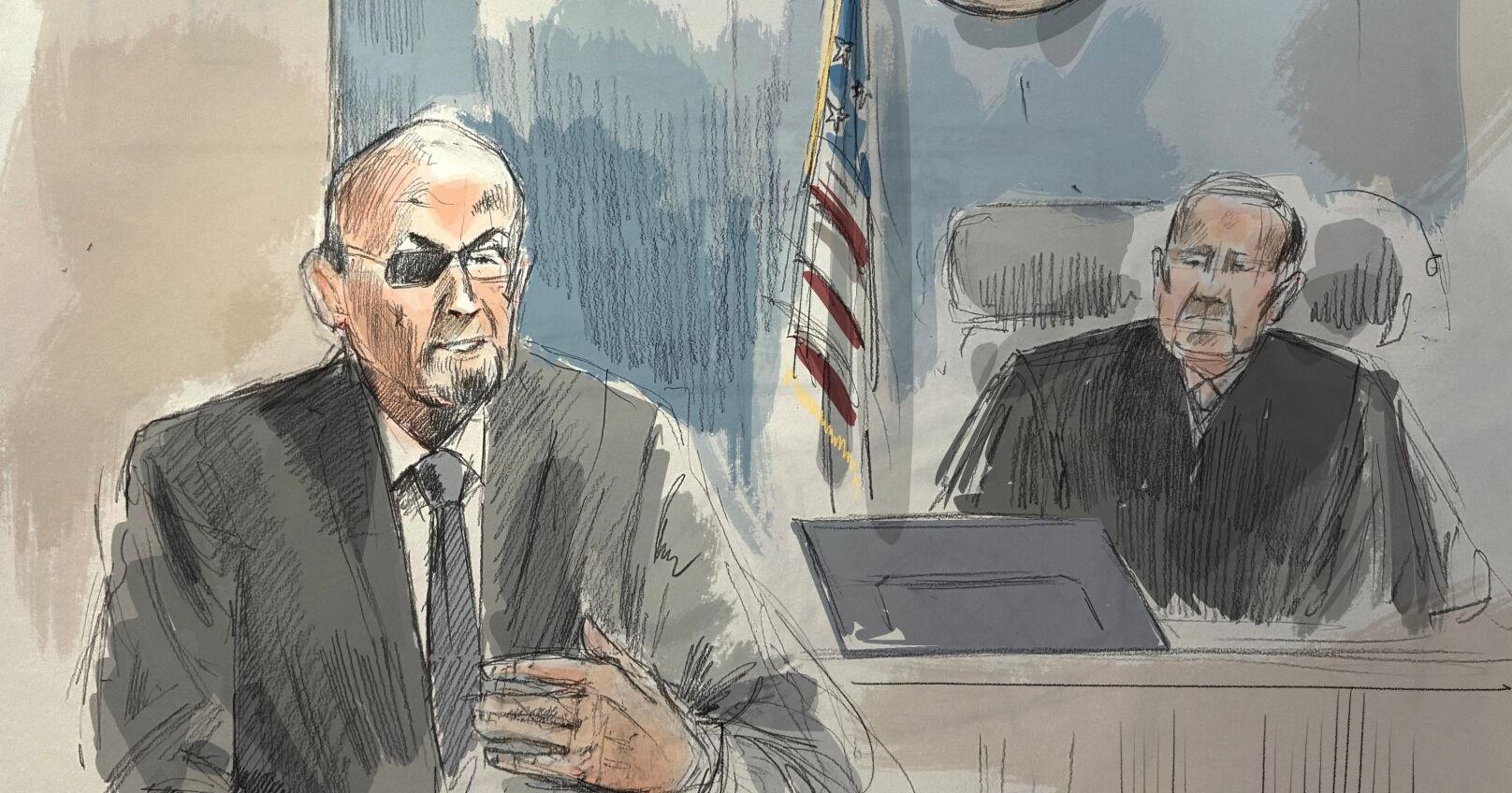
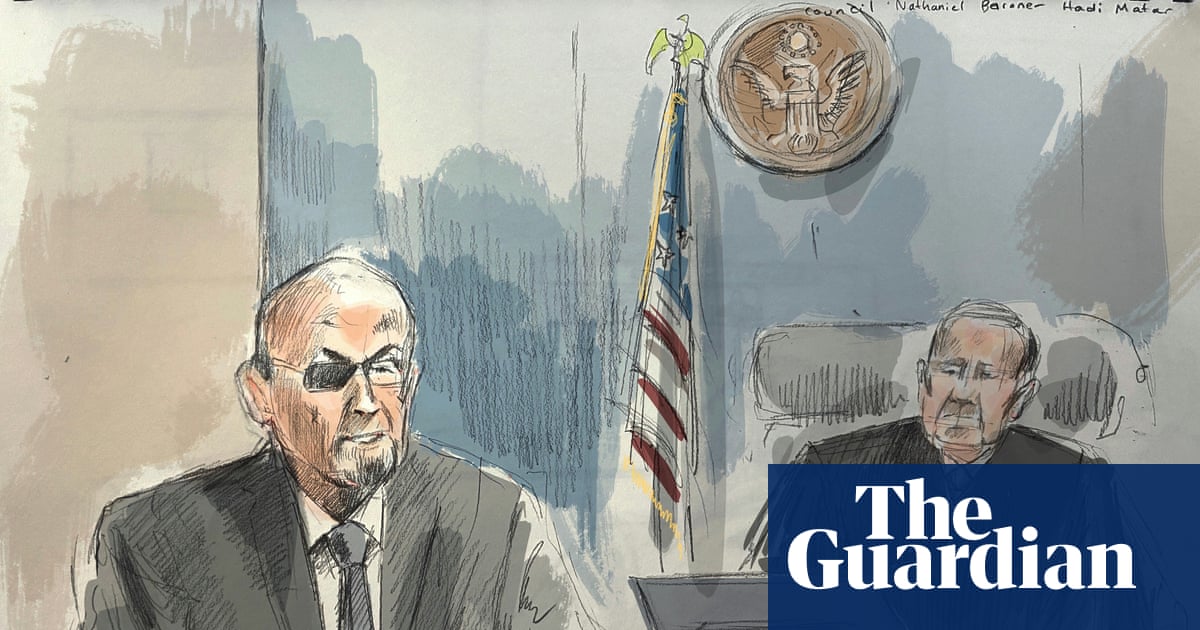
Four years after a knife attack nearly killed him, author Salman Rushdie testified in a Buffalo federal court on July 23, 2026, at the terrorism trial of Hadi Matar. Prosecutors argue Matar acted on a 1989 Iranian fatwa calling for the writer’s death over his novel The Satanic Verses.
Four years after an amphitheater ambush in western New York left him severely injured, Salman Rushdie sat across a courtroom from his convicted attacker to testify at a federal terrorism trial. The Booker Prize-winning author delivered composed, straightforward testimony before a federal jury in Buffalo, New York, recounting the events of August 12, 2022, when he was stabbed multiple times on stage.
Salman Rushdie Recalls the 2022 Attack and Lasting Injuries
Rushdie, now 79, recalled feeling what he initially thought was a punch under his chin before realizing he was bleeding. Within moments, the lecture stage became a scene of severe trauma. Rushdie testified that he found himself lying down with an enormous pool of blood all around me
that soon spread into what he described as an expansive lake.

During more than an hour on the witness stand, the author removed his glasses to show jurors his now-sightless right eye. His attacker, 28-year-old Hadi Matar, slashed him 15 times before spectators and fellow speaker Henry Reese intervened, according to court proceedings and prior reporting. The assault damaged Rushdie’s liver, paralyzed his left hand for a time, put him briefly on a ventilator, and came perilously close to his brain.
“The knife was a millimeter from my brain.”
Salman Rushdie, author, via Associated Press
Matar already stands convicted of state-level attempted murder and assault charges stemming from the Chautauqua Institution attack, for which a judge sentenced him to 25 years in prison. In the current federal proceeding, Matar faces charges that include engaging in an act of transnational terrorism, which carries a potential life sentence.
Federal Prosecutors Trace Alleged Ties to Iran and Hezbollah
While the state trial focused squarely on the physical assault, the federal terrorism case centers on Matar’s mindset and motivation. Assistant U.S. Attorney Timothy Lynch outlined the government’s case in opening statements, telling jurors that Matar spent years researching Rushdie’s habits, whereabouts, and daily routines before carrying out the attack.
According to federal prosecutors, Matar’s digital devices and New Jersey bedroom held photos of the late Iranian leader Ayatollah Ruhollah Khomeini, his successor Ayatollah Ali Khamenei, and figures associated with the Lebanese militant group Hezbollah.
The prosecution’s theory links the attack directly to the 1989 fatwa—a religious decree issued by Khomeini calling for Rushdie’s death over his novel The Satanic Verses,
which some Muslims viewed as blasphemous because of a dream sequence concerning the Prophet Muhammad.
Defense Challenges Intent and Direct Links to Terrorism
Defense attorneys have pushed back against the federal government’s terrorism narrative, arguing that prosecutors are asking jurors to connect circumstantial dots without concrete proof of what was happening in Matar’s mind on the day of the stabbing.
As the trial continues in Buffalo, the jury must weigh whether the 2022 stabbing constitutes an act of transnational terrorism directed by foreign influence or the isolated action of an individual. Matar maintains a not-guilty plea on the federal counts.
Related reading