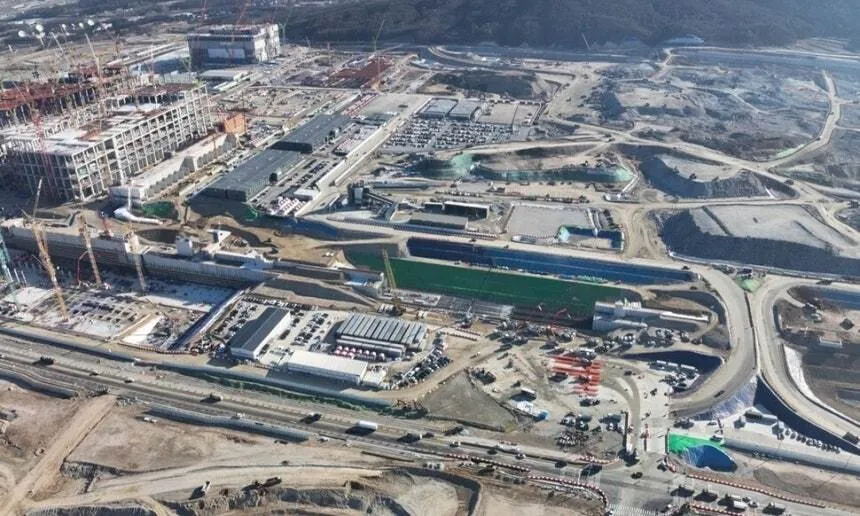
South Korea’s Honam region is poised to receive over $100 billion in semiconductor and AI infrastructure investments from Samsung Electronics and SK Hynix, marking the largest regional economic push since the $9 billion Saemangeum project. The deal—negotiated through direct meetings between President Yoon Suk-yeol and corporate leaders—combines tax breaks, energy subsidies, and infrastructure guarantees to accelerate chip production and AI data center development, while addressing long-standing concerns about economic imbalance between Seoul and provincial areas.
Announced in a series of high-profile meetings this month, the investments follow months of discussions between the Yoon administration and South Korea’s two largest semiconductor firms. Samsung will expand its chip manufacturing capacity in Honam, while SK Hynix will establish a dedicated AI data center cluster, leveraging the region’s underutilized industrial zones and lower land costs compared to Seoul’s congested metropolitan area. According to Reuters, the total investment package exceeds $100 billion, surpassing earlier estimates tied to the Saemangeum reclamation project.
The deal is framed as a “win-win” by both the government and corporate leaders, offering Samsung and SK Hynix access to tax incentives, subsidized electricity rates, and streamlined land acquisition—while Honam gains high-paying jobs, reduced regional unemployment, and infrastructure upgrades. However, critics warn the subsidies could strain public finances and raise questions about whether the benefits will outweigh the costs for local taxpayers.
Why Honam? Samsung and SK Hynix’s Strategic Shift Away from Seoul
South Korea’s semiconductor industry has long been concentrated in the Seoul-Gyeonggi-Incheon metropolitan area, where land prices and operational costs have risen sharply. Honam—comprising Jeolla and Jeju provinces—offers a stark contrast: lower land costs, abundant water resources for chip manufacturing, and proximity to ports for global supply chains. According to a Financial Times analysis, the region’s selection aligns with a broader global trend of semiconductor firms decentralizing production to mitigate risks from geopolitical tensions and natural disasters.

For Samsung, the move aligns with its $170 billion global semiconductor expansion plan announced last year, which includes facilities in the U.S., India, and Europe. SK Hynix, meanwhile, is positioning itself as a leader in AI-driven memory chips—a critical component for data centers powering generative AI models. The Honam investments will allow both firms to reduce reliance on Taiwanese and U.S. suppliers, a strategic priority amid ongoing trade tensions.
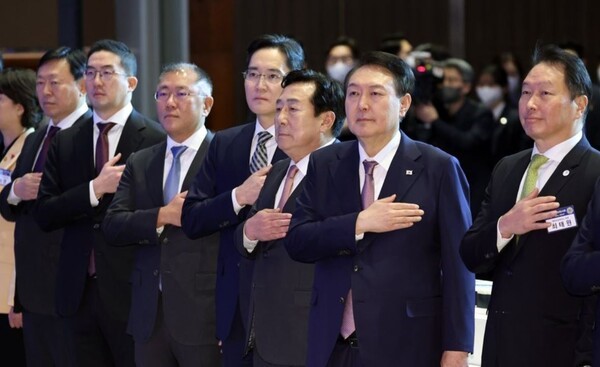
President Yoon Suk-yeol has framed the investments as part of his administration’s “New Southern Policy,” aimed at revitalizing Honam’s economy after decades of industrial decline. In a meeting with Samsung Electronics Vice Chairman Lee Jae-yong and SK Hynix CEO Choi Tae-won on May 15, Yoon emphasized the need to “balance economic development beyond the capital region”, citing Honam’s potential to create over 50,000 direct and indirect jobs by 2030.
What’s in the Deal? Tax Breaks, Energy Subsidies, and Infrastructure Guarantees
The Honam investment package includes three key components:

- Tax incentives: Samsung and SK Hynix will receive up to 10 years of corporate tax exemptions on new facilities, along with reduced property tax rates for industrial land. According to South Korea’s Ministry of Trade, Industry and Energy (MOTIE), the tax breaks are structured to offset the high initial costs of semiconductor fabs, which can exceed $10 billion per facility.
- Energy subsidies: The government will provide subsidized electricity rates for the semiconductor plants, reducing operational costs by an estimated 15–20%. Honam’s abundant hydropower resources—particularly in Jeolla Province—will also support the energy-intensive chip manufacturing process.
- Infrastructure guarantees: The government has pledged to fast-track construction of dedicated power grids, water treatment plants, and logistics hubs near the new facilities. A Yonhap report notes that SK Hynix’s AI data center in Gwangju will be connected to a new undersea fiber-optic cable linking Honam to global markets.
Critics, however, question whether the subsidies will be sufficient to offset the risks. A report by the Economic Daily highlights that similar incentives in the past—such as those offered to LG Display in Pyeongtaek—have struggled to attract long-term investment due to high labor costs and limited local talent pools.
How Will This Affect South Korea’s Semiconductor Industry?
The Honam investments could reshape South Korea’s semiconductor landscape in three key ways:
- Reduced reliance on Taiwan: With TSMC and other Taiwanese firms facing geopolitical pressures, Samsung and SK Hynix’s expansion in Honam will diversify production risks. Analysts at IHS Markit project that South Korea’s share of global semiconductor production could rise from 12% to 15% by 2027 if the Honam facilities reach full capacity.
- AI and data center growth: SK Hynix’s focus on AI data centers in Honam aligns with South Korea’s push to become a global AI hub. The company’s new facilities will support the training of large language models, reducing latency for domestic AI firms while competing with U.S. and Chinese data center clusters.
- Labor market shifts: Honam’s unemployment rate currently stands at 3.8%—higher than the national average of 2.9%, according to the Korea Statistical Office. The semiconductor investments could lower this rate by adding 50,000+ jobs, though experts warn that skilled labor shortages may persist without targeted education programs.
Yet, challenges remain. A JoongAng Ilbo analysis notes that Honam’s infrastructure—while cheaper than Seoul’s—lacks the high-speed rail and airport capacity needed to attract global talent. The government has committed to addressing these gaps, but construction timelines remain uncertain.
What Happens Next? Timeline for Construction and Potential Risks
Construction on the semiconductor facilities is expected to begin in late 2024, with initial production targeting 2026–2027. Key milestones include:
- Q3 2024: Finalization of land acquisition and environmental impact assessments.
- Q1 2025: Groundbreaking ceremonies for Samsung’s first Honam fab and SK Hynix’s AI data center.
- 2026: Pilot production phases, with full capacity expected by 2028–2030.
Risks to watch include:
- Global semiconductor demand: If AI-driven chip demand slows, the projects could face delays or cost overruns. SEMI forecasts a 12% growth in semiconductor capital expenditures in 2024, but geopolitical tensions could disrupt supply chains.
- Local opposition: Some residents in Honam have raised concerns about environmental impacts, including water usage and air pollution from semiconductor plants. Protests in Pyeongtaek over LG Display’s expansion serve as a cautionary tale.
- Government budget constraints: With South Korea’s debt-to-GDP ratio at 45%, funding the subsidies without raising taxes could strain public finances. The Ministry of Finance has not yet disclosed how the incentives will be financed.
Who Benefits—and Who Loses?
The Honam investments are designed to address long-standing economic disparities in South Korea, but the benefits will not be evenly distributed:
| Stakeholder | Potential Gains | Potential Risks |
|---|---|---|
| Samsung & SK Hynix | Lower operational costs, tax breaks, guaranteed energy supply | Dependence on Honam’s infrastructure; potential labor shortages |
| Honam Region | 50,000+ jobs, reduced unemployment, infrastructure upgrades | Environmental concerns, potential over-reliance on semiconductor sector |
| South Korean Government | Economic diversification, reduced Seoul-centric growth | High subsidy costs, potential budget strain |
| Global Semiconductor Market | Increased production capacity, reduced reliance on Taiwan | Potential price wars if demand slows |
Key Takeaways: What Readers Need to Know
- Honam’s semiconductor boom: Samsung and SK Hynix’s $100B+ investments will make South Korea’s Honam region a global semiconductor hub, competing with Taiwan and the U.S.
- Tax and energy incentives: The government is offering 10-year tax breaks and subsidized electricity to attract the firms, but critics question the long-term cost.
- Job creation vs. labor shortages: The projects could create 50,000+ jobs, but Honam lacks the skilled workforce to fill all roles without training programs.
- AI and data center focus: SK Hynix’s Honam facilities will prioritize AI-driven memory chips, positioning South Korea as a leader in next-gen computing.
- Risks to watch: Global demand, environmental concerns, and budget constraints could delay or reshape the projects.
The next major checkpoint will be the groundbreaking ceremonies in early 2025, where details on construction timelines and labor hiring plans will be announced. For updates, follow official statements from the Ministry of Trade, Industry and Energy and Samsung Electronics.
What do you think about South Korea’s push to decentralize its semiconductor industry? Will Honam’s investments pay off, or are the risks too high? Share your thoughts in the comments below.
Keep reading