
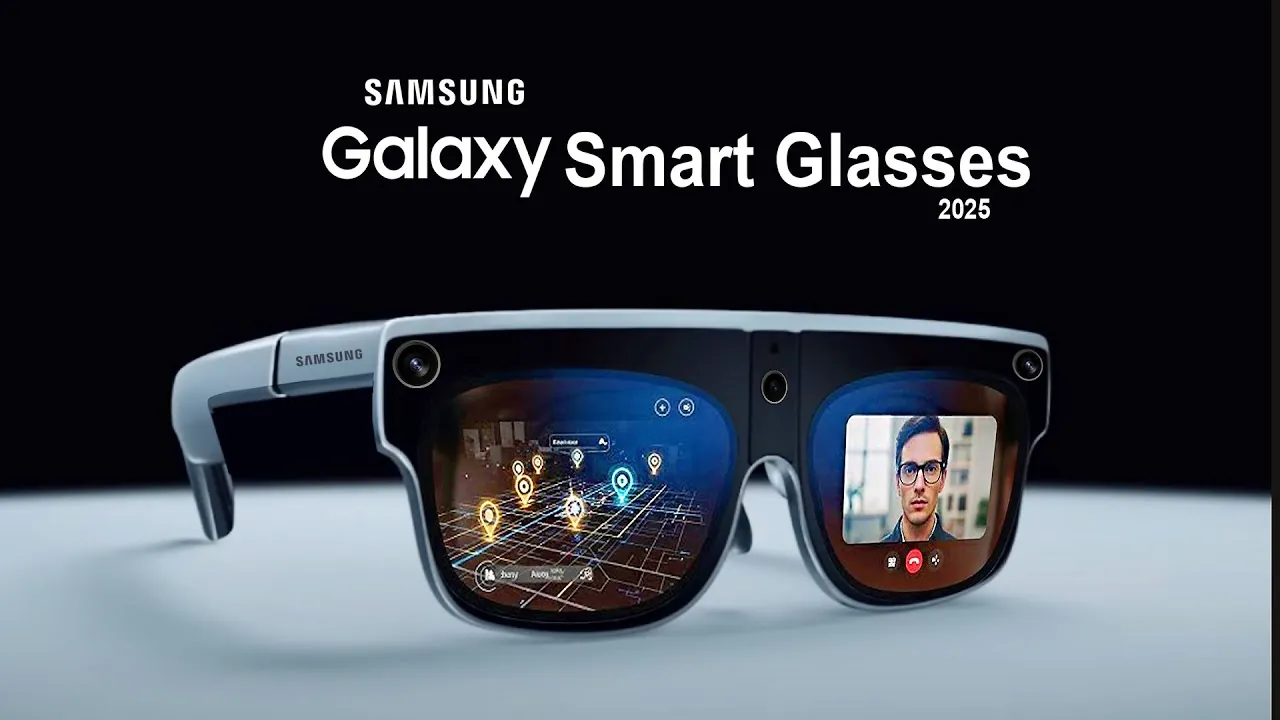
Recent reports indicate that Samsung is actively testing prototype smart glasses, marking the company’s latest attempt to enter the competitive augmented reality (XR) hardware market. While Samsung has not released an official launch date, leaked footage and industry documentation suggest the device will feature advanced gesture-based controls and deep integration with the Android XR ecosystem. These developments follow years of speculation regarding Samsung’s response to the growing interest in wearable spatial computing.
Understanding Samsung’s Move into Spatial Computing
Samsung’s interest in wearable displays is not new, but the recent emergence of prototype imagery represents a significant step forward. According to industry analysis from Android Authority, the company is developing these glasses as a direct competitor to existing head-mounted displays, focusing on a lightweight form factor rather than a bulky headset. The device is expected to operate within the broader Android XR framework, a software platform developed in collaboration with Google and Qualcomm to standardize the experience across different hardware manufacturers.

The strategic importance of this development lies in the “ecosystem” approach. By aligning with Google’s software initiatives, Samsung aims to ensure that its glasses can leverage existing applications, cloud services, and AI-driven features. This aligns with Samsung’s broader corporate strategy of integrating its hardware—ranging from mobile phones to home appliances—into a unified, interconnected environment.
Key Features and Control Mechanisms
Technical leaks suggest that the glasses will prioritize intuitive user interaction. Reports highlight the inclusion of sophisticated gesture-control systems, which would allow users to navigate interfaces without physical controllers. This shift toward “natural interaction” is a hallmark of modern spatial computing, where hand tracking and eye movement replace traditional input methods.

Furthermore, the hardware design appears to emphasize comfort and daily wearability. Unlike VR headsets that isolate the user, the current iteration of the Samsung prototype suggests a focus on augmented reality—overlaying digital information onto the physical world. This requires specialized optics and low-latency processing, which industry experts note are the primary technical hurdles for any company attempting to release consumer-grade smart glasses.
The Android XR Ecosystem and Competition
The market for smart glasses is currently characterized by intense competition and rapid innovation. Samsung is entering a landscape occupied by companies like Meta, which has seen success with its Ray-Ban smart glasses, and Apple, which recently released the Vision Pro. Samsung’s potential advantage rests on its massive manufacturing scale and its established presence in the mobile market, which provides a ready-made user base for new peripheral devices.
According to official announcements from Qualcomm regarding their partnership with Samsung and Google, the trio is working to define the future of immersive computing. This collaboration is intended to lower the barrier to entry for developers, creating a consistent environment where apps developed for one device can function on others. This standardization is critical for the long-term adoption of XR technology, as it prevents the fragmentation that has hindered previous generations of wearable tech.
What Happens Next?
As of late 2024, Samsung has maintained a policy of not commenting on unreleased hardware or rumors. Investors and technology enthusiasts are now looking toward major industry events, such as the upcoming Consumer Electronics Show (CES) or Samsung’s own “Galaxy Unpacked” events, for any formal acknowledgment of the project.

For consumers, the path forward involves watching for official certification filings, which often precede a commercial launch by several months. These regulatory documents, typically filed with bodies like the FCC in the United States, provide the first concrete evidence of a product’s technical specifications and intended release timeline. Readers interested in the latest updates can monitor Samsung’s official newsroom for press releases, which remain the only verified source for product availability and feature sets. We invite you to share your thoughts on the future of wearable tech in the comments section below.