Samsung Electronics Faces Historic Strike Threat as Labor Dispute Escalates Over Record Profits
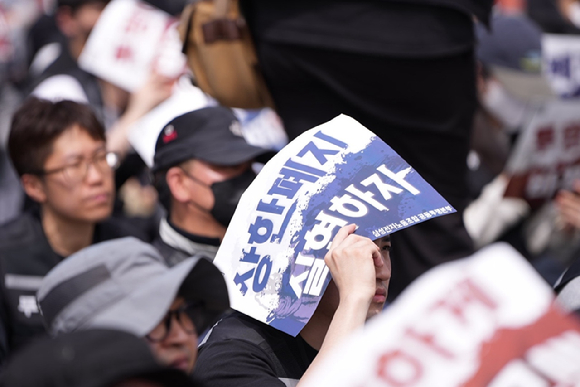
In an unprecedented show of labor unity, Samsung Electronics is bracing for what could become the largest strike in its 55-year history, as tensions between management and unions reach a boiling point over profit-sharing demands. The dispute, fueled by the company’s record-breaking earnings in the AI-driven semiconductor boom, has sent shockwaves through global supply chains and raised concerns about South Korea’s economic stability.
On April 23, 2026, approximately 40,000 unionized workers—representing nearly a third of Samsung Electronics’ domestic workforce—gathered at the company’s Pyeongtaek campus in Gyeonggi Province, South Korea, to demand sweeping changes to the company’s performance-based bonus system. The unions, led by the Samsung Electronics Labor Union (SELU), are calling for the abolition of the current 50% cap on performance bonuses and the institutionalization of a system that allocates 15% of the company’s annual operating profit to employee compensation. If their demands are not met, the unions have threatened an 18-day strike beginning May 21, which they warn could cost the company up to 18 trillion won ($13.3 billion) in lost production.
“This is not just about money—it’s about fairness and recognizing the contributions of workers who made these record profits possible,” said Choi Seung-ho, chairman of the Samsung Electronics Initial Labor Union, in a statement to reporters. “If the company refuses to negotiate in good faith, we have no choice but to seize action.”
The Stakes: A Company at the Crossroads of Profit and Labor
Samsung Electronics, the world’s largest memory chipmaker and a linchpin of South Korea’s export-driven economy, reported a record 300 trillion won ($222 billion) in operating profit for 2025, driven by surging demand for AI-related semiconductors and high-bandwidth memory (HBM) chips. The company’s semiconductor division alone accounted for nearly 80% of its profits, with margins exceeding 60% in some quarters. Despite this windfall, the unions argue that workers have not received a proportional share of the gains, pointing to the company’s long-standing policy of capping performance bonuses at 50% of annual salaries.
The unions’ demand for 15% of operating profits as bonuses would translate to an average payout of 350 million won ($258,000) per employee if applied across Samsung’s 128,000 domestic workers. For the 78,000 employees in the semiconductor division—the heart of the company’s profitability—the figure could exceed 500 million won ($370,000) per person. These numbers dwarf the company’s current bonus structure, which typically ranges between 20% and 50% of base salaries, depending on performance.
Samsung Electronics has pushed back against the unions’ demands, arguing that the proposed system is unsustainable and could jeopardize the company’s long-term competitiveness. In a statement released April 24, the company emphasized its commitment to “fair and transparent” compensation but warned that the unions’ proposal would “disproportionately benefit a little group of employees while undermining investment in future growth.” The statement likewise highlighted the company’s recent investments in AI research and development, which totaled 50 trillion won ($37 billion) in 2025, as critical to maintaining its market leadership.
A Broader Labor Movement: Ripple Effects Across South Korea’s Economy
The standoff at Samsung Electronics is not an isolated incident. Across South Korea’s corporate landscape, labor unions at major conglomerates—known as chaebols—are leveraging record profits to demand higher wages and more equitable profit-sharing. At SK Hynix, the world’s second-largest memory chipmaker, unions are pushing for a 10% share of operating profits as bonuses, while Hyundai Motor workers are demanding a 30% increase in performance-based pay. The simultaneous labor actions have raised concerns about a domino effect, with analysts warning that prolonged strikes could disrupt global supply chains for semiconductors, automobiles, and consumer electronics.
The timing of the disputes is particularly sensitive for South Korea’s economy, which is already grappling with external pressures, including slowing global demand for tech products and geopolitical tensions in the Middle East. Samsung Electronics alone accounts for roughly 20% of South Korea’s exports, and a prolonged strike could shave as much as 0.5 percentage points off the country’s GDP growth in 2026, according to estimates from the Korea Economic Research Institute.
The labor unrest has also reignited debates about South Korea’s dual labor market, where regular employees at large corporations enjoy job security and high wages, while temporary and contract workers—who make up nearly 30% of the workforce—face precarious conditions. The recent passage of the Yellow Envelope Law, which prohibits companies from suing unions for damages incurred during strikes, has emboldened labor groups across industries, including subcontractors and temporary workers who have historically had little bargaining power.
What’s Next: Negotiations, Legal Battles, and the Looming Strike Deadline
With the May 21 strike deadline prompt approaching, both sides are digging in for what promises to be a protracted battle. Samsung Electronics has already taken legal steps to preempt the strike, filing an injunction with the Seoul Central District Court to block the action on the grounds that it would violate the company’s collective bargaining agreement, which prohibits strikes during the term of the contract. The company has also accused union leaders of misusing employee data to organize the strike, a claim the unions deny.
The unions, meanwhile, have vowed to proceed with the strike if their demands are not met, framing the dispute as a test of the company’s commitment to “shared prosperity.” In a joint statement released April 25, the three largest unions at Samsung Electronics—SELU, the National Samsung Electronics Union, and the Together Union—called on the company to “abandon its outdated profit-sharing model” and embrace a system that “reflects the realities of the 21st-century economy.”
Analysts say the outcome of the dispute could set a precedent for labor relations in South Korea, where unionization rates have historically been low compared to other OECD countries. “This is a watershed moment for corporate Korea,” said Kim Jin-woo, a labor law expert at Kim & Chang, one of South Korea’s largest law firms. “If Samsung concedes to the unions’ demands, it could trigger a wave of similar actions across the chaebol sector. If it doesn’t, it risks alienating a workforce that is increasingly vocal about its rights.”
Global Implications: Why This Strike Matters Beyond South Korea
The potential strike at Samsung Electronics is being closely watched by global investors, policymakers, and industry leaders, given the company’s central role in the semiconductor supply chain. Samsung is the world’s largest producer of memory chips, which are critical components in everything from smartphones to data centers and AI systems. A prolonged disruption in production could exacerbate existing shortages in the global tech market, particularly for high-bandwidth memory (HBM) chips, which are in high demand for AI applications.
“Samsung’s dominance in the memory chip market means any disruption in its production capacity will have ripple effects across the tech industry,” said Neil Shah, vice president of research at Counterpoint Research. “Companies like Nvidia, Apple, and Microsoft, which rely on Samsung for memory chips, could face delays in product launches or increased costs if the strike goes ahead.”
The dispute also highlights broader tensions in the global tech industry, where soaring profits have not always translated into higher wages for workers. In the United States, tech giants like Amazon and Google have faced similar labor actions, with workers demanding better pay and working conditions amid record earnings. In Europe, labor unions have pushed for stricter regulations on profit-sharing, arguing that companies should be required to share a portion of their profits with employees.
For Samsung Electronics, the stakes could not be higher. The company is already locked in a fierce competition with TSMC and Intel in the AI chip market, and any disruption in production could cede ground to its rivals. At the same time, the company is under pressure to invest in next-generation technologies, including quantum computing and 6G networks, to maintain its competitive edge.
Key Takeaways: What Readers Need to Know
- Historic Strike Threat: Samsung Electronics faces an 18-day strike beginning May 21, 2026, if unions’ demands for a 15% share of operating profits as bonuses are not met. The strike could cost the company up to 18 trillion won ($13.3 billion) in lost production.
- Record Profits, Rising Tensions: The dispute is fueled by Samsung’s record 300 trillion won ($222 billion) operating profit in 2025, driven by AI-related semiconductor demand. Unions argue workers have not received a fair share of the gains.
- Broader Labor Movement: Similar disputes are unfolding at SK Hynix and Hyundai Motor, raising concerns about a domino effect across South Korea’s corporate sector and potential disruptions to global supply chains.
- Legal and Economic Risks: Samsung has filed an injunction to block the strike, while economists warn that prolonged labor actions could unhurried South Korea’s GDP growth by up to 0.5 percentage points in 2026.
- Global Implications: Samsung’s dominance in the memory chip market means any production disruptions could affect tech giants like Nvidia, Apple, and Microsoft, which rely on its chips for AI and consumer electronics.
The Path Forward: What Happens Next?
The next critical milestone in the dispute is the Seoul Central District Court’s ruling on Samsung’s injunction request, which is expected by May 10. If the court sides with the company, the unions could face legal consequences for proceeding with the strike. If the court denies the injunction, the unions are likely to move forward with their plans, setting the stage for the largest labor action in Samsung’s history.
In the meantime, both sides have signaled a willingness to negotiate, though neither has shown signs of backing down from their core demands. Samsung Electronics has offered to increase performance bonuses by up to 30% of base salaries, contingent on individual and company performance, but the unions have rejected the offer as insufficient.
For now, the world is watching—and waiting—to witness whether Samsung Electronics can navigate this crisis without derailing its global ambitions or further inflaming labor tensions in South Korea’s corporate sector.
What do you think about the growing labor disputes in South Korea’s tech industry? Should companies like Samsung share more of their profits with workers, or do the unions’ demands risk undermining long-term competitiveness? Share your thoughts in the comments below and join the conversation on World Today Journal’s social media channels.
Worth a look