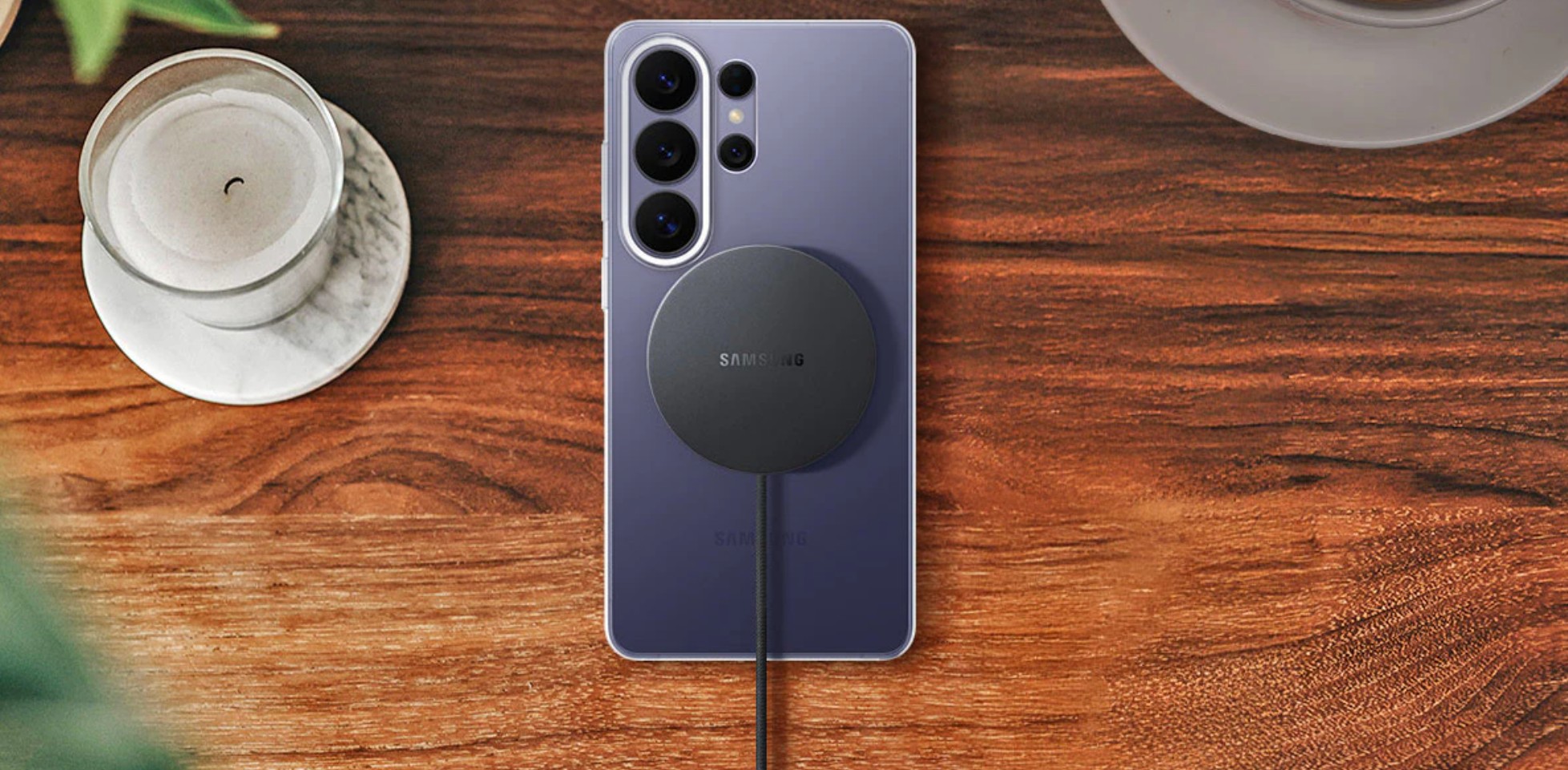
Samsung has quietly launched a 25W Magnetic Charging Pad designed to work with its new Galaxy S26 series, alongside the recently unveiled Galaxy S26, S26+ and S26 Ultra. However, a curious detail has emerged: despite offering a magnetic charging solution, Samsung’s latest smartphones don’t include the magnets necessary to fully utilize the technology. This means users will need to purchase a separate magnetic case to achieve optimal wireless charging performance, a move that has sparked debate among tech enthusiasts.
The new Magnetic Charging Pad supports up to 25W of wireless power, promising a 50% charge for the Galaxy S26 Ultra in just 31 minutes, according to Samsung. However, this speed is exclusive to the Ultra model. The Galaxy S26+ is capped at 20W, while the standard Galaxy S26 remains at 15W, consistent with the charging speeds of the Galaxy S25 series. The introduction of faster charging speeds, particularly for the flagship S26 Ultra, represents a significant upgrade in Samsung’s wireless charging capabilities, though the lack of built-in magnets complicates the user experience.
The Qi2 Standard and Samsung’s Approach
The situation highlights a nuanced approach to the emerging Qi2 wireless charging standard. While Samsung’s devices are “Qi2 ready,” meaning they are compatible with the standard, they lack the integrated magnets that enable the precise alignment and enhanced charging efficiency offered by the Magnetic Power Profile (MPP) of Qi2. According to the Qi specification, the Extended Power Profile (EPP) is limited to 15W speeds, while the 25W speeds require the MPP and active alignment provided by magnets. 9to5Google reports that this design choice raises questions about whether the Galaxy S26 Ultra truly requires a magnetic case to achieve the advertised 25W charging speeds.
This isn’t the first time Samsung has navigated the Qi2 landscape in a way that differs from competitors. Apple first integrated magnets into the iPhone in 2020 with the MagSafe system, allowing for straightforward attachment of accessories and optimized wireless charging. Google followed suit last year with the Pixel 10, establishing magnets as a key feature of the Android flagship experience. The decision to omit magnets from the Galaxy S26 series, despite the availability of the technology, has drawn criticism, with some observers suggesting it’s a cost-saving measure.
Compatibility and Accessory Ecosystem
The new Magnetic Charging Pad isn’t limited to the Galaxy S26 series. It’s too compatible with the Galaxy S25 series, which were also “Qi2 ready,” and the recently released Galaxy Buds4 and Buds4 Pro earbuds. However, the core issue remains: to fully benefit from the magnetic alignment and potentially improved charging efficiency, users will need to invest in a compatible magnetic case for their Galaxy S26. The magnetic alignment improves charging performance by minimizing energy leakage and ensuring a more stable connection. Beyond charging, magnets also enable the attachment of accessories like battery packs and card holders, a feature popularized by Apple’s MagSafe ecosystem.
The Samsung Magnetic Charging Pad 25W measures 4.4mm thick and includes a 1.5m woven cable. It features a non-slip surface to keep devices securely in place during charging. The charger is available for purchase at a price of €49.90 on its own, or €59.90 bundled with a power adapter. This pricing positions it competitively within the wireless charging market, but the added cost of a magnetic case for optimal functionality represents an additional expense for consumers.
Why the Lack of Built-in Magnets?
The question of why Samsung chose not to integrate magnets into the Galaxy S26 series remains a central point of discussion. One prevailing theory, as noted by Droid Life, is that Samsung assumes a large percentage of users already utilize phone cases, diminishing the perceived need for built-in magnetic functionality. However, this argument doesn’t fully address the benefits of magnetic alignment for those who prefer using their phones without a case or with minimalist case designs. Re-working the internal hardware to accommodate magnets would also likely increase production costs, a factor Samsung may have considered.
The decision also contrasts with the industry trend towards greater accessory integration and a more seamless user experience. The magnetic connection simplifies the process of attaching accessories and ensures a reliable charging connection, features that have resonated with consumers of both Apple and Google devices. The lack of built-in magnets on the Galaxy S26 series may, be seen as a missed opportunity to enhance the overall user experience and fully embrace the potential of the Qi2 standard.
The debate surrounding Samsung’s decision is further fueled by online discussions, with a recent poll on Reddit revealing a significant level of frustration among Android users. Many commenters expressed disappointment that Samsung continues to emulate Apple’s design choices selectively, often to the detriment of its own products.
As Samsung continues to refine its wireless charging strategy, the future of magnetic integration in its flagship devices remains uncertain. The company’s next move will likely be closely watched by both consumers and industry analysts, as the adoption of Qi2 and magnetic charging continues to gain momentum.
Samsung is expected to provide further updates on its charging technology and accessory ecosystem in the coming months. Consumers interested in learning more about the Galaxy S26 series and compatible accessories are encouraged to visit the official Samsung website for the latest information.
Keep reading