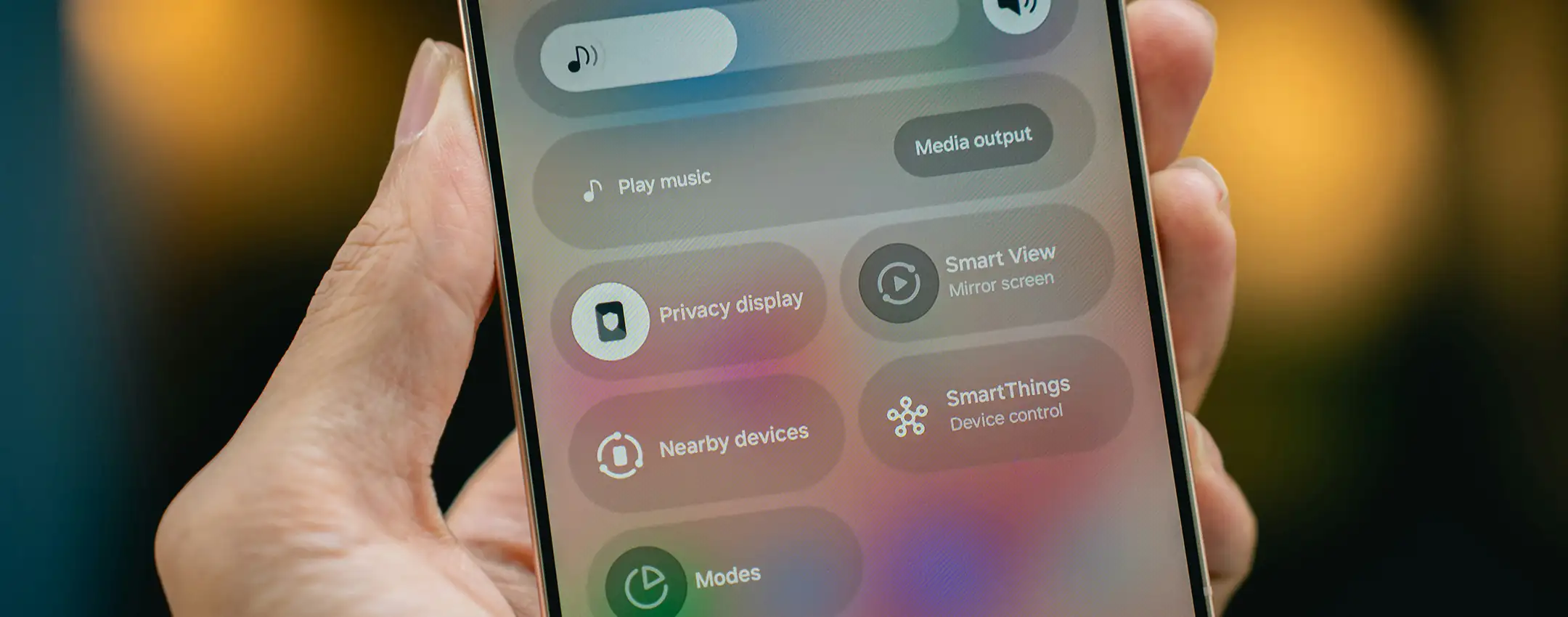
Samsung’s proprietary privacy display technology, designed to restrict viewing angles and protect sensitive on-screen data from prying eyes, remains a tightly controlled feature within the company’s ecosystem. Industry reports suggest that the South Korean manufacturer intends to maintain exclusive control over this hardware implementation through at least 2028, effectively limiting the immediate adoption of similar high-end privacy filters by competing smartphone brands.
For consumers and industry analysts alike, this development underscores the widening gap between standard OLED panels and specialized hardware-level security features. While software-based privacy solutions are widely available across the Android and iOS markets, the physical integration of privacy-focused display layers remains a rare differentiator for premium devices. According to industry supply chain tracking by Samsung Display, the company continues to invest heavily in specialized panel architectures that balance light transmission with off-axis visibility reduction.
Understanding Hardware-Level Privacy Displays
A privacy display works by physically restricting the light emission of a screen to a narrow cone, typically centered directly in front of the user. Unlike a traditional privacy screen protector—which is often a static film that can reduce screen brightness and clarity—Samsung’s approach involves embedding light-directing structures directly into the display panel. This allows the user to toggle the effect or maintain high-quality visuals while ensuring that individuals sitting to the side see only a darkened or obscured image.
The technical hurdle for competitors lies in the manufacturing process. Integrating these micro-layers without compromising the structural integrity or color accuracy of high-resolution OLED panels requires proprietary thin-film deposition techniques. As noted by the OLED-Info industry portal, the yield rates for such specialized displays are significantly lower than those for standard panels, making mass-market implementation prohibitively expensive for companies that do not control their own display supply chain.
The Impact of the 2028 Timeline
The reported 2028 exclusivity window functions as a significant barrier for other smartphone manufacturers attempting to catch up in the privacy-focused handset market. By securing its intellectual property and production capacity, Samsung aims to maintain a competitive advantage in the enterprise and security-conscious consumer segments. This strategy is consistent with Samsung’s broader efforts to leverage its vertical integration—from the Samsung Knox security platform to its advanced display manufacturing—to create a unified security value proposition.
For users, the immediate consequence is that hardware-integrated privacy features will likely remain limited to Samsung’s high-end flagship models for the next several years. Other manufacturers are expected to continue relying on software-based “privacy modes” or third-party tempered glass protectors. While these alternatives are more accessible, they often fail to replicate the seamless performance of a display engineered with privacy as a foundational component.
Market Dynamics and Future Alternatives
The broader smartphone industry is currently monitoring how competitors respond to this limitation. Some manufacturers, such as those within the BBK Electronics group or Xiaomi, have explored alternative methods for screen privacy, including software-driven brightness modulation and viewing angle restriction algorithms. However, these methods are often criticized for their impact on battery life and overall screen brightness. According to market research from IDC, the premium segment of the smartphone market is increasingly defined by such niche hardware capabilities, as consumers demand more robust data protection in public spaces.
The following table outlines the current landscape of display privacy solutions:
| Technology Type | Implementation | Availability |
|---|---|---|
| Integrated Hardware | Embedded in panel | Samsung Exclusive (Limited) |
| Software-Based | OS-level dimming | Widespread |
| Physical Add-on | Privacy film/Glass | Universal |
What Happens Next for Consumers
There are no indications that Samsung will license its privacy display technology to third-party smartphone vendors before the end of the decade. Consumers looking for hardware-level privacy will likely need to remain within the Samsung Galaxy ecosystem for the foreseeable future. For those concerned about visual privacy, the current market reality suggests that high-quality, third-party privacy glass remains the most viable, albeit imperfect, substitute.
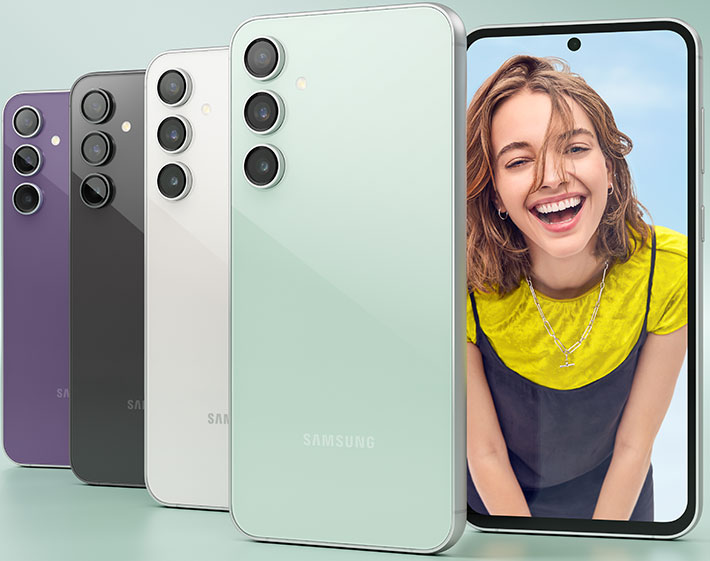
Industry observers expect the next major update regarding display technology standards to emerge during the upcoming Society for Information Display (SID) Display Week, where advancements in panel efficiency and light-directing materials are traditionally showcased. As the technology matures, it is possible that manufacturing costs will eventually decrease, potentially opening the door for wider adoption or the emergence of competitive, non-proprietary solutions by 2029 and beyond. We encourage readers to share their experiences with privacy display filters in the comments section below.