A San Francisco couple grading their Russian Hill backyard recently unearthed a 150-pound limestone sculpture buried nearly two feet underground, sparking a local mystery about the city’s artistic heritage. Greg Gatwood initially mistook the heavy, rectangular object for discarded construction debris while performing yard work at their two-story home, according to local news reports.
After turning the massive slab over, Gatwood and his partner, artist Judy Gittelsohn, discovered a detailed human face expertly carved into the stone. The limestone piece measures roughly two feet wide and nine inches thick, featuring smooth transitions that Gittelsohn immediately recognized as the work of a highly skilled hand, according to interviews covered by KTVU.
The unexpected find has drawn attention from local historians trying to piece together how a heavy piece of carved art ended up buried beneath a residential backyard. While the exact creator remains unknown, the discovery highlights the rich and sometimes hidden cultural layers embedded in San Francisco properties.
Uncovering the Russian Hill Mystery Stone
What started as a routine yard grading project quickly turned into an archaeological puzzle. Greg Gatwood described his initial encounter with the heavy stone slab, noting that he originally planned to simply pop it out of the dirt and throw it aside, assuming it was an ordinary piece of concrete, as reported by WKRC.
Once he rolled the heavy object over, the detailed features of a carved face came into view. Judy Gittelsohn, an artist, noted the exceptional craftsmanship required to achieve such smooth contours in limestone. “To get that smooth transition in carving a stone, any kind of stone, is really a masterful piece of work,” Gittelsohn told KTVU.
Ken Middlebrook, curator of collections at History San Jose, pointed out the unique nature of the discovery. “It is a treasure that they just found,” Middlebrook told KTVU, adding that the primary challenge moving forward will be determining who sculpted the face.
Investigating Ties to Ralph Stackpole and San Francisco Art History
As word of the backyard discovery spread through local circles, Gittelsohn began consulting fellow artists and friends to gather opinions on the sculpture’s style. One name surfaced repeatedly during these conversations: Ralph Stackpole, a sculptor and teacher in the early and mid-20th century.

“One of them said, ‘That looks like a Stackpole,’” Gittelsohn recalled to KTVU. “All the hairs on my body stood straight up.”
Stackpole taught at what is now the San Francisco Art Institute and left work across the city, including at the former Pacific Stock Exchange building and Coit Tower. Despite the stylistic similarities, Gittelsohn believes the piece is more likely the work of one of Stackpole’s students rather than Stackpole himself.
Ken Middlebrook characterized such occurrences as classic urban “mystories,” noting that San Francisco’s deep cultural history frequently yields unexpected artifacts in domestic spaces, whether buried in backyards or tucked away in old boxes, according to KTVU.
Future Plans for the Discovered Sculpture
Despite the uncertainty surrounding its origin, the couple has no intention of parting with the piece. Gatwood continues to work on landscaping around the heavy stone, while Gittelsohn plans to consult art experts to trace its history and uncover how it came to rest beneath their property.
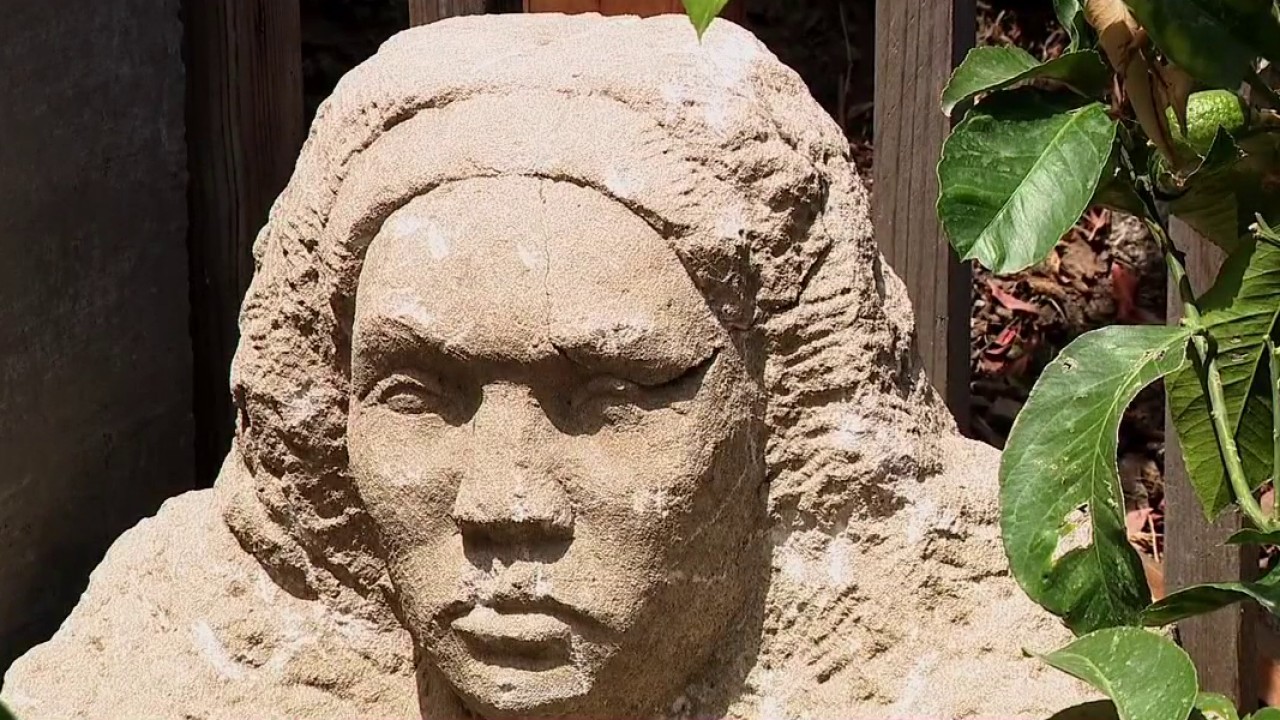
For now, the 150-pound carved limestone bust is set to remain a permanent fixture of their newly renovated garden, serving as an enigmatic link to San Francisco’s artistic past.