Mexico’s federal administration has unveiled a comprehensive strategic plan to combat the massive influx of sargassum, a pungent brown macroalgae that routinely chokes Caribbean beaches, disrupts coastal ecosystems, and threatens local tourism economies. Federal authorities, working alongside coastal municipalities and environmental researchers, announced the coordinated response as scientists warn that incoming seaweed volumes could set new records across the Riviera Maya and neighboring states.
The initiative brings together federal maritime agencies, state environmental ministries, and local sanitation crews to tackle the floating biomass before it fouls popular shorelines in destinations such as Tulum, Playa del Carmen, and Cancún. According to government briefings, the multi-layered strategy focuses on open-water collection, rapid nearshore barrier deployment, and optimized beach-cleaning logistics to minimize economic and environmental damage during peak tourism seasons.
Sargassum has plagued the wider Caribbean and the Gulf of Mexico for more than a decade, transforming from an occasional ecological oddity into a recurring seasonal crisis. Driven by rising ocean temperatures, changing current patterns, and nutrient runoff from agricultural basins, vast mats of the brown algae drift westward from the tropical Atlantic every spring and summer, piling up feet deep on white-sand beaches and emitting hydrogen sulfide gas as the plant material decays under the tropical sun.
Coordinated Maritime and Coastal Defense Strategy
The core of the federal response relies on a specialized fleet of barrier-laying vessels and collection ships operated by the Mexican Navy, known locally as Secretaría de Marina (SEMAR). According to maritime officials, naval crews deploy anchored containment booms several hundred meters offshore to divert floating sargassum masses into designated capture zones where specialized harvesting vessels scoop up the algae before it reaches the surf zone.
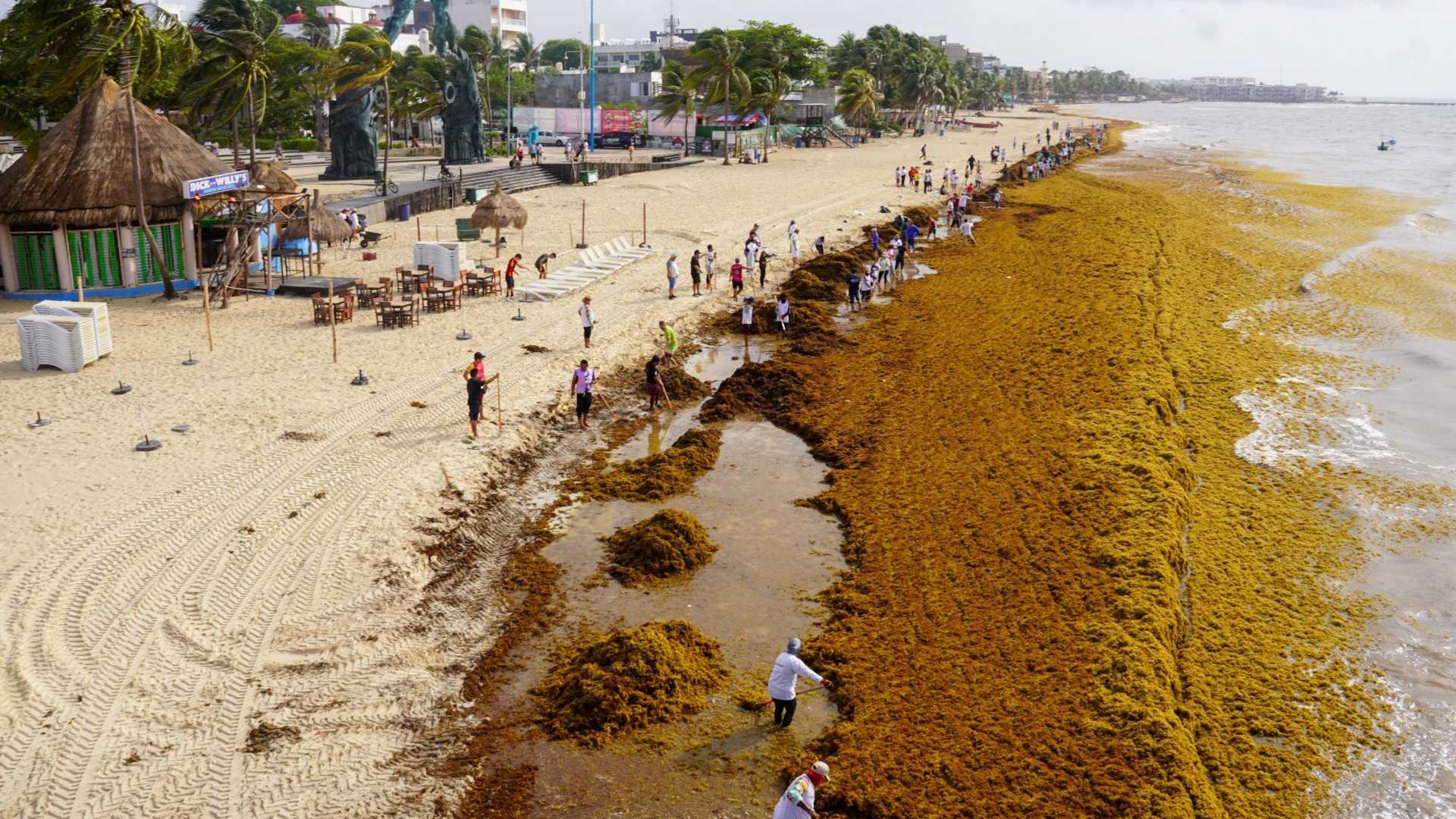
On land, municipal workers and private tourism operators coordinate hand-cleaning crews and mechanical tractors to clear material that breaches the marine barriers. Environmental regulations strictly govern the use of heavy machinery on nesting beaches for sea turtles, requiring careful coordination between sanitation contractors and federal ecological inspectors to protect local wildlife while maintaining clean public shores. Local hoteliers and business associations have also invested heavily in private containment nets and coastal cleanup crews, supplementing state-led efforts to protect key resort zones.
Scientific monitoring groups, including the Oceanographic Institute of the Gulf and Caribbean, track the movement of pelagic sargassum fields using satellite imagery and ocean current models. These institutions provide weekly forecasts to municipal leaders, allowing local authorities to deploy equipment and personnel to high-risk zones days before massive weed mats make landfall.
Economic Pressures and Environmental Impacts
The recurring sargassum crisis poses a severe threat to Mexico’s vital tourism sector, which generates billions of dollars annually and supports hundreds of thousands of jobs along the Caribbean coast. When thick layers of rotting algae accumulate on beaches, foul odors deter travelers, water discoloration impacts recreational swimming, and local municipalities face soaring costs for waste removal and disposal.
Beyond the economic toll, decomposing sargassum creates significant environmental challenges. When large masses accumulate in shallow nearshore waters, they block sunlight from reaching underlying coral reefs and seagrass meadows, while the respiration and decay of the plant deplete dissolved oxygen levels, occasionally causing localized fish kills. Furthermore, disposing of thousands of tons of harvested algae presents a logistical hurdle for inland landfills, prompting researchers to explore alternative uses such as organic fertilizers, construction bricks, and bio-plastics.
Federal environmental agencies continue to evaluate proposals from private enterprises seeking to process the harvested biomass into commercial products, aiming to transform a burdensome waste stream into a sustainable economic resource. As the current season progresses, federal and municipal agencies remain on high alert, utilizing real-time monitoring data and newly deployed maritime assets to mitigate the impact of the incoming seaweed.
Keep reading