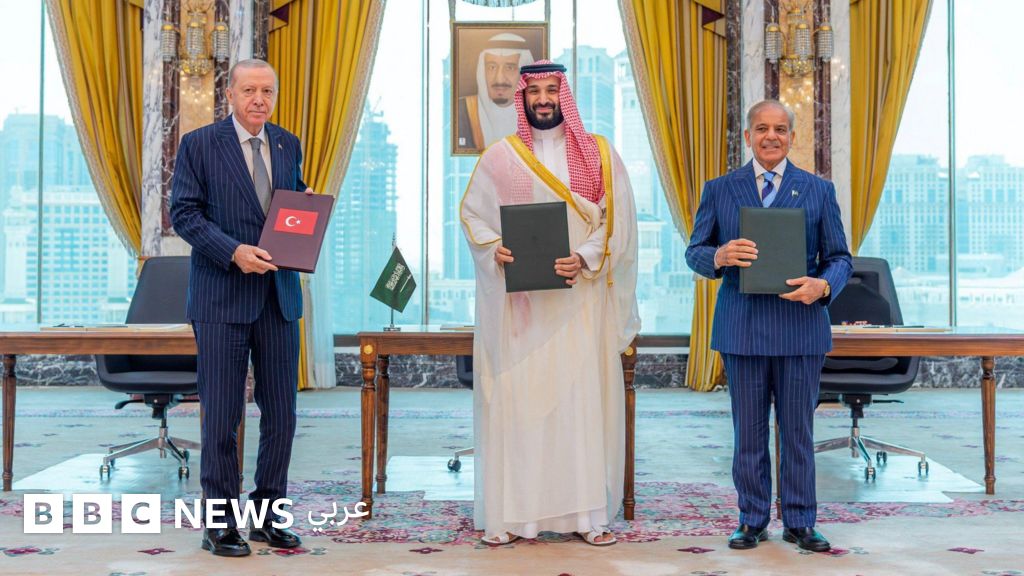
Saudi Arabia, Turkey, and Pakistan have formally signed the Mecca Joint Defense Agreement, establishing a trilateral security framework. The signing ceremony took place during high-level diplomatic engagements in the kingdom, where Riyadh actively distanced the pact from any sectarian military alignment or nuclear ambitions.
The accord has drawn international attention. Following the announcement, Iranian officials issued their first public response regarding the pact, questioning its capability to guarantee Saudi Arabia’s security. Meanwhile, diplomatic exchanges continued as Recep Tayyip Erdogan concluded a working visit to the kingdom, during which he joined Saudi and Pakistani leadership for Friday prayers at the Grand Mosque in Mecca.
As international observers analyze the broader geopolitical implications of the trilateral agreement, governments across the region are reviewing how the pact will influence existing security architectures.
Trilateral Strategic Framework and Leadership Engagements
The Mecca Joint Defense Agreement brings together Saudi Arabia, Turkey, and Pakistan. According to official reports from regional news agencies, the signing brought together senior leadership from Riyadh, Ankara, and Islamabad to codify defense commitments. The diplomatic outreach accompanying the agreement included high-profile joint appearances, underscoring the political weight attached to the pact by all three participating governments.
During his working visit to Saudi Arabia, Erdogan held talks with Saudi leadership alongside Shehbaz Sharif. The leaders participated in Friday prayers together at the Grand Mosque in Mecca, an event covered by regional media outlets including Youm7. The visible display of solidarity served to reinforce the diplomatic ties underpinning the new defense arrangement.
By coordinating strategic defense policies, the participating states aim to address shared security challenges.
Riyadh Rejects Sectarian and Nuclear Speculation
In response to commentary and regional concerns, official sources in Riyadh have moved swiftly to clarify the scope and intent of the Mecca agreement. According to comprehensive coverage by BBC Arabic, Saudi authorities explicitly rejected any characterization of the pact as a sectarian military axis. Officials emphasized that the framework is defensive.
Furthermore, the Saudi government addressed speculation linking the trilateral defense pact to nuclear ambitions, firmly denying any connection between the treaty and nuclear ambitions. Riyadh reiterated its commitment to regional norms.
These clarifications aim to assuage neighboring states. Regional diplomacy surrounding the agreement highlights the balance Saudi Arabia seeks to maintain as it strengthens ties with both Turkey and Pakistan.
Regional Reactions and Strategic Implications
The reception of the Mecca Joint Defense Agreement has varied. Iran offered the first notable external critique, with commentary questioning whether the pact could genuinely secure Saudi Arabia, as reported by Masrawy. Tehran’s response reflects regional sensitivities regarding new military alliances.
As the diplomatic dust settles following Erdogan’s departure from the kingdom, attention turns to the practical implementation of the pact.
Official updates regarding the implementation timeline are expected to be released through state media channels as the signatory nations finalize operational protocols. Readers interested in ongoing developments can monitor official government statements and updates from major international news organizations for further announcements.
Worth a look