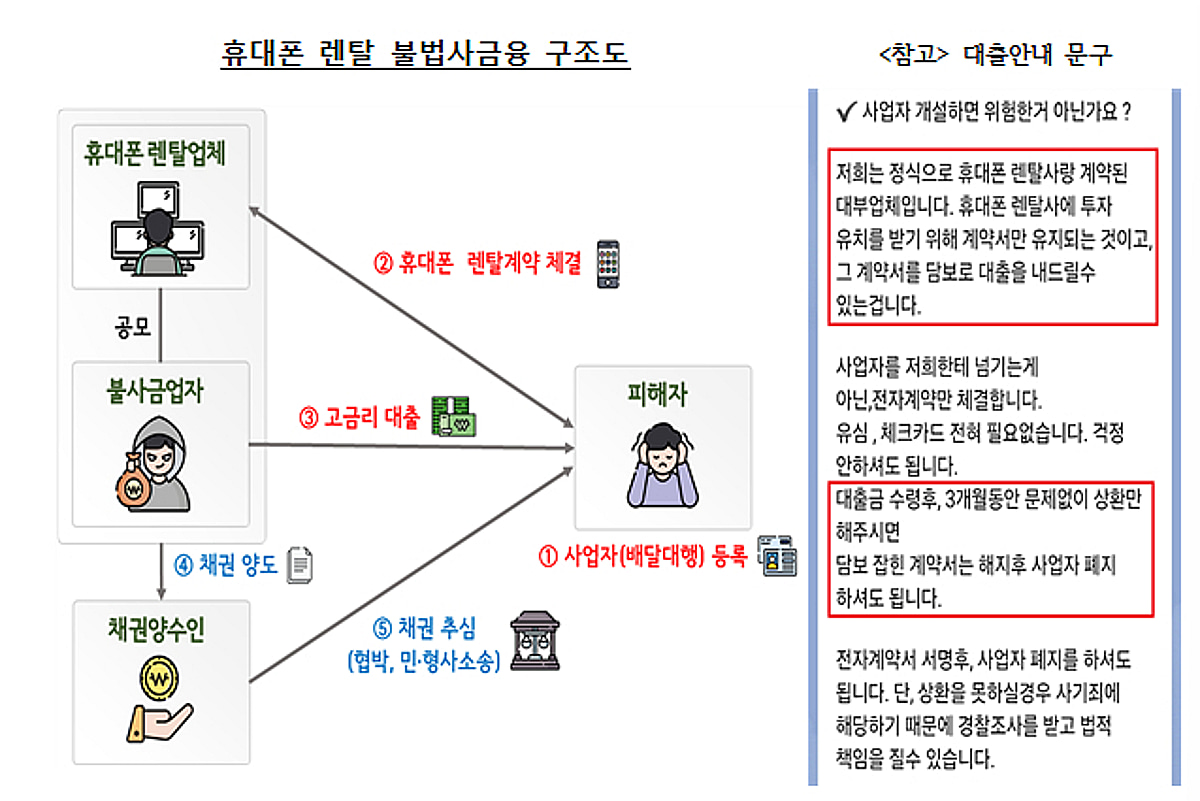
Financial regulators and law enforcement agencies are warning of a sophisticated new form of illegal lending that targets vulnerable individuals through fraudulent mobile phone rental agreements. Perpetrators of this scheme induce victims to sign digital rental contracts for devices they never receive, then use those fraudulent contracts as collateral to issue high-interest loans that can reach an annual percentage rate (APR) of 160%. Victims often discover they are saddled with significant debt, in some cases exceeding 34 million KRW, for hardware that was never in their possession.
This predatory practice, often described by authorities as a “rental loan scam,” represents a shift in the methods used by unregistered lenders to bypass traditional credit checks and usury laws. By leveraging the administrative process of mobile device rentals, these operators create a paper trail that complicates legal recourse for the victims involved. According to the Financial Supervisory Service (FSS), such schemes typically target individuals with limited access to conventional banking, trapping them in cycles of debt that are difficult to escape due to the exorbitant interest rates applied.
The Mechanics of the Rental Loan Trap
The scam begins with advertisements promising easy credit or “no-collateral” loans, often distributed through social media or messaging platforms. Once a victim engages, the lenders require them to sign a rental agreement for a high-end smartphone. The lenders claim this process is a procedural necessity to verify the borrower’s identity or creditworthiness. In reality, the victim never receives the physical device; the equipment is diverted by the criminal organization, while the victim remains legally bound to the rental payments.
Once the rental contract is active, the lenders use the obligation as a basis to issue a “loan.” Because the victim is already locked into the rental contract, they are often coerced into paying additional fees or interest on the principal amount, which is effectively a loan taken out against their own credit. As documented by Financial Services Commission (FSC) advisories regarding illegal private financing, these loans frequently carry interest rates that far exceed the statutory limit in South Korea, which is currently capped at 20% under the Interest Limitation Act. Rates reaching 160% are common in these illicit arrangements, leading to rapid debt accumulation for victims who are often unaware of the full legal implications of the documents they signed.
Identifying Signs of Predatory Lending
Financial experts emphasize that legitimate lenders do not require borrowers to sign rental agreements for hardware they do not intend to use. When assessing potential financial risks, consumers should be wary of any organization that requests the following:
- Rental Contracts as Prerequisites: Any demand to sign a rental agreement for electronic devices as a condition for receiving a loan is a major red flag.
- Lack of Physical Possession: If a lender handles the shipping or “management” of a device on behalf of the borrower, it is likely a fraudulent scheme.
- Exorbitant Interest Rates: Any loan agreement that calculates interest at rates significantly higher than the legal maximum of 20% per annum is prima facie evidence of illegal private financing.
- Pressure Tactics: High-pressure sales tactics or requirements to provide sensitive personal information via unverified messaging apps are common indicators of criminal intent.
The Korean National Police Agency advises that victims of these schemes should preserve all communication logs, digital contracts, and transfer records to assist in formal investigations. Reporting these incidents is essential, as these organizations often operate in coordinated networks that require multi-agency intervention to dismantle.
Regulatory Response and Consumer Protection
Regulators are currently focusing on strengthening oversight of the mobile rental market to prevent these agreements from being exploited as financial products. The challenge lies in the decentralized nature of these operations, which often shift platforms quickly to avoid detection. The FSS periodically updates its list of prohibited financial behaviors and provides resources for victims to report illegal lending activities through its dedicated hotline and website.
Consumers who suspect they have been targeted by such a scam are encouraged to verify the registration status of any lending institution through official government databases before entering into any financial agreement. If a debt has already been incurred under these circumstances, seeking legal counsel or contacting a financial debt counseling center is recommended to understand the options for nullifying fraudulent contracts. The next major assessment of illegal private financing trends is expected to be included in the upcoming quarterly report by the Financial Supervisory Service, which will detail ongoing enforcement efforts against such illicit digital lending practices.
Have you or someone you know encountered suspicious lending practices? Share your experiences or questions in the comments below, and stay informed by following our business coverage for updates on financial security and consumer rights.
Worth a look