
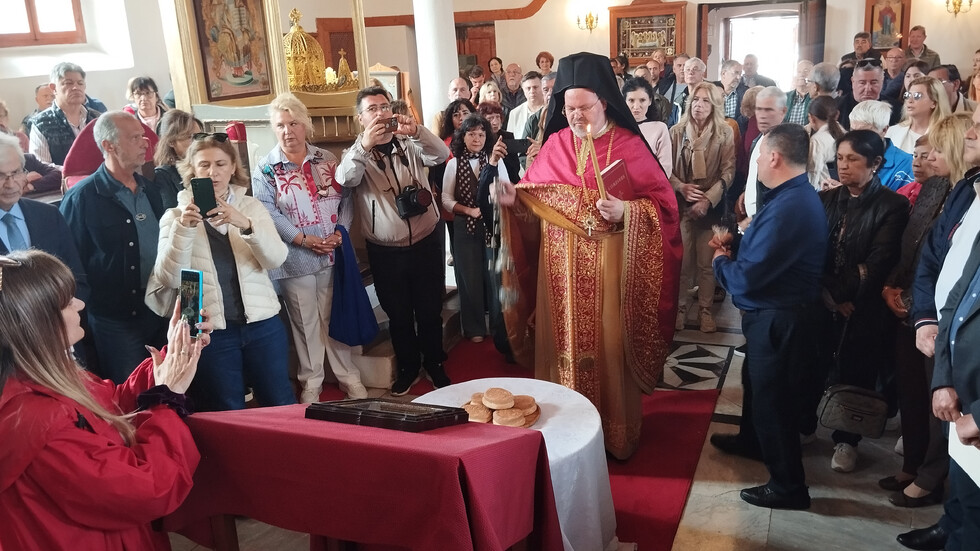
The board of Istanbul’s Bulgarian Orthodox community has issued a formal ban on Greek-language services within Bulgarian churches in Edirne, Turkiye. This decision follows a sharp dispute during the recent celebrations of St. George’s Day, marking a significant escalation in tensions over liturgical identity and religious administration in the region.
The conflict centered on the Bulgarian Orthodox Church of St. George the Victorious, located in Edirne’s Kiyik district. According to reports from the Bulgarian national news agency BTA, the friction began when Greek Orthodox clergy, specifically a metropolitan sent by the Ecumenical Patriarchate, reportedly attempted to conduct the liturgy in Greek.
The incident occurred during a high-profile gathering for St. George’s Day, the patron feast of the church, which drew hundreds of Bulgarian worshippers who had traveled to Edirne for the occasion. The attempt to shift the language of the service triggered immediate objections from the congregation, leading to the current administrative ban on Greek-language liturgies in these specific sites.
The St. George’s Day Clash and Liturgical Identity
The dispute highlights a deep-seated tension regarding the linguistic and cultural autonomy of the Bulgarian Orthodox community in Turkiye. Worshippers at the Church of St. George the Victorious argued that services held within a Bulgarian church should be conducted in the Bulgarian language. Many of the congregants reported that they do not understand Greek, making the attempted shift in liturgy a barrier to their worship and a point of cultural contention.

The reaction within the community was swift and strong. The board of Istanbul’s Bulgarian Orthodox community stepped in to protect the linguistic traditions of the church, ensuring that future services remain accessible to the Bulgarian faithful. This move is seen as an effort to preserve the distinct identity of the community in the face of perceived interference from the Ecumenical Patriarchate.
The events were not only felt locally but gained traction across regional media, including coverage by Turkish outlets such as Yeni Birlik and Haberturk, reflecting the sensitivity of religious and ethnic identity within the borders of Turkiye.
The Influence of the Ecumenical Patriarchate
At the heart of the friction is the role of the Ecumenical Patriarchate, which sent the Greek Orthodox metropolitan to lead the service. The Patriarchate’s involvement in the liturgy at a Bulgarian-affiliated church was viewed by the local community as an overreach, sparking a debate over who holds the authority to determine the language of worship in Edirne’s Bulgarian churches.

While the Ecumenical Patriarchate maintains a broad spiritual jurisdiction, the Bulgarian community in Istanbul and Edirne has asserted its right to maintain its own liturgical language. The ban on Greek-language services serves as a formal boundary, signaling that the Bulgarian community intends to maintain control over the cultural and linguistic character of its religious spaces.
A Legacy of Faith in Edirne
The Church of St. George the Victorious is part of a compact but significant religious landscape in Edirne. Notice currently two active churches belonging to the Bulgarian Orthodox Church in the city. In addition to the Church of St. George, the community maintains the church of Saints Constantine and Helena.
The Church of St. George holds particular historical value, having been built in the second half of the 19th century. According to records from Turkish Archaeological News, the church was formally consecrated on May 9, 1880. This long history of presence in Edirne underscores why the community is so protective of its traditions and the language used during its most sacred feasts.
For the hundreds of Bulgarians who travel to the Kiyik district every year, the church is more than a place of worship; We see a symbol of their enduring heritage in Turkiye. The recent Bulgarian Orthodox Church Edirne language dispute underscores the fragility of these cultural balances when administrative and spiritual jurisdictions overlap.
As the community moves forward, the focus remains on ensuring that the Bulgarian language continues to be the primary medium of faith in these historic institutions. The board’s decision to ban Greek services is a direct response to the events of St. George’s Day, aiming to prevent similar conflicts during future religious observances.
The situation remains a point of monitoring for those following the intersection of religious diplomacy and ethnic identity in the Balkans and Turkiye. The next official updates regarding the administration of these churches are expected to come from the board of the Bulgarian Orthodox community in Istanbul.
Do you believe linguistic autonomy is essential for preserving religious identity in multicultural regions? Share your thoughts in the comments below or share this story with your network.