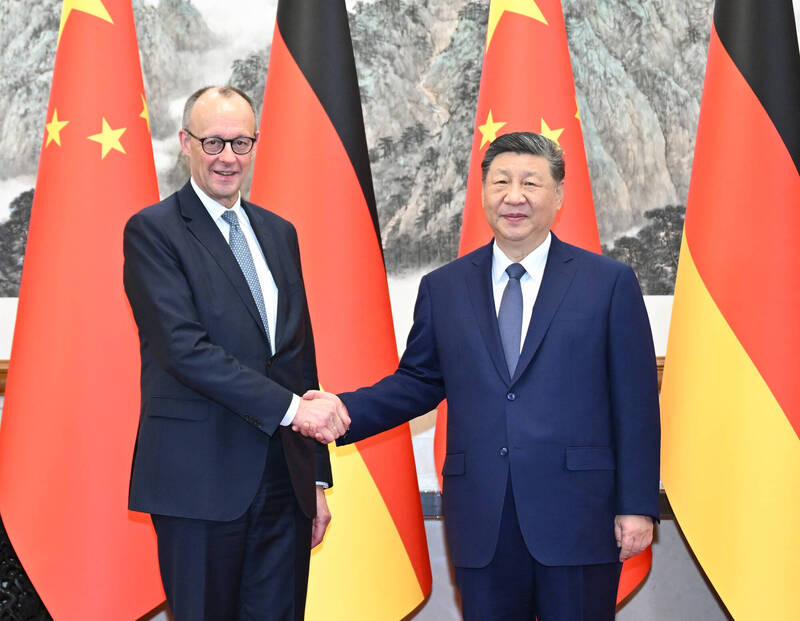
Beijing – German Chancellor Friedrich Merz concluded a two-day visit to China on February 26, 2026, delivering a clear message to President Xi Jinping regarding both the ongoing conflict in Ukraine and the sensitive issue of Taiwan. Merz urged Xi to leverage China’s influence to de-escalate the war in Ukraine and unequivocally stated that any future efforts towards unification between China and Taiwan must be achieved peacefully, rejecting the use of military force. The visit, occurring as both nations seek to strengthen economic ties amidst global uncertainties, also resulted in a significant agreement for the purchase of Airbus aircraft by China.
The German Chancellor’s visit marks a crucial moment in Sino-German relations, taking place against a backdrop of shifting global dynamics and increasing geopolitical tensions. Germany, a key player in the European Union, is navigating a complex relationship with China, balancing economic interests with concerns over human rights and international security. The discussions between Merz and Xi underscore the importance of dialogue and diplomatic efforts in addressing pressing global challenges. The timing of the visit is also notable, coinciding with a period of heightened uncertainty stemming from evolving trade policies and geopolitical realignments.
Urging De-escalation in Ukraine and Respect for International Law
A central focus of the talks was the war in Ukraine. Merz directly appealed to President Xi Jinping to utilize China’s considerable influence to bring an conclude to the Russian invasion. He specifically requested that China refrain from providing Russia with any materials – whether civilian or military – that could be used to support its war efforts in Ukraine. According to reports from the German “Wirtschaftswoche” (Economic Weekly), Merz emphasized the significance China’s actions hold for Moscow, stating that “China’s words and deeds are highly valued by Moscow.” Tvbs News reported that Merz called on Xi to exert pressure on Russia to end the conflict.
This appeal reflects growing international concern over China’s stance on the Ukraine conflict. While China has called for a peaceful resolution, it has refrained from condemning Russia’s actions and continues to maintain economic ties with Moscow. Western nations have been closely watching China for any signs of material support for Russia, which could further escalate the conflict. The Chancellor’s direct request to Xi underscores the urgency with which Germany and its allies view the situation and the importance of China playing a constructive role in achieving peace.
A Firm Stance on Taiwan: Peaceful Resolution Only
Turning to the issue of Taiwan, Merz reiterated Berlin’s longstanding policy, emphasizing that any move towards unification must occur peacefully. He explicitly warned against the use of military force, stating that “any effort towards unification must be achieved peacefully, not by resorting to military means.” Liberty Times reported on Merz’s firm stance on the matter. This message aligns with the international community’s consistent call for a peaceful and democratic resolution to the cross-strait issue.
The situation surrounding Taiwan remains a major flashpoint in international relations. China views Taiwan as a renegade province and has not ruled out the use of force to achieve unification. The United States and other Western nations have expressed strong support for Taiwan’s democratic government and have warned China against any aggressive actions. Germany’s clear articulation of its position on Taiwan underscores its commitment to maintaining peace and stability in the region. The Chancellor’s message serves as a reminder to Beijing that the international community will not tolerate any unilateral attempts to alter the status quo by force.
Economic Cooperation and Airbus Deal
Beyond the geopolitical discussions, the visit also yielded significant economic outcomes. During the meetings, it was announced that China intends to purchase up to 120 Airbus aircraft. Upmedia reported on the substantial aircraft purchase. This deal represents a major boost for the European aerospace industry and signifies China’s continued demand for commercial aircraft. Merz also indicated that further deals with multiple German companies are anticipated.
The Airbus agreement highlights the enduring economic relationship between Germany and China, despite growing geopolitical tensions. China is a crucial market for German exports, and German companies have invested heavily in the Chinese economy. Merz described the relationship as a “full strategic partnership,” signaling a desire to deepen cooperation in various sectors. He emphasized the strength of trade between the world’s three largest economies, stating that “the very fact that two of the world’s three largest economies engage in such trade has immense power.”
Navigating a Complex Relationship Amidst Global Uncertainty
The timing of Merz’s visit is particularly significant, as both Germany and China seek to strengthen cooperation in the face of global uncertainties. The rise of protectionist trade policies, particularly those initiated by former U.S. President Donald Trump, and fluctuating diplomatic relations have prompted both nations to seek greater stability in their economic partnership. The Chancellor’s visit underscores a commitment to maintaining open lines of communication and fostering mutually beneficial economic ties.
The visit also comes as Europe grapples with the implications of a potential second Trump presidency. The former U.S. President’s “America First” policies and willingness to impose tariffs on imports have created uncertainty for European businesses. Strengthening ties with China could provide a buffer against potential disruptions to trade with the United States. However, it also raises concerns about over-reliance on a single market and the need to diversify economic partnerships.
Key Takeaways
- German Chancellor Friedrich Merz urged President Xi Jinping to use China’s influence to end the war in Ukraine and refrain from providing support to Russia.
- Merz reaffirmed Germany’s position that any unification between China and Taiwan must be peaceful and without the use of military force.
- China announced its intention to purchase up to 120 Airbus aircraft, signaling continued economic cooperation between the two nations.
- The visit underscores the complex relationship between Germany and China, balancing economic interests with geopolitical concerns.
Looking ahead, the implementation of the Airbus deal and the ongoing dialogue between Germany and China will be key indicators of the evolving relationship. Further developments in the Ukraine conflict and the situation surrounding Taiwan will also significantly influence the dynamics between the two countries. The next major checkpoint will be the ongoing monitoring of China’s actions regarding Russia and the continued observation of military activity in the Taiwan Strait.
We encourage readers to share their thoughts on this developing story and engage in constructive discussion in the comments section below. Your insights are valuable as we continue to follow this important geopolitical development.