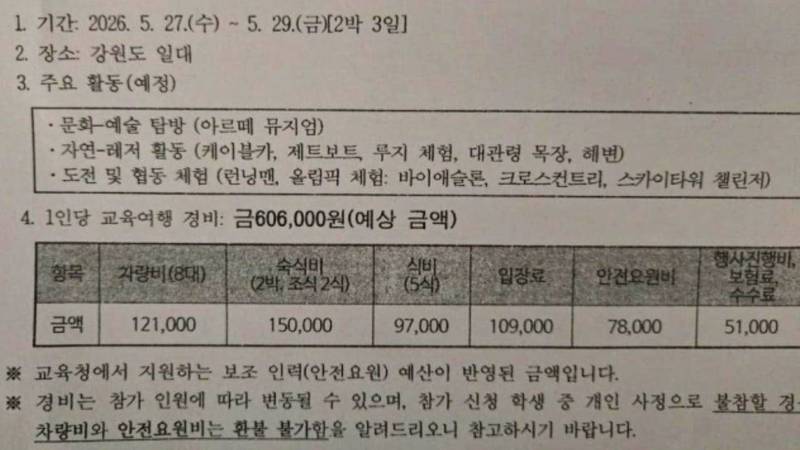
A debate has emerged within the South Korean educational community regarding the rising costs of school field trips, specifically centering on a reported price tag of 600,000 KRW for a single excursion. The controversy highlights a growing tension between the desire for high-quality, immersive educational experiences and the financial pressures placed on parents.
At the center of the discussion is the balance between the quality of the student experience and the affordability of the trip. While some argue that such costs are excessive, educators have stepped forward to explain the logistical and financial realities of organizing modern school trips that meet contemporary standards of safety and engagement.
One educator, identified as “A,” has countered criticisms by stating that an increase in the quality of the trip inevitably leads to higher costs. According to the educator, these excursions are not decided arbitrarily but are the result of a structured process involving demand surveys and collaborative planning between teachers and parents.
The Role of Demand Surveys in Trip Planning
To ensure transparency and consensus, South Korean schools typically employ a rigorous preliminary process before finalizing trip itineraries. This often begins with a demand and preference survey to determine whether parents and students prefer residential or non-residential options. These templates are designed to gather specific feedback on the type of experience desired, allowing schools to tailor the trip to the majority’s preference as seen in standard school communication forms.
The planning process generally involves several key steps to mitigate conflict over costs:
- Initial Demand Survey: Assessing whether a majority of students are interested in participating.
- Preference Polling: Determining the preference between overnight stays (residential) and day trips (non-residential).
- Collaborative Review: Involving parent representatives and teachers in the selection of destinations and services to ensure the costs align with the perceived value.
Shift Toward Small-Scale and Theme-Based Learning
Recent trends in South Korean education reveal a shift away from massive, uniform group tours toward more personalized, “small-scale” or “theme-based” field trips. This approach aims to provide students with more focused educational outcomes rather than general sightseeing.

For example, some school plans for the 2025 academic year indicate a move toward theme-based operations to better reflect student interests and educational goals as outlined in recent preference survey documents. While these specialized trips can offer deeper learning, they often require more complex logistics and specialized guides, which can contribute to the overall cost.
Stakeholders and the Cost-Quality Trade-off
The debate over the 600,000 KRW cost reflects a broader systemic challenge. For parents, the expense can be a significant burden, especially for families with multiple children. For educators, the pressure is to provide a safe, high-quality environment that justifies the cost and avoids the pitfalls of low-budget arrangements that may compromise student safety or the educational value of the trip.
Educator “A” emphasized that the participation of both parents and teachers in the decision-making process is intended to create a shared understanding of why certain costs are necessary to achieve a specific level of quality.
As schools continue to navigate these financial disputes, the focus remains on maintaining a transparent communication channel through official home correspondence and formal surveys to ensure that the final trip plan is acceptable to the community it serves.
Further updates on school trip guidelines and cost regulations are typically released through official school board announcements and district education office directives.
Do you believe the quality of educational field trips justifies higher costs, or should there be a strict cap on school excursion fees? Share your thoughts in the comments below.
Keep reading