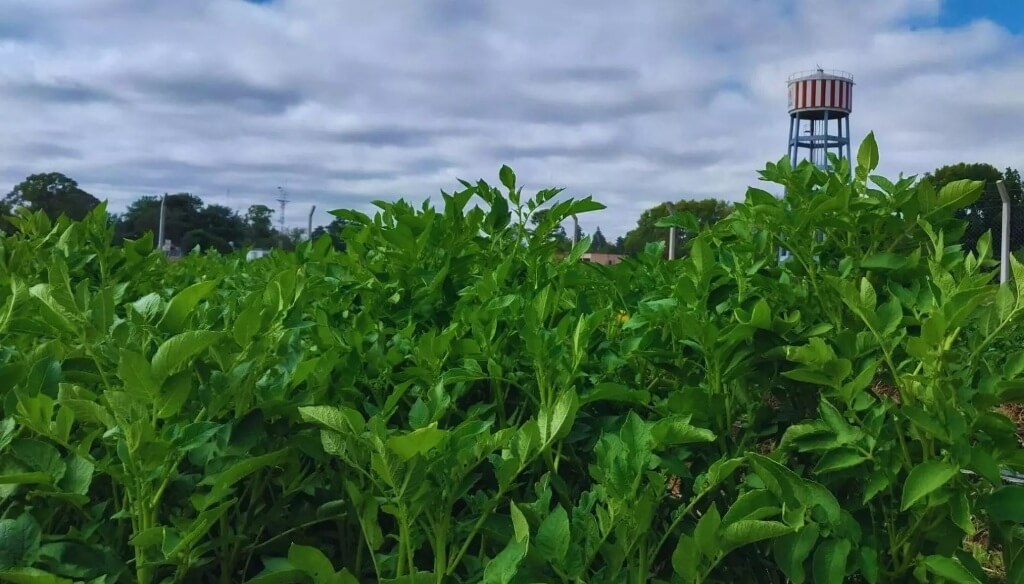
Agricultural scientists in Argentina have achieved a significant breakthrough in crop protection, developing a potato cultivar capable of resisting two of the most devastating viruses affecting the industry. Researchers from the National Agricultural Technology Institute (INTA) and the National Scientific and Technical Research Council (CONICET) have successfully created lines of the Kennebec cultivar that exhibit dual virus resistance in potato cultivars, targeting both Potato Virus Y (PVY) and Potato Leafroll Virus (PLRV) simultaneously.
The potato is a fundamental staple for the global population, making the development of resilient strains a matter of food security. Viral infections are a persistent threat to this crop, often leading to drastic reductions in both the quantity and quality of the tubers produced. By integrating specific genetic protections, the Argentine team has created a sustainable strategy to mitigate these losses without compromising the plant’s original agronomic performance.
According to Cecilia Vázquez Rovere, a researcher at the Institute of Agrobiotechnology and Molecular Biology (IABIMO) of INTA-CONICET, viral infections are a major threat due to the fact that they can significantly reduce not only the overall yield but also the commercial quality of the tubers. While approximately 50 viruses and one viroid are known to naturally infect potato crops, PVY and PLRV are recognized as the most damaging worldwide via IABIMO.
The Economic and Agricultural Toll of PVY and PLRV
The urgency of this research is underscored by the severe economic impact these viruses have on farmers. Both PVY and PLRV are transmitted by aphids and are prevalent in most potato-growing regions across the globe. The losses associated with these infections are often additive, meaning mixed infections can cause even more detrimental effects on plant growth and tuber yield than a single virus alone.
The data regarding yield loss is stark. PVY has been shown to reduce total yield by 49% and marketable yield by 65%. The impact of PLRV is even more severe; infected seed tubers have been reported to result in total yield losses of 60% and a staggering 88% loss in marketable tubers via IABIMO. In some instances, overall losses attributed to these dangerous viruses can reach up to 80%.
Understanding the Mechanisms of Resistance
To achieve dual virus resistance in potato cultivars, the researchers employed a transgenic approach, introducing specific proteins that act as a defense mechanism against the viruses. The strategy involved two distinct components:

- Resistance to PVY: This was achieved through the expression of the coat protein (CP) of the lettuce mosaic virus (LMV), referred to as CPLMV. This provides protection via a capsid protein-mediated mechanism.
- Resistance to PLRV: This was achieved by expressing the PLRV ORF2 (RepPLRV), which the research team had previously demonstrated provides resistance to various PLRV isolates.
By combining these two expressions in the Kennebec cultivar, the scientists created transgenic lines that can fight off both pathogens at once. This is a critical advancement, as the complexity of mixed infections often makes it difficult to develop durable, broad-spectrum resistance via PubMed.
Field Performance and Sustainability
A common concern with transgenic crop development is the potential for “yield penalties,” where the energy the plant spends on resistance reduces the actual amount of food produced. Still, the INTA and CONICET study found that this was not the case for the modern Kennebec lines.
The researchers conducted molecular and phenotypic characterizations of both transgenic and non-transgenic control plants in both greenhouse and field conditions. Across multiple growing seasons, two selected transgenic lines consistently showed robust resistance to both PVY and PLRV. Crucially, these plants exhibited no noticeable phenotypic alterations and no penalties in yield via PubMed.
This result demonstrates that it is possible to protect the crop from devastating viral threats while preserving the original agronomic performance of the cultivar. This balance is essential for the adoption of such technology by farmers, as it ensures that the biological protection does not arrive at the cost of productivity.
| Virus | Total Yield Loss | Marketable Yield Loss | Primary Vector |
|---|---|---|---|
| PVY (Potato Virus Y) | 49% | 65% | Aphids |
| PLRV (Potato Leafroll Virus) | 60% | 88% | Aphids |
Key Takeaways for Global Agriculture
- Dual Protection: The new Kennebec lines provide simultaneous resistance to PVY and PLRV, the two most damaging potato viruses worldwide.
- Genetic Innovation: The resistance is achieved by expressing the CPLMV coat protein and the RepPLRV ORF2.
- No Productivity Loss: Field trials confirm that the transgenic lines maintain the same yield and quality as non-resistant versions.
- Food Security: This development offers a more sustainable strategy for managing viral diseases, potentially reducing the massive yield losses that threaten potato production.
This breakthrough not only contributes to long-term crop productivity but also provides a blueprint for managing other viral diseases in agriculture. By targeting the specific proteins that viruses employ to infect plants, researchers can create a shield that protects the food supply without altering the desired characteristics of the crop.
As the agricultural sector continues to face challenges from pests and evolving pathogens, the work of the INTA and CONICET researchers highlights the importance of biotechnology in creating a more resilient and sustainable food system.
The research now serves as a foundation for further advancements in viral resistance. While these specific lines have been characterized and validated in field conditions, the continued monitoring of these cultivars will be essential to ensure the durability of the resistance against evolving viral strains.
We invite our readers to share their thoughts on the role of biotechnology in global food security in the comments below.
Related reading