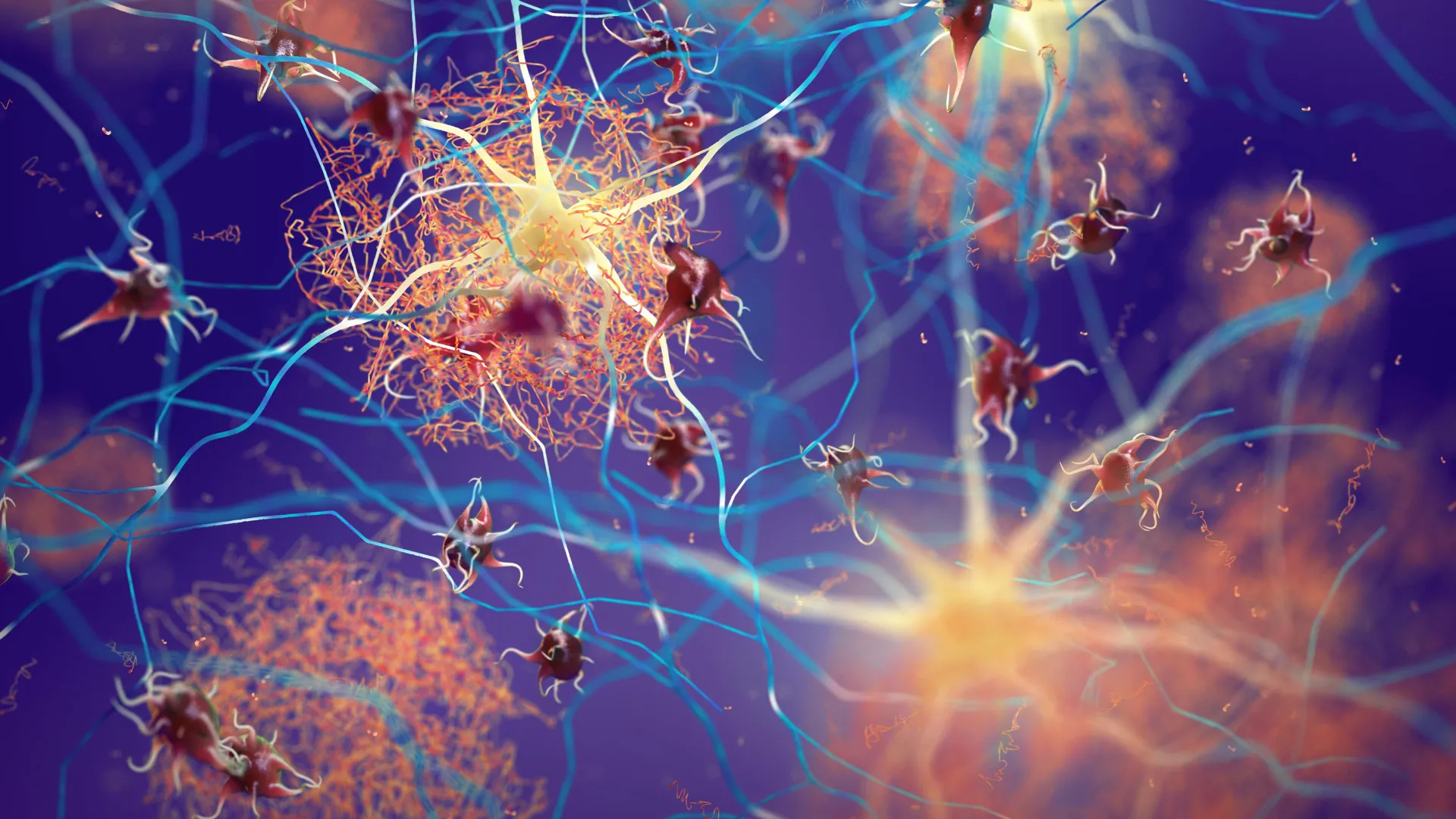
The quest to reverse the cognitive decline associated with Alzheimer’s disease has long focused on the removal of amyloid-beta plaques—the toxic protein clumps that disrupt communication between neurons. While several pharmaceutical interventions have targeted these plaques, a fresh breakthrough from the Baylor College of Medicine suggests that the secret to cleaning the brain may lie in reawakening its own internal support system.
Researchers have discovered that boosting a specific protein called Sox9 can empower astrocytes—the star-shaped glial cells that maintain brain health—to actively clear out existing harmful plaques. This discovery, detailed in a study published in Nature Neuroscience, offers a potential new pathway for treating neurodegenerative diseases by enhancing the brain’s innate phagocytic capabilities.
For millions of families worldwide, the prospect of a treatment that does not just unhurried the progression of Alzheimer’s but actively removes existing pathology is a significant development. By shifting the focus from external drugs to the activation of endogenous support cells, this research highlights a promising shift toward cell-based therapeutic strategies.
The Role of Astrocytes and the Sox9 Protein
Astrocytes were once viewed primarily as “glue” that held neurons together, but modern neuroscience recognizes them as active participants in brain function. These cells regulate the chemical environment, provide nutrients to neurons, and act as the brain’s primary waste-management system. However, as the brain ages or succumbs to Alzheimer’s, these cells often lose their efficiency, allowing amyloid-beta (Aβ) plaques to accumulate and stifle cognitive function.
The research identifies the transcription factor Sox9 as a critical regulator of astrocyte function. In the aging hippocampus—the region of the brain essential for memory and navigation—Sox9 levels naturally fluctuate. The study found that when Sox9 is overexpressed in astrocytes, it triggers a “reawakening” of the cell’s ability to identify and consume toxic proteins.
The mechanism works through a specific signaling pathway. According to the Nature Neuroscience report, Sox9 promotes the phagocytosis of Aβ plaques by regulating a phagocytic receptor known as MEGF10. Essentially, Sox9 acts as the “on switch” that tells the astrocyte to produce more MEGF10, which then acts as the “vacuum” that pulls the plaques out of the brain tissue.
Findings in Alzheimer’s Mouse Models
To test this hypothesis, scientists utilized mouse models bred to exhibit conditions similar to human Alzheimer’s disease. The results were striking: in mice that had already developed memory problems and significant plaque buildup, the increase of Sox9 led to a measurable reduction in amyloid-beta levels.
Crucially, the study demonstrated that this process was not merely a preventative measure. The overexpression of Sox9 cleared existing plaques, which in turn preserved cognitive function over time. This suggests that the brain’s support cells can be recruited to repair damage that has already occurred, rather than simply preventing new damage from forming.
The researchers further verified that the MEGF10 receptor was the primary driver of this effect. When the Sox9-MEGF10 signaling pathway was activated, the mice showed improved performance in cognitive tasks, indicating that the removal of plaques directly translated to the preservation of memory and learning capabilities.
Key Mechanisms of the Sox9-MEGF10 Pathway
- Sox9 Activation: The protein acts as a transcription factor, controlling which genes the astrocyte expresses.
- MEGF10 Regulation: Sox9 increases the expression of the MEGF10 receptor on the surface of the astrocyte.
- Plaque Phagocytosis: The MEGF10 receptor recognizes amyloid-beta plaques and triggers the astrocyte to engulf and digest them.
- Cognitive Preservation: The reduction of plaque burden allows neurons to resume healthier communication, stabilizing memory function.
What In other words for Future Treatment
While the study was conducted in mouse models, the implications for human medicine are profound. Current FDA-approved Alzheimer’s drugs, such as monoclonal antibodies, function by introducing external proteins to bind to plaques. In contrast, the Sox9 approach seeks to harness the brain’s own biology, potentially reducing the side effects associated with introducing foreign substances into the central nervous system.
The identification of the Sox9-MEGF10 axis provides a concrete target for future drug development. If scientists can develop a safe way to increase Sox9 expression or mimic its effects on MEGF10 in humans, it could lead to a new class of “astrocyte-based” therapies. This would mark a departure from neuron-centric treatments, acknowledging that the health of the brain’s support system is just as vital as the health of the neurons themselves.
However, transitioning from mouse models to human clinical trials remains a complex challenge. The human brain is significantly more complex than that of a mouse, and the timing of Sox9 activation will be critical. Researchers must determine the optimal window for intervention—whether this is a preventative measure for those with genetic predispositions or a rescue therapy for those already showing symptoms.
Comparing Current Approaches to the Sox9 Discovery
| Approach | Mechanism | Source of Action | Primary Goal |
|---|---|---|---|
| Monoclonal Antibodies | Bind to Aβ to trigger immune clearance | External (Infusion) | Plaque Reduction |
| Sox9 Activation | Upregulates MEGF10 in astrocytes | Internal (Endogenous) | Cellular Reawakening |
| Lifestyle/Dietary | General metabolic support | Systemic | Slowing Progression |
Expert Perspective: The Shift Toward Glial Biology
As a physician and journalist, I have seen the pendulum of Alzheimer’s research swing from the “amyloid hypothesis” to tau proteins and back again. What is most encouraging about this research is its focus on glial biology. For decades, astrocytes and microglia were treated as secondary characters. Now, we are seeing that they may be the key to the “cleanup” phase of treatment.
The ability to preserve cognitive function in a model that had already begun to decline is the “holy grail” of neurodegenerative research. If People can move from slowing the decline to actually restoring a level of function, we change the entire trajectory of the disease for the patient.
For those monitoring these developments, the next critical step will be the validation of these findings in non-human primates or the development of a human-cell-based screening process to ensure the Sox9-MEGF10 pathway behaves similarly in the human hippocampus.
The scientific community will be looking for the next phase of research, likely focusing on the delivery mechanism—how to safely “turn on” Sox9 in a living human brain without affecting other cellular processes. Updates on potential clinical trial designs or further mechanistic studies are expected as the research team continues to refine the Sox9-MEGF10 signaling model.
Do you or a loved one live with Alzheimer’s? We encourage you to share your thoughts and experiences in the comments below, or share this article with others who are following the latest in medical innovation.