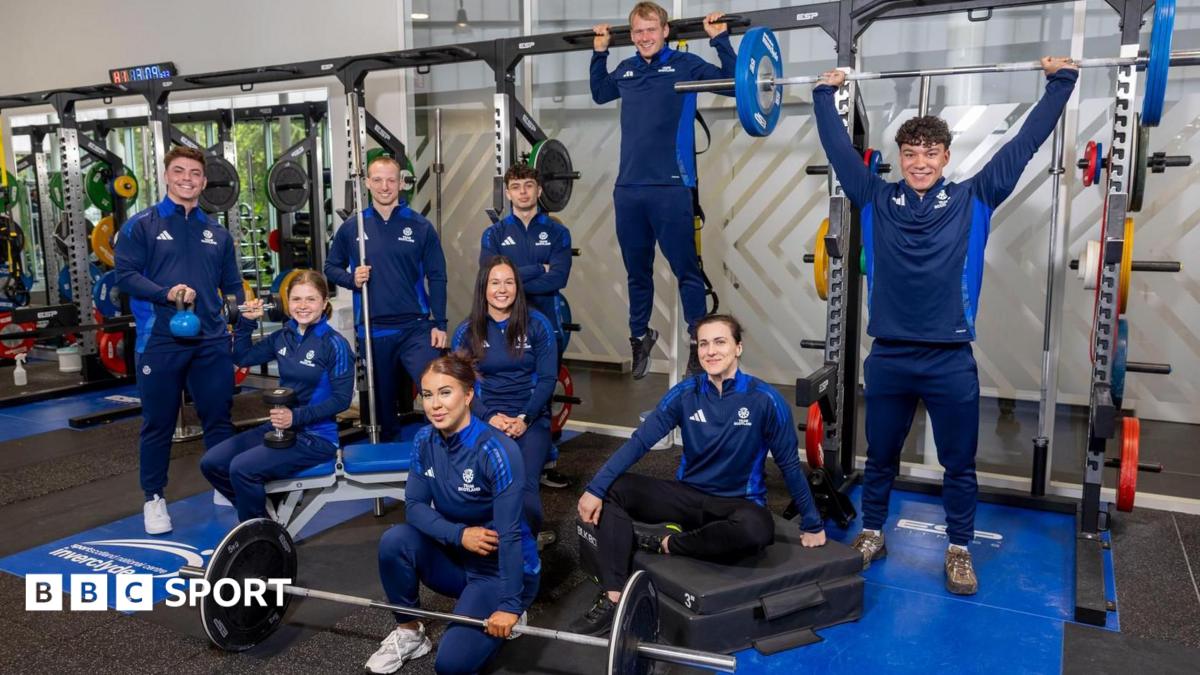
Four newly crowned British weightlifting champions—Alex Mackay, Madeline Rosher, Angus Doig, and Drew Burns—have been named to Scotland’s nine-athlete squad for the Glasgow 2026 Commonwealth Games, marking a historic moment for the sport in the UK. The selection, confirmed by Scottish Weightlifting and the Commonwealth Games Federation, underscores the rising talent pipeline in Scottish weightlifting, where athletes have increasingly dominated British domestic competitions. With Glasgow hosting the Games for the third time, the team’s preparation takes on added significance as they aim to build on Scotland’s recent podium finishes in weightlifting.
The four champions—who secured their titles at the 2024 British Weightlifting Championships—join a squad that includes experienced lifters like Scottish Weightlifting’s national team veterans, signaling a blend of youth and experience. Their inclusion reflects a strategic focus on developing homegrown talent ahead of the Games, where weightlifting will feature for the first time since 2014. The squad’s selection process, overseen by Scottish Weightlifting’s performance director Mark Wilson, prioritized athletes who met the federation’s performance standards and demonstrated consistency at international competitions.
For Mackay, Rosher, Doig, and Burns, the Commonwealth Games represent a major career milestone. Each has already earned recognition in British weightlifting circles, with Mackay and Rosher winning multiple national titles in their respective weight classes. Their selection follows a trend of Scottish lifters excelling in British competitions, where they have frequently outpaced English and Welsh rivals in recent years. According to the Commonwealth Games Federation, weightlifting’s inclusion in Glasgow 2026 is part of a broader effort to expand the Games’ appeal, with Scotland’s strong domestic performance positioning it as a competitive force in the sport.
Who Are the Four Newly Crowned British Champions in Scotland’s Squad?
Alex Mackay (Men’s 89kg) emerged as a standout performer at the 2024 British Championships, where he set a personal best in the snatch to claim the title. His selection for Glasgow 2026 follows a steady rise in international competitions, including podium finishes at the European Youth Championships. Mackay, who trains under Scottish Weightlifting’s performance program, has been described by team coaches as a “technical specialist” with a focus on refining his lift mechanics ahead of the Games.
Madeline Rosher (Women’s 64kg) secured her British title with a dominant performance in the clean and jerk, becoming the first Scottish lifter in her weight class to win back-to-back national championships. Rosher, who previously competed at the 2022 Commonwealth Games in Birmingham, has been a key figure in Scotland’s women’s weightlifting program. Her selection for Glasgow 2026 comes as she aims to build on her experience from Birmingham, where she finished seventh in her category. “Madeline’s consistency and mental toughness make her a leader in the squad,” said Scottish Weightlifting’s head coach, Alistair McLeod.

Angus Doig (Men’s 73kg) burst onto the scene at the 2024 British Championships with a series of record-breaking lifts, earning him a spot on the Commonwealth Games squad. Doig, who previously competed at the European Junior Championships, has been praised for his rapid progress under the guidance of British Weightlifting’s youth development program. His inclusion reflects Scotland’s focus on nurturing young talent, with Doig now poised to make his senior international debut.
Drew Burns (Men’s 61kg), the youngest member of the squad, won his British title with a personal best in the total lift, becoming the first Scottish lifter under 21 to qualify for the Commonwealth Games. Burns, who trains at Glasgow’s national weightlifting center, has been described by teammates as a “natural athlete” with exceptional mobility. His selection highlights the depth of Scotland’s junior ranks, where Burns has already set multiple national records in his weight class.
How Scotland’s Weightlifting Team Compares to Past Commonwealth Games Performances
Scotland’s weightlifting team has a mixed history at the Commonwealth Games, with standout performances interspersed with years of lower visibility. At the 2014 Glasgow Games, Scotland won one bronze medal in weightlifting, while the sport was absent from the 2018 Gold Coast edition. The return of weightlifting to Glasgow 2026 presents an opportunity for the team to build on its recent domestic success.
A comparison of Scotland’s medal tallies in weightlifting since 2010 shows a clear upward trend in domestic competitions, with athletes increasingly qualifying for international events. According to Scottish Weightlifting’s performance data, the number of Scottish lifters competing at European Championships has doubled over the past five years, with four athletes securing podium finishes in 2023 alone. This progress aligns with the federation’s strategic plan to increase participation and performance standards ahead of Glasgow 2026.
Key Takeaways:
- Four British champions—Mackay, Rosher, Doig, and Burns—have been selected for Scotland’s weightlifting team at Glasgow 2026, reflecting a strong domestic talent pipeline.
- Their inclusion is part of a strategic push by Scottish Weightlifting to develop homegrown athletes ahead of the Games.
- Weightlifting’s return to the Commonwealth Games after an eight-year absence presents Scotland with a chance to compete for medals in a sport where it has historically underperformed.
- The squad’s blend of experience and youth—with veterans like Rosher alongside rising stars like Burns—could position Scotland as a competitive force in Glasgow.
What Challenges Lie Ahead for Scotland’s Weightlifting Team?
The road to Glasgow 2026 is not without hurdles. Scottish lifters will face stiff competition from established weightlifting powerhouses like England, Australia, and Canada, where athletes have dominated recent Commonwealth Games. According to the Commonwealth Games Federation’s qualification criteria, only the top performers in each weight class will advance to the finals, meaning Scotland’s athletes must deliver consistent performances in the lead-up to the Games.
Logistical challenges also loom large. The Glasgow 2026 organizers have confirmed that weightlifting will take place at the SEC Armadillo, a venue that hosted the sport during the 2014 Games. However, athletes will need to adapt to the facility’s layout and conditions, which can vary significantly from their training environments. “The mental preparation for competing in front of a home crowd is just as important as the physical training,” noted Mark Wilson, Scottish Weightlifting’s performance director.
Additionally, funding remains a concern for Scottish athletes, many of whom rely on Sport Scotland’s performance grants to cover travel, training, and equipment costs. While the federation has secured sponsorship deals with local businesses, athletes like Burns and Doig—who are still in their early careers—face the challenge of balancing competition schedules with limited resources. “We’re doing everything we can to support our athletes, but the reality is that weightlifting in Scotland is still a niche sport,” said Alistair McLeod.
How Can Fans Follow Scotland’s Weightlifting Team?
Fans looking to track Scotland’s progress ahead of Glasgow 2026 can follow official updates from several sources. The Scottish Weightlifting website will publish training schedules, competition results, and athlete interviews leading up to the Games. Additionally, the Glasgow 2026 official site will provide live updates, including qualification standings and medal predictions.
.png "How Can Fans Follow Scotland’s Weightlifting Team?")
Social media will play a key role in fan engagement, with athletes like Madeline Rosher and Alex Mackay already sharing training highlights on platforms like Instagram and X (Twitter). The #TeamScotland hashtag will aggregate fan content, while the Commonwealth Games Federation will stream weightlifting events live during the Games.
For those interested in supporting Scottish weightlifting beyond Glasgow 2026, Scottish Weightlifting’s “Get Involved” page offers resources for joining clubs, volunteering, and donating to athlete development programs. The federation also hosts annual fundraising events, including the Scottish Weightlifting Challenge, which raises money for junior athletes.
What’s Next for Scotland’s Weightlifting Team?
The next major checkpoint for Scotland’s weightlifting team is the 2025 European Weightlifting Championships, scheduled for May 2025 in Tbilisi, Georgia. This competition will serve as a critical test for the Glasgow-bound athletes, with qualification for the Commonwealth Games contingent on their performances. Scottish Weightlifting has already announced a training camp in early 2025 to prepare the squad for the event.
Beyond Tbilisi, the team will compete at the 2025 World Weightlifting Championships in Saudi Arabia, where they will aim to secure top-10 finishes in their weight classes. These results will determine their seeding for Glasgow 2026, with higher placements offering a better chance of advancing to the medal rounds. “Every competition between now and Glasgow is an opportunity to refine our technique and gain experience,” said Mark Wilson. “Our goal is to walk into that venue in 2026 with confidence.”
As the countdown to Glasgow 2026 begins, Scotland’s weightlifting team stands at a crossroads. With four newly crowned British champions leading the charge, the squad has the potential to deliver Scotland’s best-ever performance in the sport at a home Games. However, the journey ahead will demand resilience, strategic planning, and unwavering support from fans and sponsors alike.
For updates on Scotland’s weightlifting team, follow Scottish Weightlifting, Glasgow 2026, and the athletes on social media. Share your predictions and support the team using #TeamScotland.
Worth a look
- MSC 2026 Results: Team Spirit Crowned World Champions, ONIC Esports Takes Third Place
- Yankees Call Up Top Prospect George Lombard Jr
- Speed Drawing Brings Legendary Argentina and Spain Football Stars to Life (world-today-news.com)
- Microsoft to Bring Old Xbox Games to PC and Project Helix via New Emulators (time.news)