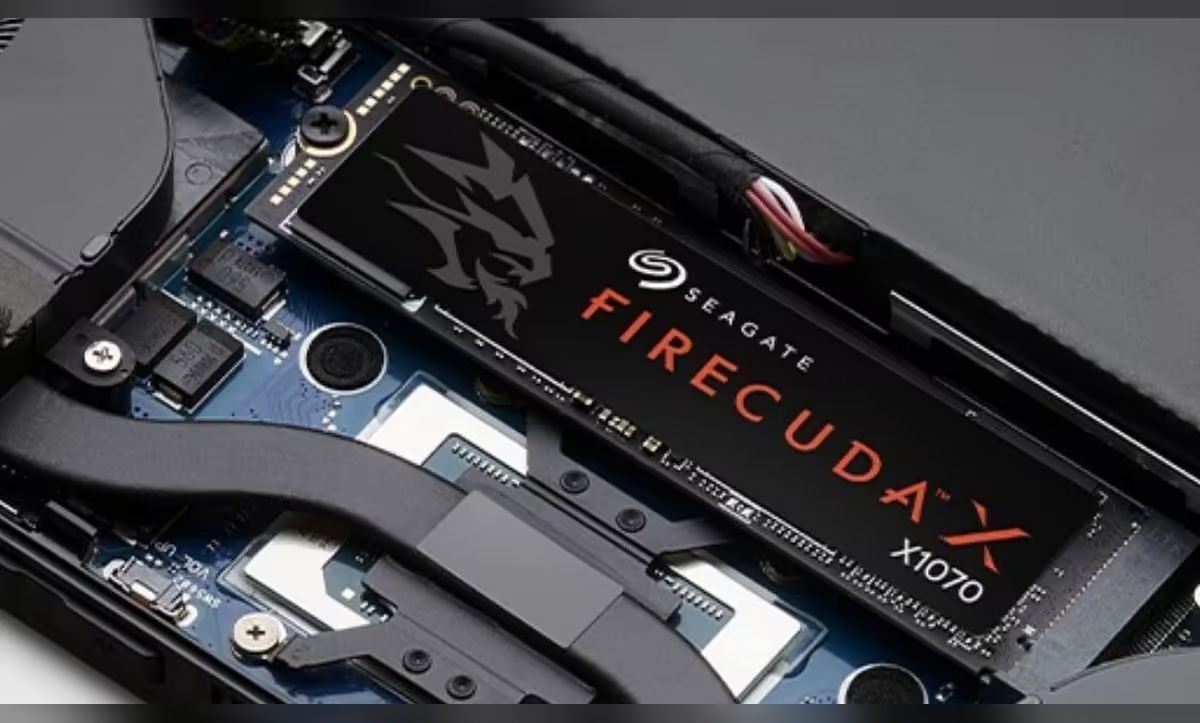
Seagate is poised to expand its FireCuda lineup of NVMe solid-state drives, but leaked specifications suggest the upcoming X1070 model may represent a shift in priorities. While the naming convention implies a step up in performance, early data indicates the X1070 will offer slower speeds and reduced endurance compared to the existing FireCuda 530R. This potential repositioning has sparked discussion among tech enthusiasts and industry observers, raising questions about Seagate’s strategy for the high-performance SSD market.
Details surrounding the FireCuda X1070 first surfaced after a listing appeared at retailer Best Buy, as reported by TechPowerUp. The listing revealed that the X1070 will utilize the PCIe 4.0 interface, a generation behind the latest PCIe 5.0 standard and will therefore operate at lower speeds than competing drives that leverage the newer technology. This decision is particularly noteworthy given the recent release of PCIe 5.0 SSDs from other manufacturers, offering significantly increased bandwidth and performance.
FireCuda X1070: Specifications and Positioning
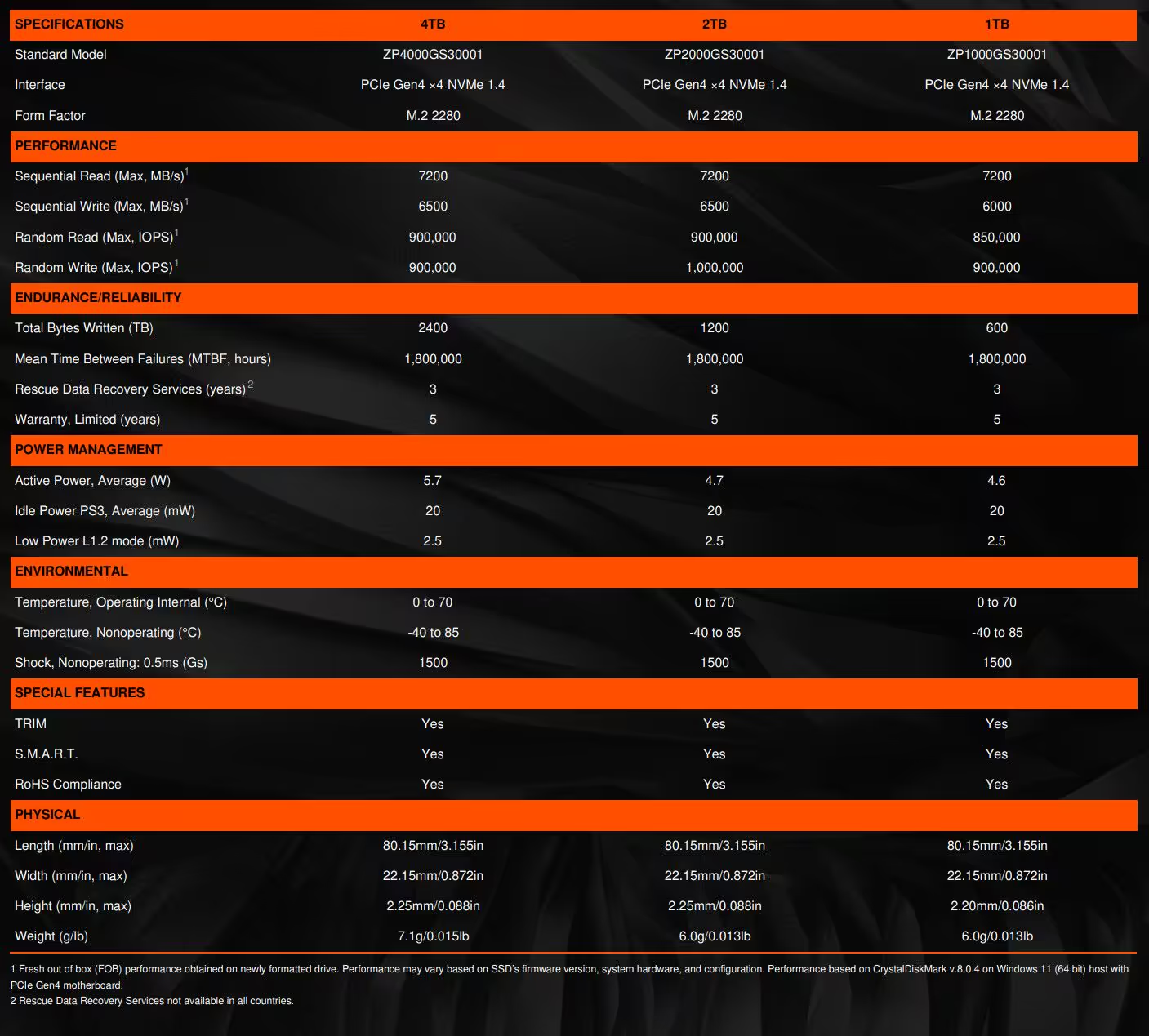
The leaked specifications paint a clearer picture of the X1070’s capabilities. Sequential read speeds are advertised up to 7,200 MB/s for the 1TB model, increasing to 6,500 MB/s for the 2TB and 4TB capacities. Sequential write speeds reach 6,000 MB/s for the 1TB version and 6,500 MB/s for the larger drives. Still, these figures fall short of the FireCuda 530R, which boasts read speeds of up to 7,400 MB/s and write speeds ranging from 6,800 to 7,000 MB/s depending on capacity. Notebookcheck highlighted this performance difference in their reporting on the leak.
Random read/write performance, measured in IOPS (Input/Output Operations Per Second), similarly sees a reduction in the X1070. The drive achieves approximately 900,000 IOPS, compared to 1.3 million IOPS for the 530R. The Total Bytes Written (TBW) – a measure of the drive’s endurance – is reportedly halved across the different capacity options. Despite these reductions, Seagate maintains a 5-year warranty for the FireCuda X1070.
Another notable characteristic of the X1070 is its lower power consumption, estimated to be around 3 to 4 watts less than the 530R. This reduction is likely attributable to a DRAM-less design, which simplifies the drive’s architecture and reduces costs. As of March 11, 2026, official pricing information for the FireCuda X1070 remains unavailable, with Tom’s Hardware reporting a pre-announcement listing price of $829.99.
Implications for System Builders and Purchasing Decisions
Considering comparable specifications, the FireCuda 530R remains the faster and more durable option. The X1070 may only appeal to users prioritizing low power consumption and simplified heat dissipation. The numerical jump in the model name appears to mask an emphasis on efficiency rather than outright performance. Without aggressive pricing, its appeal will likely be limited compared to established high-end PCIe 4.0 SSDs.
If Seagate aligns the pricing with competing models, the X1070 could uncover a niche in compact PCs or laptops where thermal management is a concern. However, users seeking high IOPS and robust TBW ratings will likely stick with the 530R or direct competitors. The choice between these drives will ultimately depend on individual needs and budget constraints.
The NVMe SSD market continues to evolve rapidly, with manufacturers constantly pushing the boundaries of performance and efficiency. Understanding the nuances of each drive, such as interface type, read/write speeds, endurance ratings, and power consumption, is crucial for making informed purchasing decisions. The FireCuda X1070’s specifications suggest a deliberate trade-off between performance and efficiency, potentially targeting a specific segment of the market. Further details, including official pricing and availability, are expected to be released by Seagate in the coming weeks.
Seagate has not yet officially commented on the specifications or positioning of the FireCuda X1070. The company is expected to formally announce the new drive, along with its pricing and availability, in the near future. Consumers interested in learning more about the FireCuda X1070 are encouraged to monitor Seagate’s official website and social media channels for updates.
Key Takeaways:
- The Seagate FireCuda X1070 is a new NVMe SSD that utilizes the PCIe 4.0 interface.
- It offers lower performance and endurance compared to the FireCuda 530R.
- The X1070 features reduced power consumption, likely due to a DRAM-less design.
- Official pricing and availability are currently unknown.
Do you consider Seagate’s strategy with the FireCuda X1070 will pay off? Share your thoughts in the comments below, and be sure to share this article with anyone considering a new SSD!
Worth a look