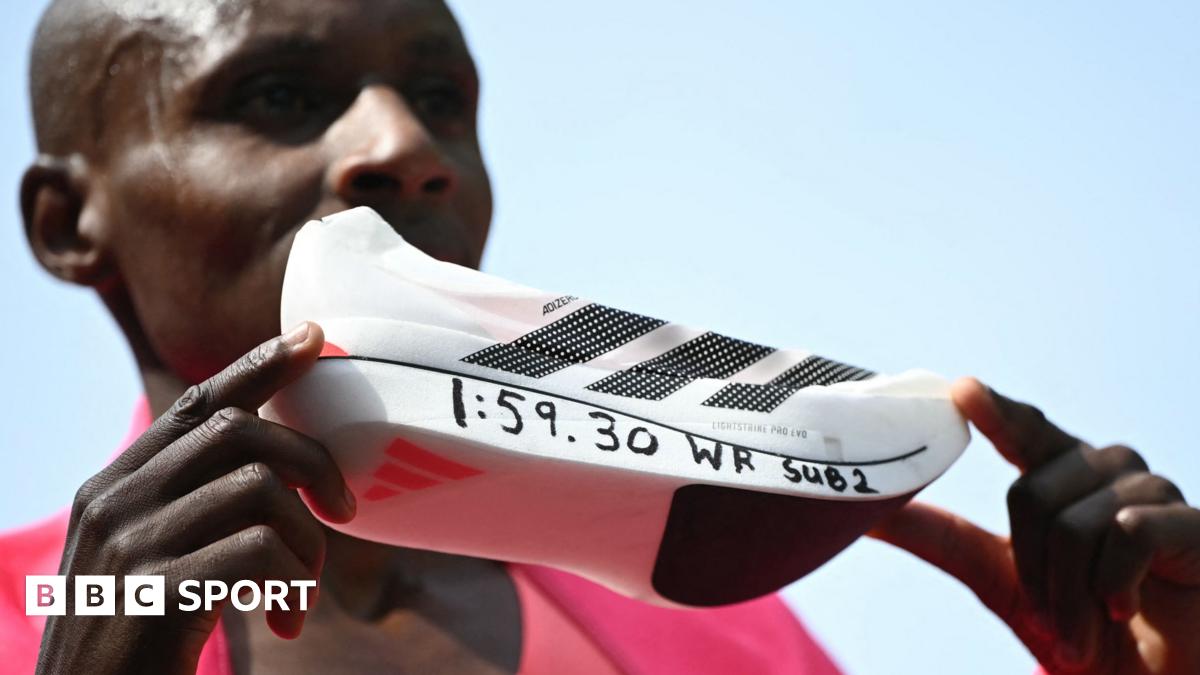
The pursuit of the sub-two-hour marathon has long been the “moonshot” of distance running, a boundary that once seemed biologically impossible. That barrier finally collapsed during the 2026 London Marathon, where Kenyan athlete Sabastian Sawe clocked a historic time of one hour, 59 minutes, and 30 seconds. Whereas the achievement is a testament to Sawe’s elite physiology, it has reignited a fierce global debate over the role of technology in sport—specifically the “super-shoes” that are pushing human limits to unprecedented levels.
In the wake of this performance, World Athletics president Sebastian Coe has stepped forward to address concerns that the sport is becoming a contest of engineering rather than athleticism. Coe has signaled that while the governing body will maintain strict regulations to ensure fair play, it will not strangle innovation
, suggesting that the current regulatory framework remains on the right side
of the balance between progress and integrity. This stance comes as the athletics world grapples with the reality that the gap between human effort and mechanical assistance is narrowing.
The controversy centers on the specific footwear worn by Sawe: the Adidas Adizero Adios Pro Evo 3. This ultra-lightweight trainer, weighing just 97 grams, represents a paradigm shift in footwear design, incorporating materials ranging from kite-surfing fabrics to specialized rubber compounds derived from car tires. The resulting performance boost has led some critics to label the trend as “technical doping,” arguing that the shoes provide an unfair advantage that obscures the true athletic merit of the runner.
The Engineering Behind the Sub-Two Hour Run
To understand why Sebastian Coe’s comments are so pivotal, one must look at the specifications of the footwear that enabled Sawe’s record. The Adizero Adios Pro Evo 3 is the culmination of three years of research and development by Adidas. According to reports from The Telegraph, the shoe is 30% lighter than its predecessor and is designed to improve running economy by 1.6%.
The shoe’s architecture is built around a 39mm stack height, designed to maximize cushioning and energy return. By utilizing high-resilience foams and a carbon-fiber plate, the shoe reduces the energy lost with every stride, effectively acting as a spring that propels the runner forward. For a marathoner, where efficiency is measured in fractions of a second per kilometer, these marginal gains accumulate into minutes over the 42.195-kilometer distance.
Sabastian Sawe, 31, had previously indicated that breaking the late Kelvin Kiptum’s world record was only a matter of time
. However, the speed of his descent into the sub-two-hour territory has left the sport questioning whether the record books are still a reflection of human evolution or a leaderboard for shoe manufacturers.
The Regulatory Tightrope: Innovation vs. Integrity
World Athletics faces a complex challenge: how to allow the sport to evolve without rendering previous records meaningless. The governing body has previously implemented rules regarding sole thickness (stack height) and the number of carbon plates allowed in a shoe to prevent footwear from becoming “mechanical aids.”

Sebastian Coe’s assertion that the rules are on the right side
suggests that World Athletics believes the current limits—which typically cap stack height at 40mm for road races—are sufficient to prevent the shoes from doing “too much” of the work. By refusing to strangle innovation
, Coe is acknowledging that technology is an inherent part of sporting progress. From the introduction of synthetic tracks to the evolution of aerodynamic swimsuits, sport has always integrated technology; the “super-shoe” era is simply the latest iteration of this trend.
However, the “technical doping” argument persists. Critics argue that when a shoe can provide a measurable percentage increase in running economy, the “level playing field” is compromised, particularly for athletes who do not have access to the latest prototypes or those sponsored by brands with less advanced R&D capabilities.
Key Technical Specifications of the Adizero Adios Pro Evo 3
| Feature | Specification/Impact | Purpose |
|---|---|---|
| Weight | 97 grams | Minimize energy expenditure per stride |
| Stack Height | 39mm | Maximize cushioning and energy return |
| Weight Reduction | 30% lighter than previous version | Increase agility and reduce fatigue |
| Running Economy | +1.6% improvement | Allow athlete to maintain higher speeds longer |
What Which means for the Future of Athletics
The precedent set by Sabastian Sawe and the response from Sebastian Coe indicate a future where the “human” and the “machine” are inextricably linked. We are entering an era of “augmented athletics,” where the primary question is no longer if a record will fall, but which technology will facilitate it.
For the global audience and fans of the sport, this shift changes the way we consume athletics. The focus is shifting from purely physiological metrics—VO2 max, lactate threshold, and mileage—to a holistic view that includes materials science and biomechanical engineering. While this adds a layer of complexity, it also creates a new frontier for excitement, as the limits of human capability are pushed further than ever before.
The impact extends beyond the elite level. As these technologies trickle down to consumer models, the “super-shoe” effect is democratizing speed, allowing amateur runners to achieve times that were previously reserved for professionals. However, this also complicates the “all-time” rankings, as records set in “primitive” footwear are now fundamentally different from those set in the modern era.
Stakeholders and the Path Forward
The ongoing tension involves three primary stakeholders:

- The Athletes: Who want the best possible equipment to maximize their natural talent and secure lucrative sponsorships.
- The Manufacturers: Companies like Adidas and Nike, who treat the marathon as a high-profile laboratory for their latest engineering breakthroughs.
- The Governing Body: World Athletics, which must protect the “spirit of the sport” while avoiding the role of a technophobic regulator.
The consensus among many analysts is that as long as the shoes are available to all professional competitors and adhere to the stack-height limits, the records will stand. The focus now shifts to whether other brands will respond with even more aggressive designs, potentially pushing World Athletics to tighten the rules once again.
The next critical checkpoint for the sport will be the upcoming World Athletics Championships and the lead-up to the next Olympic cycle, where the interaction between new footwear prototypes and championship-pressure environments will be closely monitored. World Athletics is expected to continue reviewing footwear submissions to ensure they remain within the approved technical specifications.
Do you believe super-shoes provide an unfair advantage, or are they simply the natural evolution of the sport? Share your thoughts in the comments below and share this article with fellow athletics fans.
Worth a look