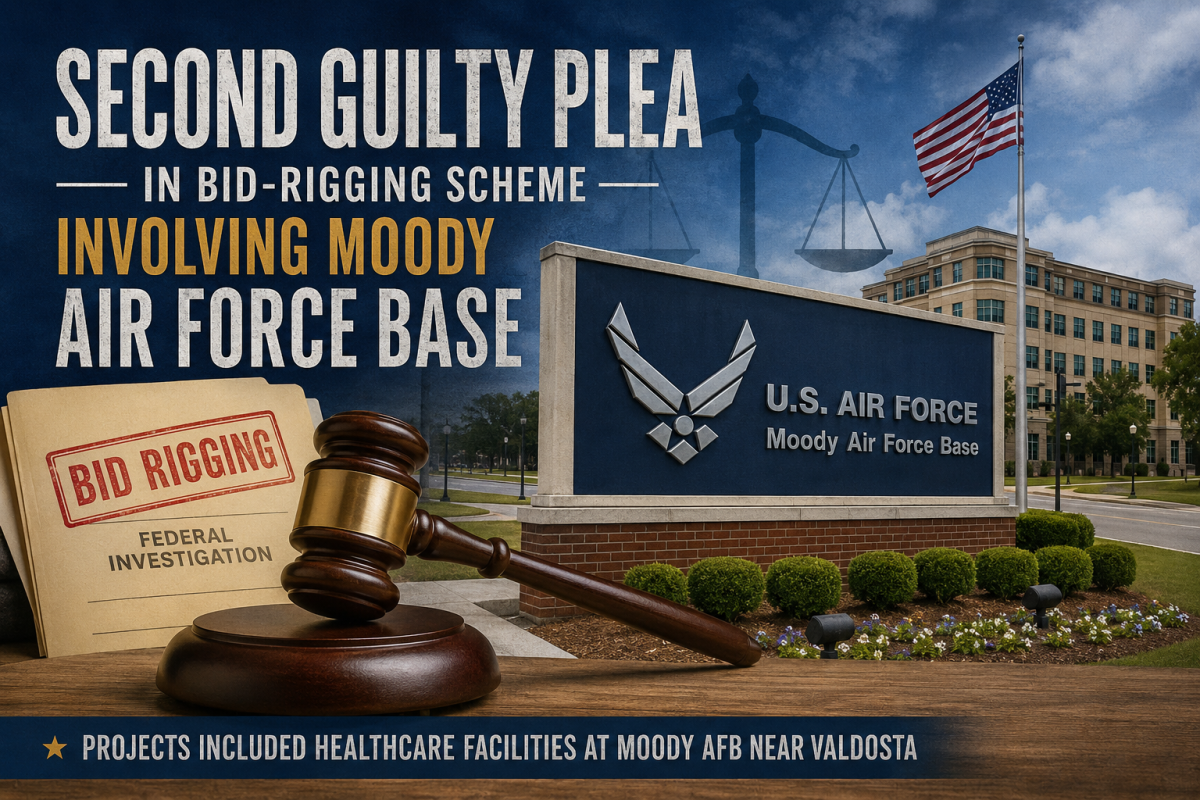
A second individual has entered a guilty plea in connection with a federal bid-rigging scheme that targeted construction projects at Moody Air Force Base in Georgia. This development marks a significant progression in the ongoing investigation into fraudulent practices within government contracting, shedding light on the complexities of maintaining integrity in military infrastructure procurement.
The case centers on efforts to subvert the competitive bidding process, a critical mechanism designed to ensure that taxpayer dollars are utilized efficiently and that projects are awarded based on merit and cost-effectiveness. The Department of Justice (DOJ) has emphasized that such schemes not only inflate costs for the government but also undermine the fairness essential to federal contracting operations. For further details on how the government pursues these violations, readers can review the Antitrust Division Manual provided by the DOJ.
Understanding the Bid-Rigging Investigation
Bid-rigging occurs when competitors coordinate their actions to manipulate the outcome of a procurement process. By agreeing to submit non-competitive bids or abstaining from bidding altogether, the involved parties artificially inflate prices, effectively defrauding the agency involved. In this instance, the investigation focuses on activities surrounding specific construction contracts at Moody Air Force Base. According to official federal court filings, the scheme involved a coordinated effort to circumvent standard procurement regulations, which are governed by the Federal Acquisition Regulation (FAR).
The guilty plea of the second defendant follows a trajectory of accountability established by federal prosecutors. In cases of this nature, defendants often face charges related to conspiracy to defraud the United States and violations of the Sherman Antitrust Act. The legal framework surrounding these charges is designed to protect the integrity of the competitive bidding process, ensuring that the Department of Defense receives fair market value for infrastructure improvements.
Legal Implications and Regulatory Oversight
The impact of bid-rigging on military installations like Moody Air Force Base extends beyond the immediate financial loss. Such actions can compromise the schedule and quality of essential infrastructure projects, potentially affecting the operational readiness of the base. Federal authorities frequently rely on the Fraud Section of the Department of Justice to investigate and prosecute these sophisticated white-collar crimes.
For contractors and entities doing business with the federal government, these proceedings serve as a reminder of the strict compliance standards required. Federal contracts are subject to rigorous oversight, and any attempt to manipulate the bidding process is treated as a serious breach of federal law. The ongoing nature of the investigation suggests that authorities remain focused on identifying all participants who may have played a role in the scheme.
Key Takeaways for Procurement Integrity
- Competitive Bidding: The bedrock of federal procurement, designed to ensure fairness and cost-efficiency.
- Federal Oversight: Agencies like the DOJ and the Air Force Office of Special Investigations (OSI) actively monitor for signs of collusion.
- Legal Consequences: Participation in bid-rigging schemes can lead to severe criminal penalties, including imprisonment and substantial fines.
- Compliance: Contractors are encouraged to implement robust internal controls to prevent unethical conduct in the bidding process.
As the legal process moves forward, the court will determine the sentencing for those who have entered guilty pleas. These proceedings are a matter of public record and can be tracked through the Public Access to Court Electronic Records (PACER) system. Future hearings will be scheduled to address the remaining aspects of the case, and stakeholders continue to monitor for official updates from the U.S. Attorney’s Office.

We will continue to follow this story as further information becomes available through official court dockets and prosecutorial announcements. If you have thoughts on the importance of transparency in government contracting, please feel free to share your perspectives in the comments section below.
Keep reading