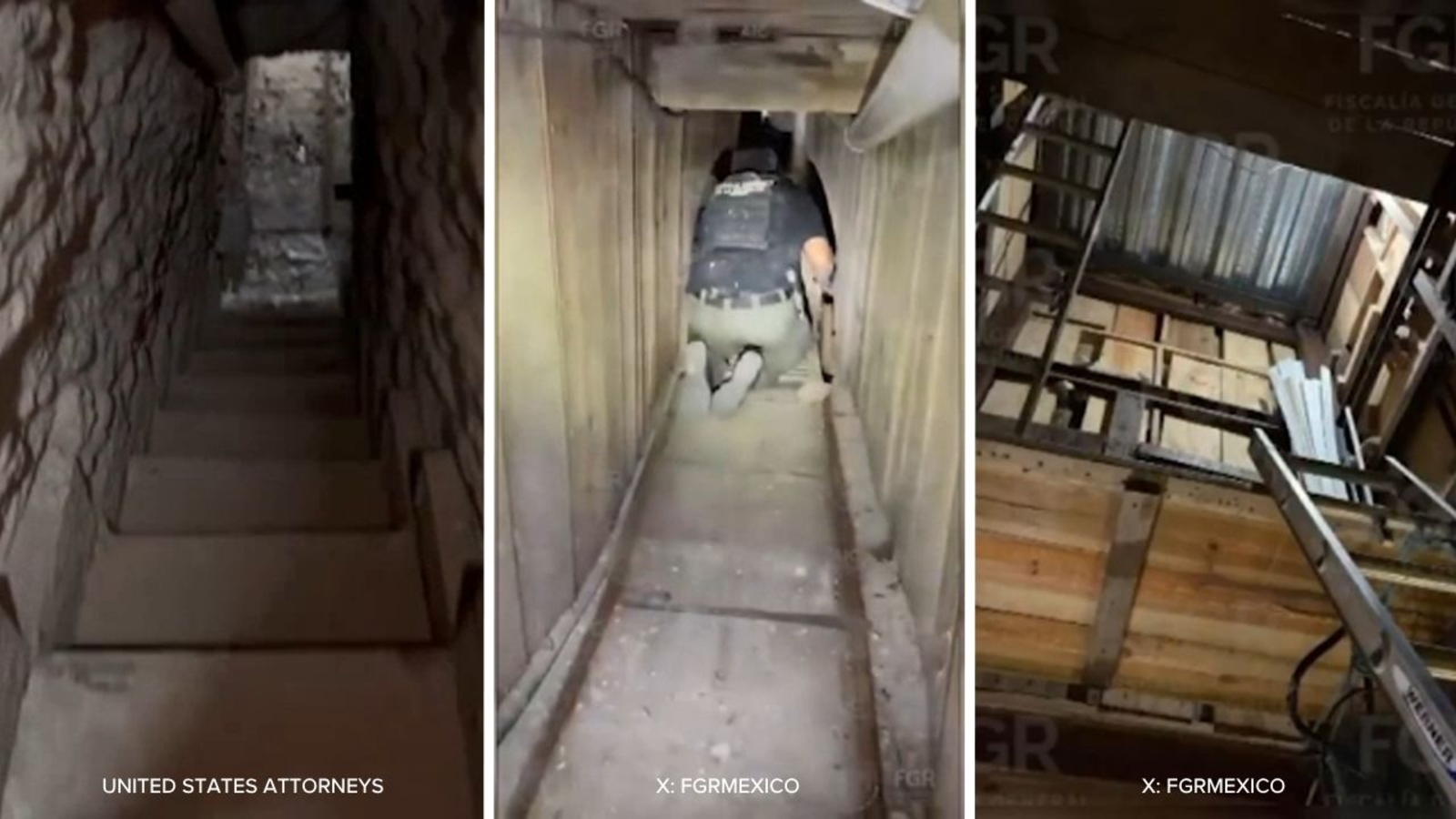
Underground Deception: Massive Drug Tunnel Discovered Concealed Beneath Fake Otay Mesa Store
In a sophisticated display of criminal ingenuity, federal authorities have uncovered a massive cross-border drug tunnel in the Otay Mesa area of San Diego, hidden beneath the floor of what appeared to be a legitimate commercial storefront. The discovery, which has sent ripples through law enforcement and border security agencies, reveals the increasing complexity with which transnational criminal organizations are attempting to bypass United States border defenses.
The operation, which utilized a “fake” retail establishment to mask the entrance to an extensive underground network, allowed for the high-volume transit of illicit narcotics between Tijuana, Mexico, and San Diego, California. According to investigators, the scale of the operation is underscored by the recovery of more than one ton of cocaine, a seizure that represents a significant blow to regional smuggling networks.
This latest development in the “tunnel wars” along the U.S.-Mexico border highlights a shift toward highly engineered, clandestine infrastructure designed to evade modern detection technologies. As the Otay Mesa drug tunnel discovery comes to light, federal prosecutors are moving forward with multiple charges against individuals allegedly central to the smuggling ring.
The Deception: A Storefront for Smuggling
The crux of the operation relied on the principle of “hiding in plain sight.” By establishing or occupying a commercial building in the Otay Mesa industrial and commercial district, smugglers were able to maintain a facade of normalcy. To the casual observer or a passing patrol, the location appeared to be nothing more than a standard business, providing a perfect cover for the heavy foot traffic and logistical movements required to maintain a high-functioning drug pipeline.

The tunnel itself was not merely a crude hole in the ground; investigators described it as a highly developed passage designed for efficiency and concealment. Such tunnels often include sophisticated features such as ventilation systems, electrical lighting, and sometimes even rail systems to transport heavy loads of narcotics. The transition from the “store” floor to the tunnel entrance was engineered to be seamless, ensuring that even if the building were inspected, the entrance would remain undetected.
Law enforcement agencies, including U.S. Customs and Border Protection (CBP), have long warned that the industrial sectors near border crossings are high-priority zones for these types of “built-in” smuggling operations. The use of commercial properties provides smugglers with a legal pretext for the movement of goods, making it significantly harder for authorities to distinguish between legitimate commerce and illicit transit.
Scale of the Operation: The Cocaine Seizure
The true magnitude of the criminal enterprise became clear during the subsequent search and seizure operations. Authorities confirmed that the investigation led to the recovery of more than 2,000 pounds—approximately one ton—of cocaine. The sheer volume of the narcotics suggests that this tunnel was not a temporary or experimental route, but a primary artery for a major distribution network.

The seizure of such a massive quantity of cocaine has significant implications for the local and national drug markets. In terms of street value, a single ton of cocaine can represent tens of millions of dollars, providing a massive revenue stream for the cartels involved. This financial incentive drives the continuous evolution of smuggling methods, from the use of drones to the construction of these elaborate underground corridors.
Beyond the cocaine, investigators are examining whether the tunnel was also utilized for the smuggling of weapons or other contraband. The dual-use nature of these tunnels—facilitating both the flow of drugs into the U.S. And the flow of firearms into Mexico—remains a critical concern for the Department of Homeland Security (DHS).
Legal Fallout and Enforcement
As the physical investigation continues, the legal battle is intensifying. Prosecutors have already filed charges against at least four individuals in connection with the operation. While the specific identities and full scope of the conspiracy are still being detailed in federal filings, the charges are expected to include conspiracy to import controlled substances and potentially money laundering or racketeering, depending on the findings of the ongoing investigation.
The involvement of multiple agencies—including Homeland Security Investigations (HSI), the DEA, and local San Diego law enforcement—indicates a multi-jurisdictional effort to dismantle the entire hierarchy of the smuggling ring. Federal authorities are not merely looking to arrest the individuals operating the tunnel, but are working to identify the high-level organizers who fund and direct these cross-border operations from within Mexico.
The prosecution of this case will likely serve as a centerpiece for federal efforts to demonstrate the efficacy of border interdiction strategies. For the defendants, the legal hurdles are significant, as the evidence gathered from sophisticated surveillance and forensic analysis of the tunnel site is expected to be substantial.
The Growing Sophistication of Cross-Border Tunnels
The Otay Mesa discovery is part of a documented trend of increasing technical sophistication in transnational organized crime. While early smuggling tunnels were often rudimentary, modern “narco-tunnels” often resemble small-scale civil engineering projects. They are frequently built with reinforced walls, sophisticated drainage to prevent flooding, and communication lines to coordinate movements between sides of the border.
This technological arms race between smugglers and border security is constant. As the U.S. Implements more advanced ground-penetrating radar, seismic sensors, and satellite surveillance, criminal organizations respond by digging deeper and utilizing more complex concealment methods, such as the fake storefront used in this case.
The geographic location of Otay Mesa is particularly strategic. As one of the busiest commercial land ports of entry in the United States, the high volume of legitimate truck traffic provides a “noise” that smugglers attempt to exploit. The proximity to Tijuana, a major hub for cartel activity, makes the area a perennial target for underground transit routes.
Key Takeaways: The Otay Mesa Tunnel Case
- Method of Concealment: A fake commercial storefront in Otay Mesa, San Diego, was used to hide the tunnel entrance.
- Narcotics Seizure: Authorities recovered more than 1 ton (approximately 2,000 lbs) of cocaine.
- Criminal Charges: At least four individuals have been charged in connection with the cross-border smuggling operation.
- Strategic Importance: The tunnel connected San Diego directly to Tijuana, facilitating high-volume narcotics transit.
- Law Enforcement Response: A multi-agency effort led by federal authorities is currently dismantling the network.
As the investigation unfolds, the focus will remain on the logistical links that allowed such a massive operation to function undetected for an extended period. The ability to maintain a fake business while managing the transit of tons of cocaine suggests a high level of local coordination and significant financial investment.
Next Steps: The legal proceedings for the charged individuals are expected to move into the federal court system in the coming weeks. Official updates regarding further arrests or additional seizures will be released by the Department of Justice as they become available.
What are your thoughts on the evolving tactics used in border smuggling? Do you believe current detection methods are keeping pace with these developments? Let us know in the comments below and share this report with your network.