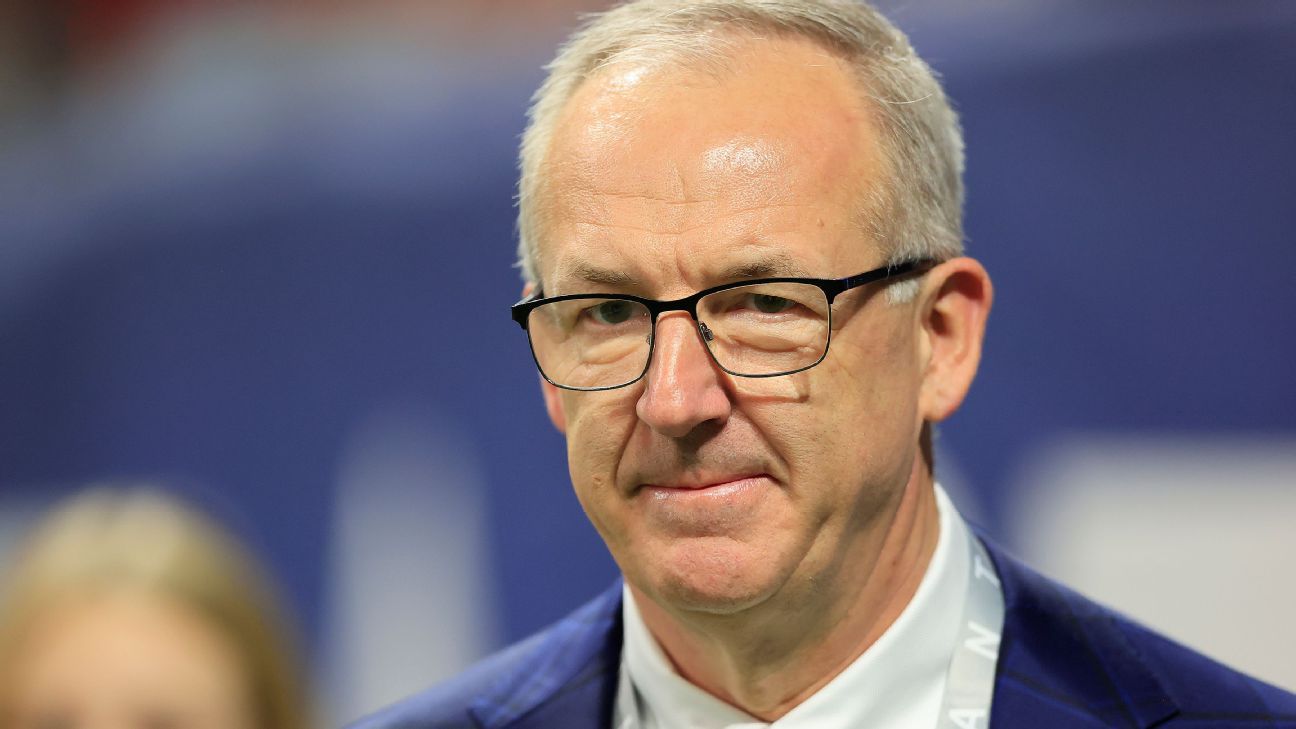
The rapidly evolving landscape of college athletics, marked by name, image, and likeness (NIL) deals, the transfer portal, and increasing financial stakes, is forcing a reckoning with the NCAA’s existing rules regarding player recruitment. Southeastern Conference (SEC) Commissioner Greg Sankey has publicly characterized the current language governing tampering as “archaic,” signaling a growing pressure for reform. While stopping short of joining the Big Ten’s call for a complete halt to tampering investigations, Sankey emphasized the need for clarity and a more nuanced understanding of how recruiting operates in this latest era.
Sankey’s comments, made during the SEC men’s basketball tournament in Nashville, Tennessee, reflect a broader frustration among conference leaders regarding the NCAA’s ability to effectively regulate player movement and prevent underhanded recruitment tactics. The issue of tampering – attempts to entice players to transfer schools – has turn into particularly contentious, highlighted recently by accusations leveled by Clemson’s Dabo Swinney against Ole Miss’s Pete Golding. This case, involving linebacker Luke Ferrelli, brought the complexities of the transfer portal and potential illicit influence into sharp focus. The SEC commissioner’s stance underscores the delicate balance between maintaining competitive integrity and acknowledging the realities of modern college sports.
The Shifting Sands of College Athletics
The current turmoil surrounding tampering rules is inextricably linked to the seismic changes that have reshaped college athletics over the past several years. The introduction of NIL rights in 2021, allowing student-athletes to profit from their personal brand, fundamentally altered the recruiting landscape. Simultaneously, the NCAA implemented a one-time transfer rule, granting players greater freedom to switch schools without penalty. These changes, coupled with the increasing influence of agents and collectives – organizations that pool funds to facilitate NIL deals – have created a complex web of incentives and opportunities for both players and institutions. The NCAA Council approved an interim NIL policy in June 2021, setting the stage for the current environment.
Sankey argues that the NCAA’s existing rules, drafted in a different era, are ill-equipped to address these new realities. He believes that a more pragmatic approach is needed, one that acknowledges the legitimate avenues for player recruitment while still deterring unethical behavior. “We need clarity,” Sankey stated, emphasizing the importance of clear guidelines for both schools and student-athletes. He also stressed the need for policymakers to understand “how this game is being played,” suggesting that a more informed perspective is crucial for effective regulation. Yet, he cautioned against a complete cessation of investigations, arguing that simply halting enforcement would not solve the underlying problems.
Differing Approaches Among Power Conferences
The SEC’s position on tampering investigations stands in contrast to that of the Big Ten Conference, which recently requested that the NCAA temporarily pause all inquiries while it re-evaluates its rules. ESPN reported on March 13, 2026, that the Big Ten formally requested the pause. This move reflects a growing concern among Big Ten leaders that the NCAA’s enforcement efforts are overly aggressive and potentially unfair, given the ambiguity of the current rules.
However, the ACC and Big 12 conferences have publicly opposed the Big Ten’s request, signaling a division among the Power Five conferences regarding the best course of action. Sankey aligns himself with this more cautious approach, believing that a complete halt to investigations would be counterproductive. He maintains that the NCAA should continue to enforce the existing rules, even as it works to modernize them. This stance suggests a desire to maintain some level of control over the recruiting process while also acknowledging the need for reform.
The Ferrelli Case and Accusations of Tampering
The recent accusations of tampering leveled by Clemson coach Dabo Swinney against Ole Miss coach Pete Golding have further fueled the debate over recruiting practices. Swinney publicly accused Golding of improperly influencing Luke Ferrelli, a linebacker who initially committed to Clemson after entering the transfer portal from California. Ferrelli ultimately signed with Ole Miss, prompting Swinney to allege that the Rebels engaged in illicit recruitment tactics. ESPN detailed Swinney’s accusations in September 2025.
While the NCAA has not yet reached a conclusion in the Ferrelli case, it has issued a memo stating that it will “pursue significant penalties” for any confirmed violations of its tampering rules. This announcement underscores the NCAA’s commitment to enforcing its regulations, even as it grapples with the challenges of the new recruiting landscape. However, critics argue that the NCAA’s enforcement efforts are often inconsistent and lack transparency, leading to frustration and distrust among member institutions.
Sankey Calls for a “Quick Policy Reset”
Despite his reservations about halting investigations, Sankey has made it clear that the NCAA’s current policies are unsustainable. He believes that a “quick policy reset” is needed to address the ambiguities and inconsistencies that plague the current system. This reset would involve clarifying the rules governing NIL deals, the transfer portal, and agent involvement, as well as establishing clear guidelines for what constitutes impermissible contact with prospective student-athletes.
Sankey emphasized that any changes to the rules must be accompanied by clear communication and enforcement mechanisms. He argued that simply issuing a memo without taking concrete action would be ineffective. “The notion that a memo would be sent and that changes things when the NCAA is perceived as sitting on the sidelines, that’s not a workable solution,” he stated. He also noted that school leaders who met with NCAA President Charlie Baker this week pressed for swift action, indicating a widespread desire for reform.
Greg Sankey’s Background and Influence
Greg Sankey has served as the commissioner of the Southeastern Conference since 2015. Prior to his appointment, he held various positions within the SEC for 13 years under former commissioner Mike Slive. Before joining the SEC, Sankey served as the commissioner of the Southland Conference. According to his Wikipedia profile, Sankey was born on August 3, 1964, in Auburn, New York. His extensive experience in college athletics administration has earned him a reputation as a powerful and influential figure, with some media outlets dubbing him “the most powerful man in college athletics.”
Sankey’s leadership has been instrumental in shaping the SEC’s response to the challenges of the modern era. He has been a vocal advocate for student-athlete welfare and has played a key role in negotiating media rights deals that have generated significant revenue for the conference. His current push for reform of the NCAA’s tampering rules reflects his commitment to maintaining the integrity of college athletics while adapting to the changing landscape.
Key Takeaways:
- SEC Commissioner Greg Sankey believes the NCAA’s tampering rules are outdated and require revision.
- The Big Ten has called for a pause in tampering investigations, a position the SEC does not currently support.
- Accusations of tampering, such as those made by Dabo Swinney against Ole Miss, highlight the challenges of regulating recruiting in the NIL era.
- Sankey advocates for a “quick policy reset” to clarify the rules and ensure consistent enforcement.
The NCAA is expected to continue discussions regarding tampering rules and potential reforms in the coming weeks. The next key checkpoint will be the NCAA Division I Council meeting scheduled for April 15, 2026, where these issues are expected to be a prominent topic of discussion. The outcome of these deliberations will have a significant impact on the future of college athletics recruiting.
What are your thoughts on the NCAA’s handling of tampering in college sports? Share your opinions and insights in the comments below. Don’t forget to share this article with your network to continue the conversation.
- Draws and Fades: Robert MacIntyre, Sam Burns eye major championship breakthrough amid elite contenders
- Campus de légende: en Afrique du Sud, se réapproprier sa langue maternelle pour décoloniser le savoir [3/6] – RFI
- China Urges Global Cooperation on AI Governance to Maintain Human Control (newsdirectory3.com)
- Calls Grow to Scrap VAT on Sunscreen in Ireland (news-usa.today)