
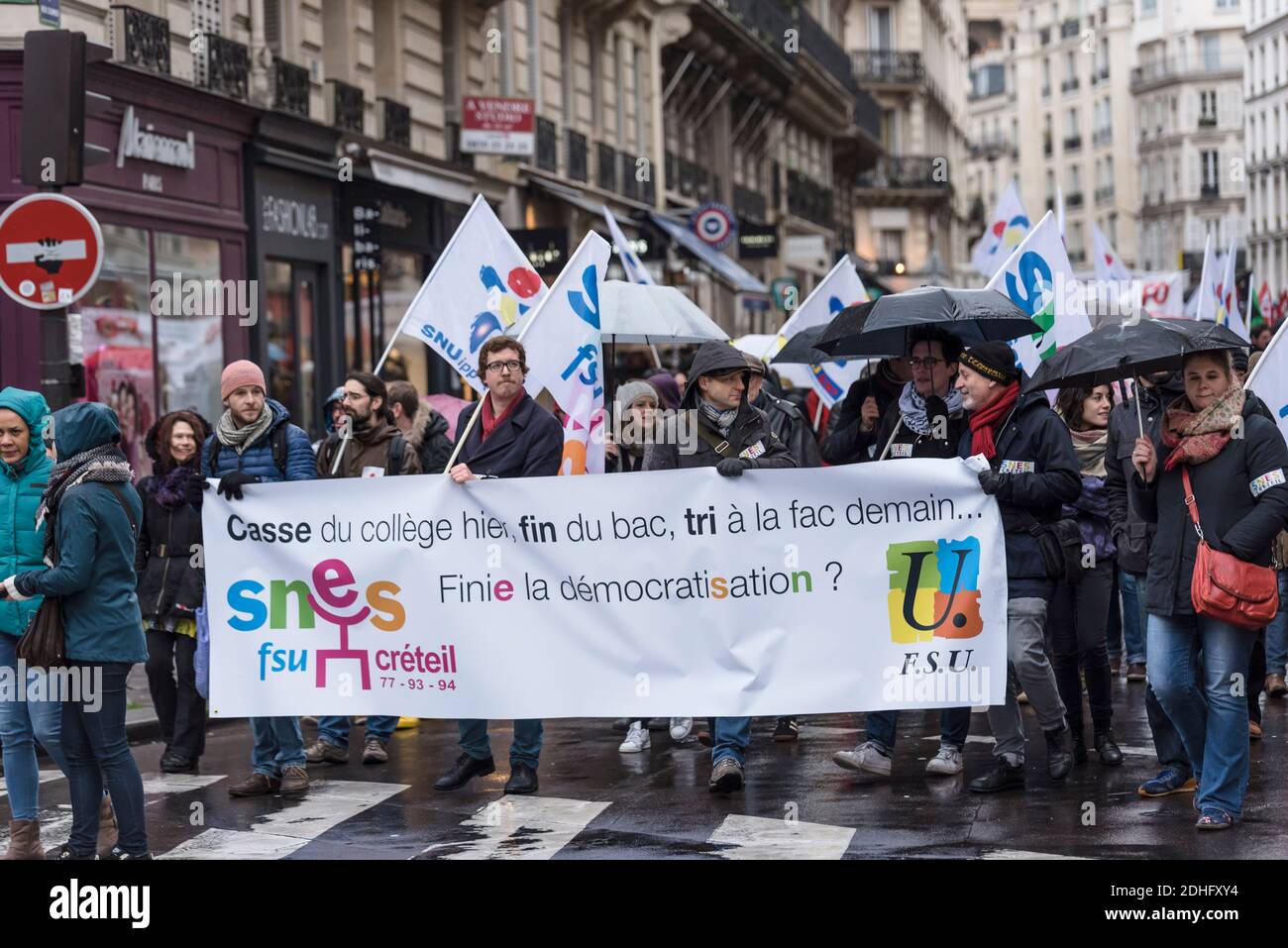
Labor unions representing education staff in the Seine-Saint-Denis department, alongside the FCPE parents’ federation, organized a departmental protest on Saturday, June 13, to voice ongoing concerns regarding public school funding and working conditions. The demonstration sought to highlight what organizers describe as a persistent lack of resources in the “93” department, a region that frequently reports the highest rates of student poverty in mainland France according to data from the National Institute of Statistics and Economic Studies (INSEE).
The mobilization brought together a coalition of groups including Sud Éducation, CGT Éduc’action, FSU, FO Enseignement, and UNSA Éducation. Participants gathered to demand a “special plan” for Seine-Saint-Denis, citing class sizes that remain among the largest in the country and a high turnover rate of teaching staff. The protest follows a series of local strikes throughout the academic year, reflecting a long-standing tension between the Ministry of National Education and the Seine-Saint-Denis educational community over equity in school staffing.
Demands for a Special Plan for Seine-Saint-Denis
At the core of the June 13 action is the demand for a comprehensive investment strategy specifically tailored to the socio-economic challenges of the Seine-Saint-Denis department. Representatives from the participating unions argue that the current national allocation model fails to account for the specific needs of schools in the area, where according to the Ministry of National Education’s 2023 statistical report, the density of students from low-income households is significantly higher than the national average.
The coalition is calling for the creation of thousands of permanent positions to stabilize school teams. Teachers and parents have expressed concern that the reliance on temporary or contract staff hinders educational continuity. These demands mirror the broader “Choc des savoirs” reforms introduced by the French government in early 2024, which have faced criticism from several teachers’ unions who argue that such measures prioritize structural changes over the necessary increase in human and financial resources.
The Role of Parental Advocacy
The involvement of the FCPE (Fédération des conseils de parents d’élèves) underscores the cross-community nature of the protest. By aligning with labor unions, the parents’ federation seeks to amplify the message that the current educational environment in the department negatively impacts student success rates. In many instances, the FCPE has pointed to the correlation between school infrastructure, teacher availability, and the academic performance of students in priority education zones (ZEP).
According to official government definitions, the priority education policy aims to correct social inequalities through the allocation of additional resources to schools in disadvantaged areas. However, critics, including the unions involved in the June 13 protest, maintain that these measures have not kept pace with the demographic growth observed in Seine-Saint-Denis over the last decade. The department continues to grapple with a rapidly increasing school-age population, which exacerbates the pressure on existing classroom capacity.
Context of Institutional Tensions
The protest is part of a broader cycle of industrial action that has defined the 2023-2024 school year in France. While the government has emphasized its commitment to prioritizing education in its budgetary planning, local representatives in Seine-Saint-Denis maintain that the departmental reality remains disconnected from national policy announcements. The discrepancy between the state’s stated goals and the local experience of teachers is a recurring theme in reports from the French Senate’s Committee on Culture, Education and Communication, which has periodically assessed the state of public schools in the region.
For parents and teachers, the protest serves as a platform to pressure the Ministry of National Education for concrete commitments regarding the next school year’s staffing levels. The primary point of contention remains the “carte scolaire”—the annual process of allocating teaching positions to schools. Unions are pushing for a transparent, needs-based distribution that prioritizes the most vulnerable areas in the northern suburbs of Paris.
What Happens Next?
As the academic year draws to a close, the focus for the participating unions and the FCPE shifts to the negotiations for the 2024-2025 school year. The Ministry of National Education is expected to release final staffing figures for the upcoming term in the coming weeks, a process that will be closely monitored by the educational community in Seine-Saint-Denis. Further information regarding school operations and upcoming public service updates can be found on the official website of the Créteil Academy, which oversees education in the department.
The unions have indicated they will continue to evaluate the government’s response before deciding on any further industrial action during the start of the next term. Observers note that the consistency of these mobilizations suggests that the issue of regional educational equity will remain a significant challenge for the government in the months ahead. Readers are encouraged to monitor local updates from their respective school districts and participate in upcoming school council meetings to stay informed about local developments.