
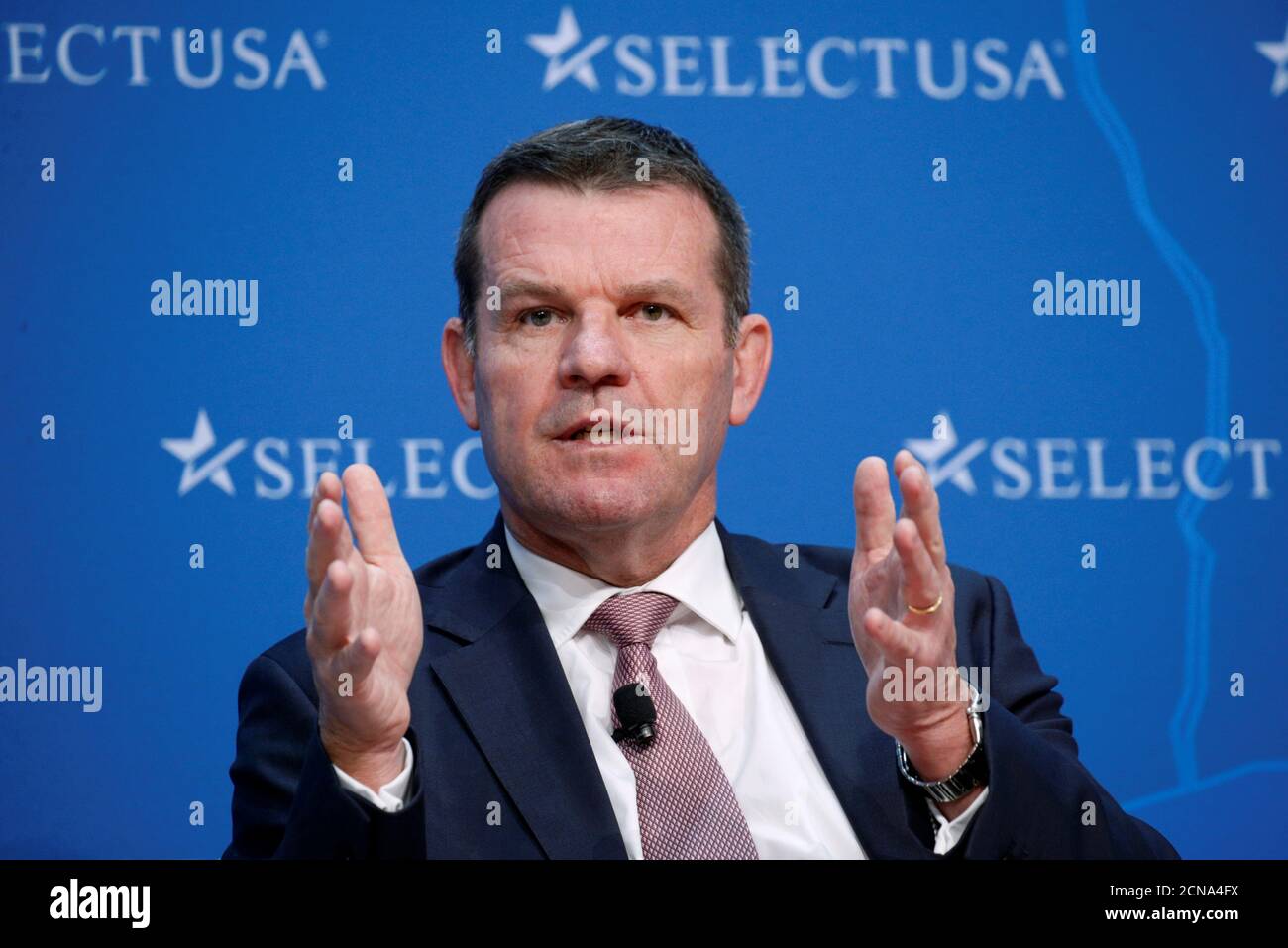
The air in National Harbor, Maryland, this past week was thick with the specific, high-stakes energy that only accompanies the convergence of global capital and political ambition. From May 3 to 6, the SelectUSA Investment Summit served as the epicenter for international firms weighing a pivotal question: Is now the right time to scale operations within the United States?
For the thousands of global executives, policymakers, and economic development officials who gathered, the answer was not a simple “yes,” but rather a complex “where” and “how.” As the Chief Editor of Business at World Today Journal, I have watched the ebb and flow of Foreign Direct Investment (FDI) for nearly two decades. What struck me most about this year’s summit was the shift from general interest to surgical precision. Firms are no longer just looking for “the U.S. Market”; they are looking for specific ecosystems—states with the right power grids for AI data centers, regions with specialized workforce pipelines for semiconductors, and municipalities offering aggressive tax incentives for green energy.
The summit, organized by the U.S. Department of Commerce, functions as a high-speed matchmaking service. It strips away the bureaucratic layers of federal entry and puts foreign CEOs in the same room as governors and mayors. In a world defined by “friend-shoring” and the reconfiguration of global supply chains, the United States is positioning itself not just as a consumer market, but as the safest and most innovative harbor for long-term industrial capital.
For the foreign firm contemplating a move, the proposition is clear: the U.S. Offers an unmatched combination of venture capital access, intellectual property protections, and a massive internal market. However, the path to entry remains a gauntlet of regulatory nuances and fierce interstate competition.
The Gateway Mechanism: How SelectUSA Operates
To understand the appeal of the American market, one must first understand the mechanism of SelectUSA. It is not merely an annual event but a year-round federal program designed to facilitate Foreign Direct Investment. The program acts as a concierge service, helping companies navigate the labyrinth of federal regulations while connecting them with the state and local partners who actually hold the keys to land, labor, and local tax breaks.
The core value proposition for an international firm is the reduction of “entry friction.” By centralizing the initial outreach through the SelectUSA program, the U.S. Government effectively signals that it is open for business, providing a streamlined point of contact for firms that might otherwise be intimidated by the fragmented nature of American governance.
During my conversations with attendees in National Harbor, a recurring theme emerged: the importance of “ecosystem fit.” A German automotive supplier is not looking for “America”; they are looking for the specific cluster of battery plants and charging infrastructure emerging in the American Midwest. A Singaporean fintech firm is not looking for a “U.S. Office”; they are looking for the talent density of New York or the venture capital velocity of Silicon Valley.
A Marketplace of States: The Competition for Capital
One of the most fascinating dynamics of the SelectUSA Summit is the internal competition. While the federal government provides the invitation, the individual states provide the incentives. The summit is a marketplace where U.S. States compete against one another to lure foreign firms with a variety of “deals.”
These incentives typically fall into three categories:
- Tax Abatements: Temporary or permanent reductions in corporate or property taxes to offset the initial cost of facility construction.
- Workforce Grants: State-funded training programs designed to ensure the local labor pool meets the specific technical requirements of the incoming firm.
- Infrastructure Support: Direct investment in roads, rail spurs, or utility upgrades to make a specific site “shovel-ready.”
This competition creates a buyer’s market for foreign firms. When a company announces its intent to build a new manufacturing plant, it often triggers a “bidding war” between states. We have seen this play out recently in the semiconductor and electric vehicle (EV) sectors, where states have offered billions in cumulative incentives to secure high-paying industrial jobs.
However, this “race to the bottom” on taxes is often balanced by the firm’s need for stability and infrastructure. A tax break is useless if the local power grid cannot support a fabrication plant or if the regional airport cannot handle the necessary logistics. The most successful states are those that pair financial incentives with genuine structural advantages.
Strategic Priorities: From Silicon to Sustainability
The 2026 summit highlighted a clear hierarchy of strategic interests. The U.S. Is no longer just attracting services and finance; there is a concerted push to “re-industrialize” through targeted FDI in critical technologies.
The Semiconductor Surge
The influence of the CHIPS and Science Act continues to ripple through the investment landscape. By providing massive federal subsidies to bring chip manufacturing back to U.S. Soil, the government has created a magnetic pull for foreign equipment manufacturers and materials suppliers. These “satellite” firms are now rushing to establish U.S. Bases to be near the massive “fabs” being constructed across the Sun Belt and the Midwest.
The Green Energy Transition
Sustainability is no longer a corporate social responsibility (CSR) checkbox; it is a primary driver of investment. Foreign firms specializing in hydrogen fuel, carbon capture, and advanced battery chemistry are finding a receptive environment, driven partly by federal climate goals and the desire for energy independence. The focus has shifted toward creating “circular economies” where the raw materials, processing, and final assembly all happen within the same geographic region to minimize carbon footprints and supply chain risks.
The AI Infrastructure Race
Artificial Intelligence is the invisible hand guiding much of the current investment. Beyond the software companies, there is a desperate need for the physical infrastructure of AI: data centers, specialized cooling systems, and high-capacity power generation. This has led to a surge of interest in regions with abundant land and cheap energy, shifting the investment map away from traditional hubs and toward the American interior.
Navigating the American Labyrinth: Challenges for Foreign Firms
Despite the warmth of the welcome at the SelectUSA Summit, the reality of doing business in the U.S. Remains challenging for many foreign entities. The primary hurdles are rarely the “big” things like federal law, but rather the “small” things like local zoning and labor market volatility.
The Labor Gap: While the U.S. Has a deep pool of high-end talent, there is a documented shortage of skilled tradespeople—welders, electricians, and technicians—necessary for advanced manufacturing. Foreign firms often find that while they can secure a plot of land and a tax break, finding 500 qualified technicians in a rural county is a far more difficult task.
Regulatory Fragmentation: A firm may reach an agreement with the federal government and the state governor, only to be stalled by a local zoning board or an environmental impact study at the county level. This “fragmented sovereignty” can be jarring for firms coming from centralized economies where a single government approval clears the path entirely.
The Cost of Compliance: The U.S. Legal environment is notoriously litigious. From employment law to intellectual property disputes, the cost of “defensive” legal counsel is a significant overhead that foreign firms must budget for from day one.
Practical Roadmap for International Investors
For firms that have considered America but haven’t yet made the leap, the process is no longer about finding a local agent and hoping for the best. The modern approach is data-driven and strategic.
First, firms should utilize the official SelectUSA resources to identify “industry clusters.” Rather than picking a state based on a general reputation, companies should analyze where their existing suppliers and competitors are located. The “cluster effect” significantly reduces the cost of logistics and increases the availability of specialized talent.
Second, it is critical to conduct “boots-on-the-ground” due diligence. A site visit to National Harbor is a start, but visiting the actual municipality—speaking with the local chamber of commerce and inspecting the local utility infrastructure—is where the real risks are uncovered.
Finally, firms should seek “hybrid” entry strategies. Many successful foreign companies start with a small R&D outpost or a strategic partnership with a U.S.-based firm before committing to a full-scale manufacturing facility. This allows them to test the labor market and regulatory environment with limited capital exposure.
Key Takeaways for Foreign Firms
- Leverage the Concierge: Use SelectUSA as the primary entry point to bypass initial federal bureaucracy.
- Play the States: Understand that states compete for your investment; don’t settle for the first incentive package offered.
- Prioritize Ecosystems: Look for “clusters” of existing industry rather than just low-tax jurisdictions.
- Budget for “Friction”: Account for the costs of local zoning, labor shortages, and the U.S. Legal environment.
- Align with Policy: Investments in semiconductors, AI infrastructure, and green energy currently enjoy the strongest federal tailwinds.
The Path Forward
The SelectUSA Investment Summit is more than a networking event; it is a barometer for the global economy’s confidence in the American project. As supply chains continue to shift away from high-risk geopolitical zones, the U.S. Is positioning itself as the premier destination for “safe” capital. However, the success of these investments will depend not on the promises made in the hallways of National Harbor, but on the ability of states to provide the actual infrastructure and workforce required to sustain 21st-century industry.
The next major checkpoint for global investors will be the release of the updated FDI quarterly reports from the Department of Commerce, which will reveal whether the handshakes of May translate into the hard capital of June and July. As we track these flows, the window for “early mover” advantages in the new U.S. Industrial landscape is closing quickly.
Do you believe the U.S. Is currently the most attractive destination for foreign capital, or are other regions offering better long-term value? We invite you to share your insights and experiences in the comments below.
Worth a look