Revolutionary ‘Artificial Muscle’ Lens Could Transform Microscopy and Beyond
Imagine a microscope lens that adjusts its focus without motors or complex mechanics. That future is closer than you think, thanks to groundbreaking research from Georgia Tech. Scientists have developed a novel lens powered by a responsive hydrogel – essentially, an “artificial muscle” – that promises to revolutionize microscopy and perhaps unlock new frontiers in imaging technology.
How Does This Innovative Lens Work?
The core of this innovation lies in a unique hydrogel material. This isn’t your typical gel; its a network of polymers designed to dynamically change between liquid-like and solid-like states. Here’s a breakdown of the key principles:
* Hydrogel Responsiveness: the hydrogel reacts to heat by shrinking when warmed and swelling when cooled, effectively altering its shape.
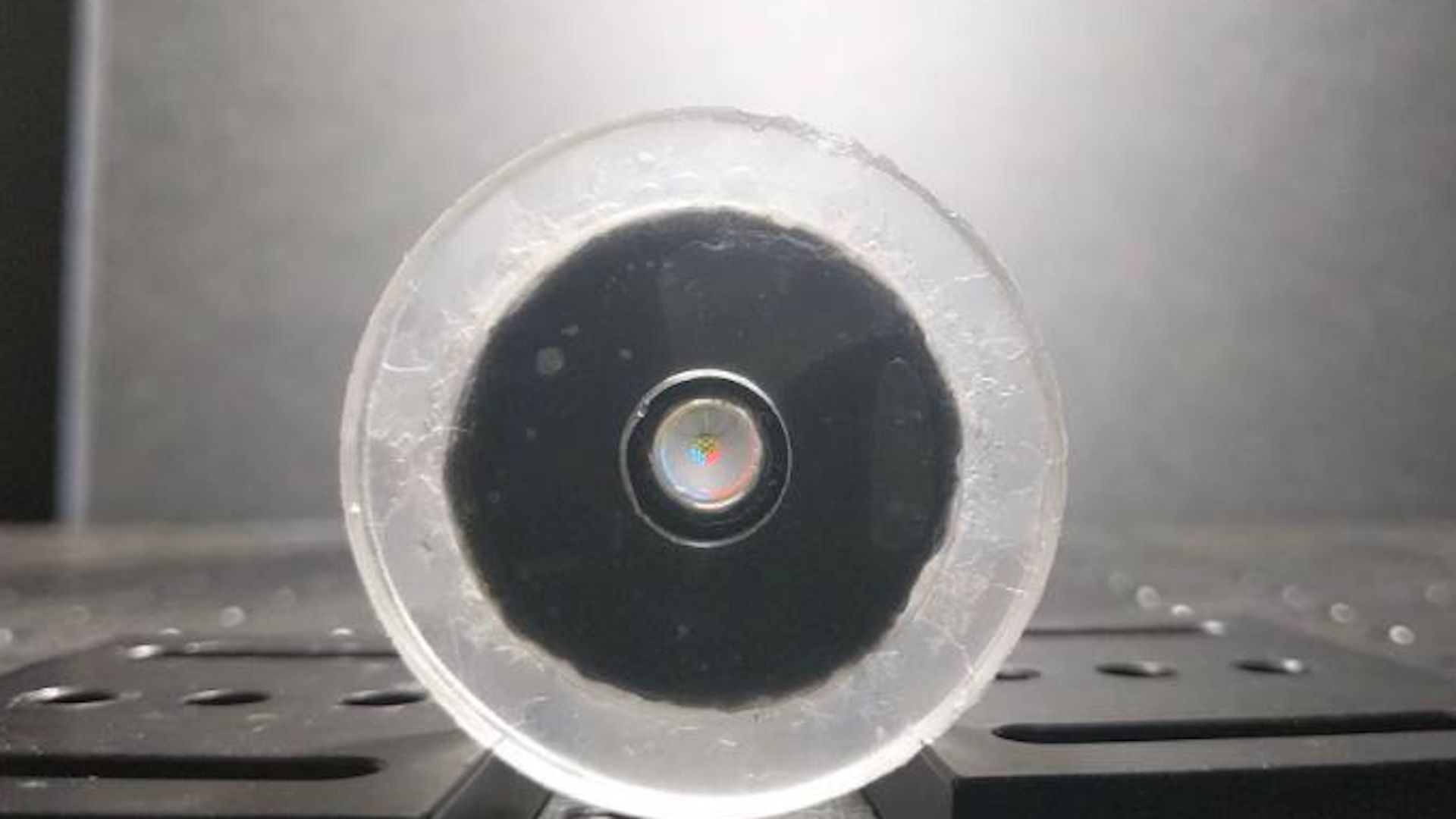
* Graphene Oxide Integration: Tiny particles of graphene oxide are embedded within the hydrogel. These particles absorb light, generating heat and triggering the shape-changing response.
* Mimicking the Human Eye: The design incorporates a ring of this responsive hydrogel around a silicon polymer lens, mirroring the natural mechanics of the human eye.
When light – even the intensity of sunlight – hits the graphene oxide, it heats the hydrogel. This causes it to contract,pulling on the lens and bringing objects into focus. remove the light source,and the hydrogel expands,relaxing the tension. Importantly, this lens reacts to light across the entire visible spectrum.
Seeing the Unseen: Microscopic Capabilities
Published recently in Science Robotics, the research demonstrates the lens’s remarkable ability to resolve incredibly fine details. Researchers, led by Dr. Shu Jia of georgia Tech and researcher Zheng, found this lens could rival traditional glass lenses in microscopy.
Specifically, the lens successfully imaged:
* 4-micrometer gaps between a tick’s claws.
* 5-micrometer filaments of fungus.
* 9-micrometer stubble on an ant’s leg.
These results highlight the potential for this technology to substantially enhance our ability to observe the microscopic world.
Beyond Microscopy: A Self-Powered, bright Camera System
But the potential doesn’t stop at improved microscopy. The team is now integrating the lens into a microfluidic system, utilizing valves also made from the responsive hydrogel. This integration is particularly exciting as it means the same light used to create the image can also power the system.
This paves the way for:
* Autonomous Camera Systems: Imagine cameras that adjust focus and operate independently, without external power sources.
* Novel Imaging Capabilities: The adaptable nature of the hydrogel opens doors to mimicking the vision of other creatures.
Inspired by nature: Seeing Like a Cat or a Cuttlefish
The adaptability of this lens is truly remarkable. Researchers believe it could be engineered to replicate the unique visual abilities of animals.
Consider these possibilities:
* Cat-like Vision: Mimicking a cat’s vertical pupils to enhance detection of camouflaged objects.
* Cuttlefish Retina: Replicating the cuttlefish’s W-shaped retina to perceive colors beyond the human visual spectrum.
“We can actually control the lens in really unique ways,” explains Zheng, emphasizing the vast potential for customization and innovation.
What This Means for You
This research represents a meaningful leap forward in imaging technology. While still in advancement, this “artificial muscle” lens promises to deliver more affordable, adaptable, and powerful imaging solutions for a wide range of applications – from scientific research and medical diagnostics to environmental monitoring and beyond. It’s a engaging glimpse into a future where our ability to “see” is limited only by our imagination.
Resources:
* Science Robotics Publication
* Dr. Shu Jia’s Georgia Tech profile
Keep reading