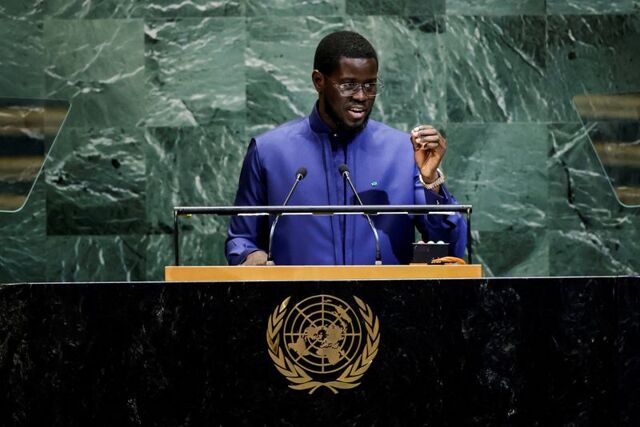
In a decisive move to stabilize a nation grappling with significant fiscal volatility, Senegal’s President Bassirou Diomaye Faye has appointed seasoned economist Ahmadou Al Aminou Lo as the country’s new prime minister. The announcement, made via state television on Monday, marks a pivotal shift in the administration’s approach to managing Senegal’s mounting economic challenges and its precarious relationship with international lenders.
Lo, who previously served as the head of the Senegal branch of the Central Bank of West African States, steps into the role at a moment of profound transition. His appointment comes just three days after President Faye dismissed the previous government, which was led by the firebrand populist Ousmane Sonko. The leadership change is widely viewed as an attempt to pivot toward economic pragmatism as the administration seeks to navigate a deepening financial crisis.
Addressing the nation, Lo emphasized the gravity of the current situation, signaling that his tenure will be defined by fiscal discipline and the restoration of market confidence. “We must all be aware of the state of emergency our country currently finds itself in,” Lo stated, specifically highlighting the critical state of public finances and its broader impact on the national economy. He sought to offer immediate reassurance to both the local private sector and the international community, asserting that “Senegal is a safe and reliable country and intends to remain so.”
A Strategic Shift Toward Economic Stabilization
The selection of Ahmadou Al Aminou Lo is a clear indication of President Faye’s intent to prioritize economic technicality over populist rhetoric. As a former high-ranking official within the Central Bank of West African States, Lo brings a level of institutional experience that is expected to be vital in negotiating with global financial bodies and managing the nation’s complex debt profile.

The timing of this appointment is inextricably linked to the current standoff with the International Monetary Fund (IMF). The IMF recently froze Senegal’s $1.8 billion lending program following the discovery of misreported debt data. This freeze has left a significant gap in the country’s projected revenue and has complicated the government’s ability to fund essential services and infrastructure projects.
The economic landscape Lo inherits is characterized by high leverage and diminished investor trust. At the end of 2024, Senegal’s debt level reached 132% of its economic output, a figure that has raised alarms among credit rating agencies and international partners alike. The new prime minister’s primary mandate will likely be to address these disparities and present a transparent, credible framework for debt management that can unlock the frozen IMF funds.
Navigating the Debt Crisis and IMF Relations
One of the most contentious issues facing the Senegalese government is the management of its estimated $13 billion debt. The outgoing prime minister, Ousmane Sonko, had been a vocal opponent of any debt restructuring—a move the IMF has been advocating for to ensure long-term sustainability. This ideological divide between the populist wing of the government and the necessity of international fiscal compliance has created a period of intense policy uncertainty.

While Sonko argued against restructuring, President Faye has maintained a more measured and less vocal stance on the matter, creating space for a technocratic approach. Lo’s background suggests that the new government may be more inclined to engage in the structured negotiations required to manage the $13 billion obligation. The goal will be to find a balance that satisfies the IMF’s requirements for transparency and restructuring while maintaining domestic stability.
The implications of the IMF’s $1.8 billion lending freeze cannot be overstated. Without this support, the government faces heightened difficulty in servicing its existing obligations and managing the impact of the 132% debt-to-GDP ratio. Lo’s ability to restore the integrity of Senegal’s financial reporting will be the litmus test for his administration’s success in the coming months.
Political Uncertainty and the Role of the Pastef Party
Despite the appointment of a stabilizing economic figure, the political environment in Dakar remains highly unpredictable. The dismissal of Ousmane Sonko on Friday has left a vacuum in the leadership of the Pastef party, the political force that has dominated the National Assembly and was instrumental in President Faye’s rise to power.
The relationship between the President and the party’s most influential figures remains under scrutiny. In March, Sonko issued a stark warning that he could lead the Pastef party into the opposition if the President deviated from the party’s core agenda. This threat poses a significant risk to the government’s legislative capacity. if the ruling party moves into opposition, the administration may find it nearly impossible to pass the critical reforms necessary to secure international financial support.
Further complicating the political landscape is the recent resignation of the National Assembly speaker on Sunday. This departure has fueled intense speculation regarding the future of the legislature. There are growing rumors that Sonko himself may be positioned to fill the speaker’s role, which would fundamentally alter the power dynamics between the executive and legislative branches.
Legislative Outlook
The National Assembly is scheduled to meet this Tuesday to discuss the “reintegration” of Sonko as a lawmaker. The outcome of these discussions will be a critical indicator of whether the government can maintain a unified front or if the administration will face a fractured legislature that could stall essential economic reforms.
Key Takeaways: Senegal’s Leadership Transition
- New Leadership: Economist Ahmadou Al Aminou Lo has been appointed Prime Minister to prioritize economic stability and investor confidence.
- Fiscal Emergency: The appointment follows a “state of emergency” regarding public finances, with debt reaching 132% of economic output at the end of 2024.
- IMF Standoff: A $1.8 billion IMF lending program remains frozen due to issues surrounding misreported debt.
- Debt Management: The government must navigate a $13 billion debt load, with the new administration likely facing pressure to consider restructuring.
- Political Risk: The dismissal of Ousmane Sonko has created uncertainty within the ruling Pastef party and the National Assembly.
As Senegal enters this new chapter, the world will be watching to see if the appointment of a seasoned economist can bridge the gap between populist political promises and the harsh realities of global finance. The upcoming sessions of the National Assembly will provide the first real glimpse into how the new administration intends to manage both its economy and its political allies.
Next Checkpoint: The National Assembly is expected to convene on Tuesday to discuss legislative reintegration and the current political standing of Ousmane Sonko.
What are your thoughts on Senegal’s new economic direction? Do you believe a technocratic appointment is the right move for the country? Let us know in the comments below and share this article with your network.
Keep reading